🌼 Page 2: Advanced Orchid Care and Root Mastery
🌼 Turning Observation into Expertise
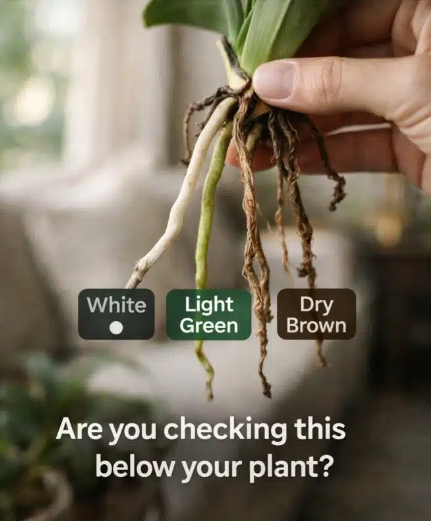
🍃 Reading Patterns, Not Just Colors
Experienced growers don’t just look at color once—they observe patterns over time.
For example:
- Roots staying green too long may indicate overwatering
- Roots turning silver too quickly may suggest low humidity
- Uneven color distribution may reveal inconsistent watering
Understanding these patterns allows for precise adjustments.
🍃 The Role of Consistency
Orchids thrive on routine. Sudden changes in care can stress roots and disrupt their natural cycle.
Maintaining consistency in:
- Watering schedule
- Light exposure
- Temperature
is key to long-term health.
🌼 Orchid Care Indoors: Practical Guidelines
🍃 Watering Technique
Instead of watering on a fixed schedule, use root color as your guide.
Water when:
- Roots are mostly silvery
Avoid watering when:
- Roots are still green
🍃 Light Management
Bright, indirect light supports:
- Healthy root activity
- Efficient photosynthesis
- Strong blooms
🍃 Potting Medium
Use materials like bark or moss that allow:
- Airflow
- Quick drainage
- Root breathing
🌼 FAQ: Orchid Root Health and Care
🍃 How do I know if my orchid needs water?
Check the roots. Silvery color means it’s time to water.
🍃 Can roots recover from damage?
Yes, if healthy roots remain and conditions improve.
🍃 Why are my roots turning black?
This usually indicates root rot caused by excess moisture.
🍃 Are aerial roots normal?
Yes, they help the plant absorb moisture from the air.
🍃 Should I cut damaged roots?
Only remove roots that are clearly dead or mushy.
🍃 Can orchids grow new roots?
Yes, under proper conditions, new roots will develop.
🍃 Does root color affect blooming?
Indirectly, yes. Healthy roots support better blooms.
🍃 Is misting enough for watering?
No, orchids need thorough watering, not just surface moisture.
🍃 Do orchids need fertilizer?
Yes, but in diluted amounts.
🍃 What is the biggest mistake beginners make?
Overwatering.
🌼 Final Conclusion: The Language of Roots
Orchid roots are not hidden—they are expressive, dynamic, and deeply informative.
By understanding their colors, you gain insight into:
- Hydration levels
- Environmental balance
- Overall plant health
Healthy orchids are not the result of complex techniques, but of attentive observation.
When roots receive proper airflow, balanced moisture, and gentle feeding, they reward you with strength, resilience, and breathtaking blooms.
And in that quiet exchange—between plant and caretaker—you begin to see orchids not just as decorations, but as living indicators of harmony within your space.