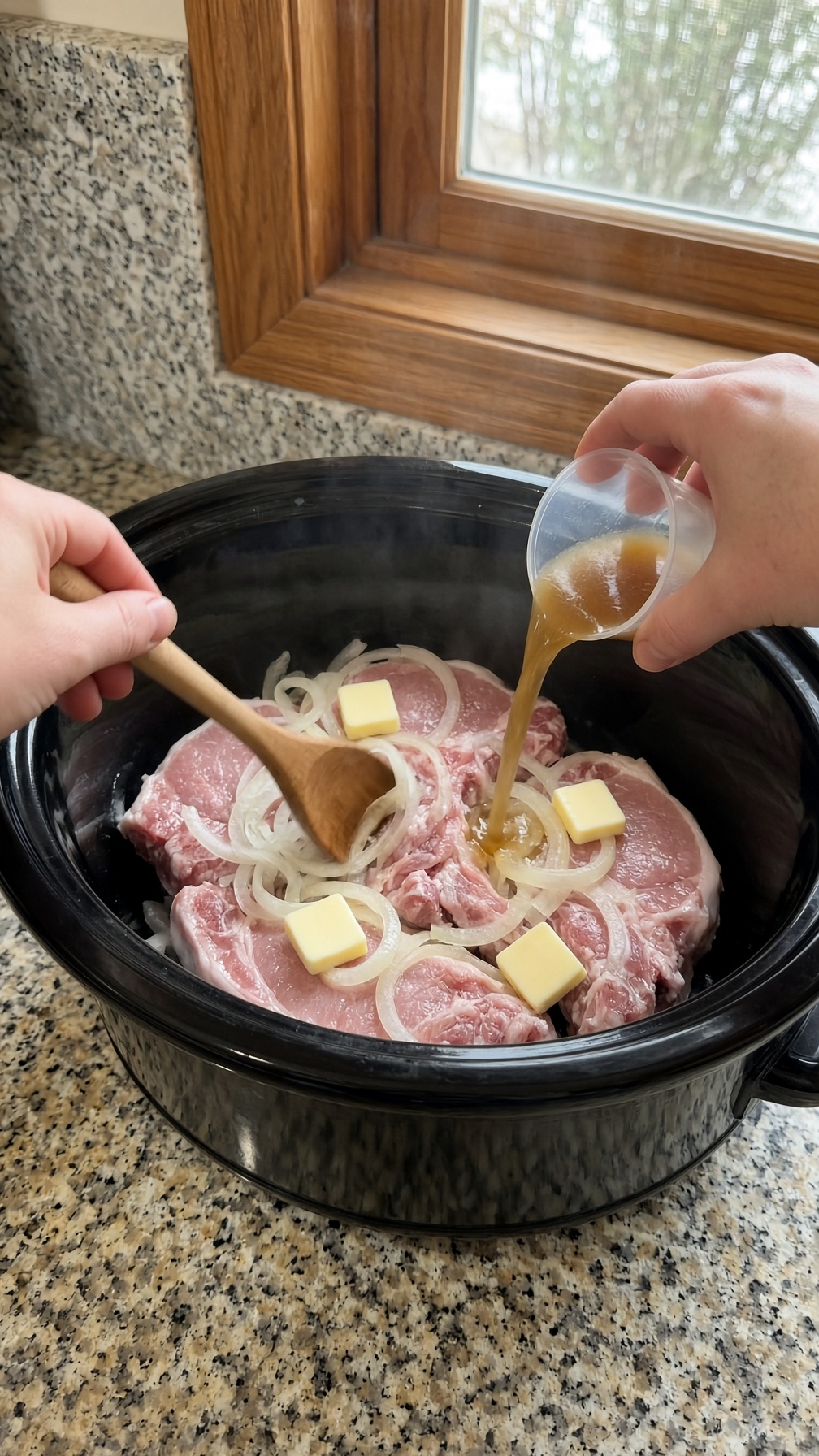
These Smothered Pork Chops with Onion Gravy turn three comforting main ingredients into a hearty family dinner:
Pork Chops • Onions • Gravy
Juicy pork chops are browned in a skillet, then surrounded by slowly softened onions and a rich homemade gravy. Everything finishes together until the pork is tender and coated in savory onion sauce.
Serve these smothered pork chops over creamy mashed potatoes, rice, egg noodles, or buttered biscuits for a satisfying dinner that’s especially good when you want old-fashioned comfort food without complicated ingredients.
Why You’ll Love These Smothered Pork Chops
- Juicy, flavorful pork chops
- Rich homemade onion gravy
- Simple skillet preparation
- Everyday ingredients
- Excellent with mashed potatoes
- Easy family dinner
- No canned gravy required
- Easy mushroom variation
- Great for Sunday dinner
- Leftovers reheat well
The 3 Main Ingredients
1. Pork Chops
Thick-cut pork chops provide the hearty centerpiece.
2. Onions
Slowly cooked onions add sweetness and savory depth.
3. Gravy
A simple pan gravy brings everything together and captures the browned flavor left behind by the pork.
Ingredients
For the Pork Chops
- 4 thick-cut pork chops, bone-in or boneless
- 1 teaspoon kosher salt
- ¾ teaspoon black pepper
- 1 teaspoon garlic powder
- 1 teaspoon onion powder
- ½ teaspoon smoked paprika
- ½ cup all-purpose flour
- 2 tablespoons olive oil
- 1 tablespoon unsalted butter
For the Onion Gravy
- 2 large yellow onions, thinly sliced
- 2 tablespoons unsalted butter
- 3 garlic cloves, minced
- 2 tablespoons all-purpose flour
- 2 cups low-sodium chicken broth
- ½ cup whole milk or heavy cream, optional
- 1 tablespoon Worcestershire sauce
- ½ teaspoon dried thyme
- ½ teaspoon black pepper
- Salt, to taste
Optional Garnish
- Fresh parsley
- Fresh thyme
- Cracked black pepper
Best Pork Chops for Smothered Pork Chops
Thicker pork chops are generally easier to keep juicy than very thin chops.
You can use either:
Bone-in pork chops or boneless pork chops.
Bone-in chops make a beautiful presentation and can be more forgiving during cooking.
Boneless chops are convenient and easy to eat.
Look for chops approximately 1 to 1½ inches thick when possible.
Don’t Use Extremely Thin Chops for Long Simmering
Thin pork chops cook quickly.
If you brown them and then simmer them in gravy for a long time, they can become dry.
For thin chops, shorten the finishing time considerably and rely on an instant-read thermometer rather than the clock.
How to Make Smothered Pork Chops with Onion Gravy
Step 1: Dry the Pork Chops
Remove the pork chops from their packaging.
Pat them thoroughly dry with paper towels.
A dry surface browns more effectively.
Step 2: Season
Season both sides with:
- Salt
- Black pepper
- Garlic powder
- Onion powder
- Smoked paprika
Step 3: Lightly Dredge in Flour
Place ½ cup flour in a shallow dish.
Lightly coat each pork chop.
Shake away excess flour.
You want a thin coating rather than a heavy breading.
The flour helps create a golden exterior and eventually contributes to the gravy.
Step 4: Heat the Skillet
Place a large heavy skillet over medium-high heat.
Add olive oil.
Once hot, add the pork chops.
Don’t crowd the skillet.
Step 5: Brown the Pork Chops
Sear until nicely browned on the first side.
Flip and brown the second side.
At this stage, you’re primarily developing color rather than trying to fully cook the pork.
Transfer the chops to a clean plate.
Don’t Wash the Skillet
Those browned bits on the bottom are exactly what we want.
They’re going into the onion gravy.
Step 6: Add Butter and Onions
Reduce the heat to medium.
Add 2 tablespoons butter.
Add the sliced onions.
Cook for approximately 8–12 minutes, stirring occasionally.
The onions should become soft and golden.
For a deeper onion flavor, let them cook a little longer.
Step 7: Add Garlic
Add the minced garlic.
Cook approximately 30 seconds, until fragrant.
Don’t let the garlic burn.
Step 8: Add Flour
Sprinkle 2 tablespoons flour over the onions.
Stir continuously for approximately 1–2 minutes.
This cooks away the raw flour taste and creates the base for the gravy.
Step 9: Add Broth Gradually
Slowly pour in the chicken broth while stirring.
Scrape the bottom of the skillet to release all the browned bits.
The gravy will begin thickening as it heats.
Step 10: Season the Gravy
Add:
- Worcestershire sauce
- Thyme
- Black pepper
Taste before adding additional salt.
Broth and Worcestershire already contribute sodium.
Step 11: Add Optional Cream
For a creamier Southern-style gravy, stir in:
½ cup whole milk or heavy cream.
For a darker traditional onion gravy, leave the dairy out.
Both versions are delicious.
Step 12: Return the Pork Chops
Place the browned pork chops back into the skillet.
Spoon onions and gravy over them.
Step 13: Finish Gently
Reduce the heat.
Cover partially and cook gently until the pork is done.
Cooking time depends heavily on chop thickness and how much they cooked during searing, so use temperature rather than relying solely on a fixed number of minutes.
Whole cuts of pork should reach 145°F (63°C) internally and then rest for at least 3 minutes.
Step 14: Check the Gravy
If the gravy becomes too thick, add a splash of broth.
If it’s thinner than you prefer, remove the pork once safely cooked and simmer the gravy briefly until it reaches your desired consistency.
Step 15: Rest the Pork
Remove the skillet from direct heat.
Let the pork chops rest for at least 3 minutes.
Step 16: Serve
Place a pork chop over mashed potatoes or rice.
Spoon plenty of onions and gravy over the top.
Finish with parsley and cracked black pepper.
The Secret to Juicy Smothered Pork Chops
Pork chops have a reputation for being dry, but that usually comes from overcooking.
Modern pork doesn’t need to be cooked until it’s gray and firm throughout.
For whole pork chops, the target minimum internal temperature is 145°F (63°C) followed by a 3-minute rest.
An instant-read meat thermometer is one of the most useful tools you can have for this recipe.
Bone-In vs. Boneless Pork Chops
Both work.
| Pork Chop | Flavor | Cooking | Best Feature |
| Bone-in | Rich | Slightly less uniform | Classic presentation |
| Boneless | Mild | Very even | Convenient |
| Thick-cut | Juicier | More forgiving | Best for smothering |
| Thin-cut | Good | Very fast | Quick dinner |
For this recipe, thick-cut chops are especially forgiving.
Why Thickness Matters
A thick pork chop gives you enough time to create good browning before the interior becomes overcooked.
Thin chops can reach their target temperature surprisingly quickly.
That’s why you should adjust cooking based on thickness rather than assuming every pork chop needs the same amount of time.
Why Flour the Pork Chops?
The light flour coating serves several purposes.
It helps:
- Encourage browning
- Create a lightly textured exterior
- Give the gravy something to cling to
- Contribute a little thickening
Don’t create a heavy coating.
This isn’t fried pork.
Why Brown the Pork First?
Browning creates flavor.
When the pork hits the hot skillet, its surface develops a savory golden crust.
Some browned bits remain behind.
Those bits become incorporated into the gravy when you add broth.
Don’t Crowd the Pan
Four large pork chops may not comfortably fit in every skillet.
If they overlap, cook them in two batches.
Crowding traps steam and makes browning more difficult.
Why Onions Are So Important
Onions aren’t just an optional vegetable here.
They’re one of the three major components.
As they cook, they become:
- Softer
- Sweeter
- More savory
Their flavor eventually becomes part of the gravy itself.
Yellow Onions
Yellow onions are my first choice.
They’re assertive when raw but become pleasantly sweet when cooked.
Sweet Onions
Sweet onions also work.
They create a slightly sweeter gravy.
How Thin Should You Slice the Onions?
Aim for relatively thin, even slices.
Very thick onion pieces take longer to soften.
Paper-thin slices can disappear almost completely into the sauce.
A medium-thin slice gives you onions that soften while still remaining visible.
Want Deeply Caramelized Onions?
Cook the onions longer before adding flour.
Lower the heat slightly and let them slowly develop a deep golden color.
This can take significantly longer than a standard sauté, but the flavor becomes sweeter and more concentrated.
French Onion-Inspired Pork Chops
Use plenty of deeply caramelized onions.
Prepare the gravy.
Near the end, add a small amount of:
- Gruyère
- Swiss cheese
- Provolone
Let the cheese melt over the pork.
This creates a French onion-inspired variation with pork chops as the centerpiece.
Mushroom and Onion Pork Chops
Add approximately 8 ounces sliced cremini or baby bella mushrooms.
Brown the mushrooms after removing the pork chops.
Then add the onions.
Cook until excess mushroom moisture evaporates before making the gravy.
Why Brown Mushrooms First?
Mushrooms release significant water.
If they aren’t properly cooked, that water can thin the gravy.
Browning them concentrates their flavor and improves texture.
Creamy Mushroom Pork Chops
Combine:
- Pork chops
- Onions
- Mushrooms
- Creamy gravy
Finish with a little heavy cream.
Serve over egg noodles.
Garlic Onion Pork Chops
Increase the garlic from three cloves to five.
Add fresh parsley at the end.
For extra richness, finish the gravy with a tablespoon of butter.
Cajun Smothered Pork Chops
Replace some of the seasoning with Cajun seasoning.
Add:
- Paprika
- Garlic
- Cayenne, optional
Be cautious with additional salt because Cajun seasoning blends can already contain substantial sodium.
Pepper Gravy Pork Chops
Increase the freshly cracked black pepper.
Add a splash of heavy cream.
This creates a creamy pepper-style gravy that works especially well with mashed potatoes.
Bacon and Onion Pork Chops
Cook several bacon strips until crisp.
Remove and crumble.
Use a modest amount of the bacon fat to sauté the onions.
Finish the dish with crumbled bacon.
Because bacon is salty, reduce added salt.
Can You Use Pork Loin Chops?
Yes.
Just remember that pork loin is relatively lean.
Monitor the internal temperature carefully so it doesn’t become dry.
Can You Use Pork Shoulder Steaks?
Pork shoulder behaves differently.
It contains more connective tissue and benefits from longer cooking.
Don’t automatically substitute it using the same timing as lean loin chops.
Homemade Gravy vs. Canned Gravy
Homemade gravy takes only a few additional minutes and allows you to use the flavor already in your skillet.
| Gravy | Flavor | Control | Convenience |
| Homemade pan gravy | Rich | Excellent | Easy |
| Jarred gravy | Mild | Limited | Very fast |
| Canned soup gravy | Creamy | Moderate | Fast |
The homemade pan gravy is particularly worthwhile because the browned pork and onions have already built so much flavor.
Chicken Broth or Beef Broth?
Chicken broth produces a slightly lighter gravy.
Beef broth makes it darker and more robust.
Either can work.
For a classic pork gravy, low-sodium chicken broth is an excellent starting point.
Why Low-Sodium Broth?
The gravy reduces while cooking.
Worcestershire sauce also contributes salt.
Starting with low-sodium broth makes seasoning easier to control.
Creamy Gravy vs. Brown Onion Gravy
Brown Onion Gravy
Use broth without dairy.
You’ll get a darker, more savory sauce.
Creamy Onion Gravy
Add milk or cream.
You’ll get a softer, richer gravy with a lighter color.
How to Make the Gravy Extra Creamy
Heavy cream creates the richest result.
Whole milk creates a lighter version.
Half-and-half sits between the two.
Add dairy gradually and keep the heat moderate.
How to Fix Thin Gravy
The easiest solution is reduction.
Once the pork reaches its target temperature, transfer it to a plate and keep warm.
Simmer the gravy uncovered until it thickens.
You can also make a small cornstarch slurry if necessary.
Mix:
- 1 teaspoon cornstarch
- 1 teaspoon cold water
Add gradually.
How to Fix Thick Gravy
Add warm broth a few tablespoons at a time.
Stir.
Stop when the gravy easily coats the back of a spoon.
Why Did My Gravy Become Lumpy?
The flour probably wasn’t incorporated evenly.
When adding broth, pour gradually while stirring continuously.
A whisk can help if the gravy begins forming lumps.
Why Is My Gravy Greasy?
Excess oil or pork fat may remain in the skillet.
After searing the chops, you can remove excess grease while keeping the flavorful browned bits.
Leave enough fat to sauté the onions.
Why Does My Gravy Taste Like Raw Flour?
The flour needs to cook briefly before the liquid is added.
After sprinkling flour over the onions, stir for approximately 1–2 minutes.
This eliminates much of the raw flour flavor.
Why Is My Pork Dry?
The most likely reason is overcooking.
Pork chops can move from juicy to dry quickly, especially thin boneless chops.
Use an instant-read thermometer.
Why Are My Pork Chops Tough?
Possible causes include:
- Overcooking
- Very lean chops
- Chops cut too thin
- Excessively long simmering
Unlike chuck roast, lean pork chops don’t become more tender simply because you simmer them for several additional hours.
Don’t Confuse Pork Chops with Slow-Cooking Cuts
This is important.
Pork shoulder contains substantial connective tissue and benefits from long cooking.
Pork loin chops are much leaner.
Treating loin chops like pork shoulder can produce dry meat.
Best Skillet for Smothered Pork Chops
A heavy skillet provides excellent browning.
Good choices include:
- Cast iron
- Stainless steel
- Heavy sauté pan
A 12-inch skillet is particularly convenient for four chops.
Cast Iron vs. Stainless Steel
| Skillet | Browning | Gravy | Cleanup |
| Cast iron | Excellent | Excellent | Moderate |
| Stainless steel | Excellent | Excellent | Moderate |
| Nonstick | Moderate | Easy | Easy |
Stainless steel and cast iron create especially flavorful browned bits for the gravy.
What to Serve with Smothered Pork Chops
These pork chops are all about the gravy, so choose sides that can absorb it.
Excellent options include:
- Mashed potatoes
- White rice
- Egg noodles
- Buttered biscuits
- Creamy polenta
- Roasted potatoes
Creamy Mashed Potatoes
Mashed potatoes are arguably the best pairing.
Spoon potatoes onto the plate.
Place the pork chop partially over them.
Cover both with onion gravy.
Rice
White rice is inexpensive and easy.
It also absorbs gravy extremely well.
This is a good option for stretching the meal for a larger family.
Egg Noodles
Wide egg noodles are another classic choice.
Cook them separately.
Toss lightly with butter.
Then spoon the pork and gravy over the top.
Biscuits
Warm biscuits make an excellent side because they can soak up any gravy left on the plate.
Vegetable Side Dishes
Balance the rich gravy with vegetables such as:
- Green beans
- Broccoli
- Brussels sprouts
- Asparagus
- Collard greens
- Glazed carrots
Southern-Style Dinner Plate
For a comfort-food dinner, serve:
Smothered Pork Chop + Mashed Potatoes + Green Beans + Biscuit
Spoon onion gravy generously over the pork and potatoes.
Lighter Dinner Option
Serve the pork with:
- Roasted broccoli
- Green beans
- Simple salad
Use a smaller amount of gravy.
Make-Ahead Preparation
You can prepare several components in advance.
Slice the onions.
Measure the seasonings.
Mix the dry seasoning.
Prepare your broth.
However, pork chops have the best texture when browned and finished relatively close to serving.
Can You Make the Gravy Ahead?
Yes.
You can prepare onion gravy in advance and refrigerate it.
When you’re ready to cook, brown fresh pork chops and gently reheat the gravy.
You may need a splash of broth because refrigerated gravy thickens.
Meal Prep
Smothered pork chops can be meal-prepped.
Divide into airtight containers with:
- Mashed potatoes or rice
- Pork chop
- Onion gravy
- Green vegetable
Keep plenty of gravy around the pork to help preserve moisture during reheating.
How to Store Leftovers
Cool leftovers promptly and refrigerate them in airtight containers.
For best quality, enjoy within approximately 3–4 days.
Best Way to Reheat Pork Chops
The goal is to heat them without cooking them far beyond their original doneness.
Stovetop
Place the pork and gravy in a skillet.
Add a splash of broth.
Cover and warm gently over low heat.
Microwave
Place a pork chop with gravy in a microwave-safe dish.
Heat in short intervals.
The gravy helps protect the pork from drying.
Can You Freeze Smothered Pork Chops?
Yes, although pork chops are generally best freshly cooked.
If freezing:
Cool completely.
Place the pork in freezer-safe containers with plenty of gravy.
Freeze individual portions when possible.
Thaw overnight in the refrigerator before gently reheating.
Does Cream Gravy Freeze Well?
Cream-based gravy can sometimes separate slightly after freezing.
Brown onion gravy generally freezes more predictably.
If you’re specifically preparing the recipe for freezing, consider making the broth-based gravy and adding cream after reheating.
How to Double the Recipe
For eight pork chops, use two large skillets or brown the chops in batches.
Don’t stack raw chops while browning.
Make a larger batch of onion gravy.
A wide skillet or Dutch oven can be useful when finishing a double batch.
Budget-Friendly Tips
Pork chops often go on sale and can be an economical family protein.
To stretch the meal:
- Serve over mashed potatoes
- Add extra onions
- Add mushrooms
- Serve with rice
- Include vegetables
- Make homemade gravy rather than buying multiple prepared sauces
Useful Kitchen Tools
Helpful equipment includes:
- 12-inch skillet
- Sharp chef’s knife
- Cutting board
- Kitchen tongs
- Whisk
- Wooden spoon
- Measuring cups
- Measuring spoons
- Instant-read meat thermometer
- Airtight storage containers
The instant-read thermometer is particularly valuable because pork chop thickness varies considerably.
Restaurant-Style Presentation
Place a mound of mashed potatoes slightly off-center.
Lean the pork chop against the potatoes.
Spoon onions over the pork.
Pour gravy around and partially over both.
Finish with:
- Parsley
- Fresh thyme
- Cracked black pepper
This simple plating technique makes a very traditional meal look polished.
Common Mistakes to Avoid
Using Wet Pork Chops
Pat them dry for better browning.
Using Too Much Flour
You only need a light coating.
Crowding the Skillet
Brown in batches if necessary.
Burning the Garlic
Add it after the onions have softened.
Adding Broth Too Quickly
Add gradually while stirring.
Using High-Sodium Broth
Start with low-sodium broth.
Overcooking the Pork
Use a thermometer.
Simmering Thin Chops for Too Long
Thin pork cooks rapidly.
Forgetting the Rest
Whole pork chops should rest at least 3 minutes after reaching 145°F (63°C).
Frequently Asked Questions
What are the three main ingredients?
Pork chops, onions, and gravy.
Should I use bone-in or boneless pork chops?
Both work. Thick-cut chops are generally easier to keep juicy.
What temperature should pork chops reach?
Whole pork chops should reach 145°F (63°C) internally followed by at least a 3-minute rest.
Can I use thin pork chops?
Yes, but shorten the cooking considerably and monitor temperature carefully.
Can I add mushrooms?
Absolutely. Brown them before making the gravy.
Can I make creamy gravy?
Yes. Add whole milk, half-and-half, or heavy cream.
Can I use beef broth?
Yes. It creates a darker, more robust gravy.
Why are my pork chops dry?
They were most likely cooked too long.
How do I thicken gravy?
Simmer it uncovered or use a small cornstarch slurry if necessary.
What is the best side dish?
Creamy mashed potatoes are especially good because they absorb the onion gravy.
Can I prepare this ahead?
The gravy can be made ahead, but the pork has its best texture when cooked close to serving time.
Final Thoughts
These Smothered Pork Chops with Onion Gravy show just how satisfying three simple main components can be:
Pork Chops • Onions • Gravy
The best results come from a few important techniques: use thick chops when possible, pat them dry, brown them properly, slowly soften the onions, build the gravy from the flavorful pan drippings, and use an instant-read thermometer rather than overcooking the pork.
Serve everything over creamy mashed potatoes with green beans or warm biscuits on the side, and don’t forget that extra spoonful of onion gravy.
It’s simple skillet comfort food with juicy pork, sweet savory onions, and enough homemade gravy to make every bite count.