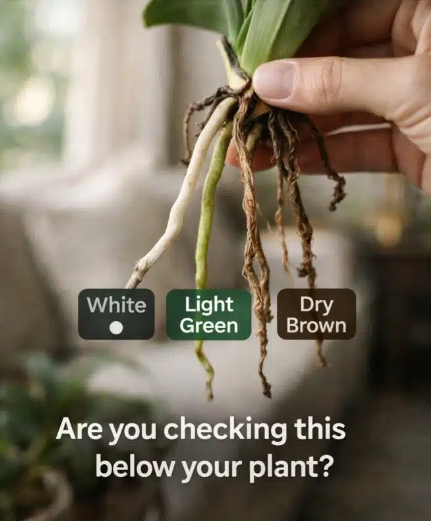
🌿 What Orchid Root Colors Mean: How to Tell If Your Orchid Is Healthy, Thirsty, or in Trouble
🌼 Page 1: Reading the Language of Orchid Roots
🌼 Introduction: The Secret Life Beneath the Pot
Orchids are admired for their graceful blooms, but the true story of their health is written below the surface—in their roots. For indoor gardeners, especially those styling orchids in refined living spaces, understanding root color is one of the most valuable skills you can develop.
Unlike many houseplants, orchids communicate clearly through their roots. Their color changes are not random—they are signals. Signals that tell you when the plant is hydrated, when it needs attention, and when something is going wrong.
Once you learn to “read” these signals, orchid care becomes less about guesswork and more about observation and precision.
🌼 Why Orchid Roots Are Different
🍃 The Velamen Layer: Nature’s Smart Design
Orchid roots are covered in a spongy outer layer called velamen. This structure allows them to:
- Absorb water quickly
- Store moisture temporarily
- Reflect light and prevent damage
- Exchange oxygen with the air
Because of this, orchid roots are visible indicators of internal health. Their color shifts depending on hydration, light, and overall condition.
🍃 Why Root Color Matters More Than Soil
In traditional plants, soil moisture is the main indicator of watering needs. With orchids, the roots themselves provide more accurate information.
This is especially important in interior design settings, where orchids are often displayed in decorative containers. Even when the pot hides the medium, exposed aerial roots still reveal the plant’s condition.
🌼 Healthy Orchid Root Colors
🍃 Bright Green: Fully Hydrated and Active
When orchid roots appear vibrant green, it means:
- They have recently absorbed water
- Cells are fully hydrated
- The plant is actively functioning
This is the ideal state after watering.
Green roots indicate that the plant is:
- Receiving sufficient moisture
- Able to transport nutrients effectively
- In a stable, healthy condition
🍃 Silvery Gray: Normal and Thirsty
When roots turn silvery or pale gray, they are not unhealthy—they are simply dry.
This color means:
- The velamen has lost surface moisture
- The plant is ready for watering
- Oxygen exchange is active
This is the perfect moment to water your orchid.
Many beginners mistakenly water too early, but waiting until roots reach this silvery stage helps maintain proper balance.
🌼 Warning Colors: Early Signs of Trouble
🍃 Yellowish Roots: A Subtle Warning
If roots begin to look yellow rather than green or silver, it may indicate:
- Too much light exposure
- Nutrient imbalance
- Early stress
While not immediately dangerous, this is a signal to reassess care conditions.
🍃 Light Brown or Tan: Aging or Mild Stress
Some older roots naturally darken over time. However, widespread browning may suggest:
- Inconsistent watering
- Beginning stages of root decline
At this stage, intervention can still restore health.
🌼 Serious Warning Signs
🍃 Dark Brown or Black: Root Rot
Dark, mushy roots are a clear sign of root rot.
This happens when:
- Roots sit in excess moisture
- Airflow is limited
- The potting medium stays wet too long
Affected roots often:
- Feel soft or hollow
- Emit an unpleasant smell
- Collapse when touched
Immediate action is required to prevent further damage.
🍃 White and Crispy: Severe Dehydration
If roots appear dry, brittle, and lifeless, the plant may be severely dehydrated.
This can result from:
- Prolonged lack of watering
- Extremely dry air
- Damaged root systems
In this case, recovery is possible but requires careful rehydration.
🌼 The Balance Between Water and Air
🍃 Why Color Changes Happen
Root color is directly linked to moisture levels.
- Green = hydrated
- Silver = dry
- Dark = overwatered or damaged
This dynamic system allows gardeners to fine-tune their care routines.
🍃 The Importance of Airflow
Orchid roots need oxygen as much as water.
Without proper airflow:
- Roots suffocate
- Rot develops quickly
- Nutrient absorption stops
This is why breathable pots and well-draining media are essential.
🌼 Orchids in Interior Design: Beauty Rooted in Health
🍃 A Visual Statement
Orchids are often placed in:
- Living rooms as focal points
- Kitchen counters for freshness
- Bathroom windows for humidity
- Office desks for elegance
Their clean lines complement modern and minimalist interiors.
🍃 Why Root Health Affects Aesthetics
Healthy roots lead to:
- Firm leaves
- Balanced growth
- Symmetrical blooms
In design-focused environments, this translates to a plant that looks intentional and refined.
🌼 Real Estate Staging and Plant Perception
🍃 Orchids as a Styling Tool
In home staging, orchids are used to:
- Add life to neutral spaces
- Highlight natural light
- Create calm, welcoming atmospheres
🍃 The Hidden Message of Healthy Plants
Buyers may not consciously analyze plants, but they notice them.
Healthy orchids suggest:
- Care and maintenance
- Attention to detail
- A well-managed home
Unhealthy ones can subtly signal neglect.
🌼 Placement and Light Influence Root Color
🍃 Living Room Placement
Creates a sophisticated focal point while providing stable lighting conditions.
🍃 Kitchen Placement
Adds freshness but requires attention to heat and humidity.
🍃 Bathroom Placement
Supports hydration due to higher humidity, often benefiting root health.
🍃 Entryway Placement
Offers a welcoming impression but must still provide adequate light.
🌼 A Deeper Insight: Roots as Indicators of Everything
At this point, a powerful realization emerges.
Root color is not just about watering—it reflects the entire environment:
- Light quality
- Humidity levels
- Air circulation
- Feeding practices
Each color shift is a response to these factors.
So the question becomes: how can you use this knowledge not just to react—but to proactively create the ideal conditions for your orchid?