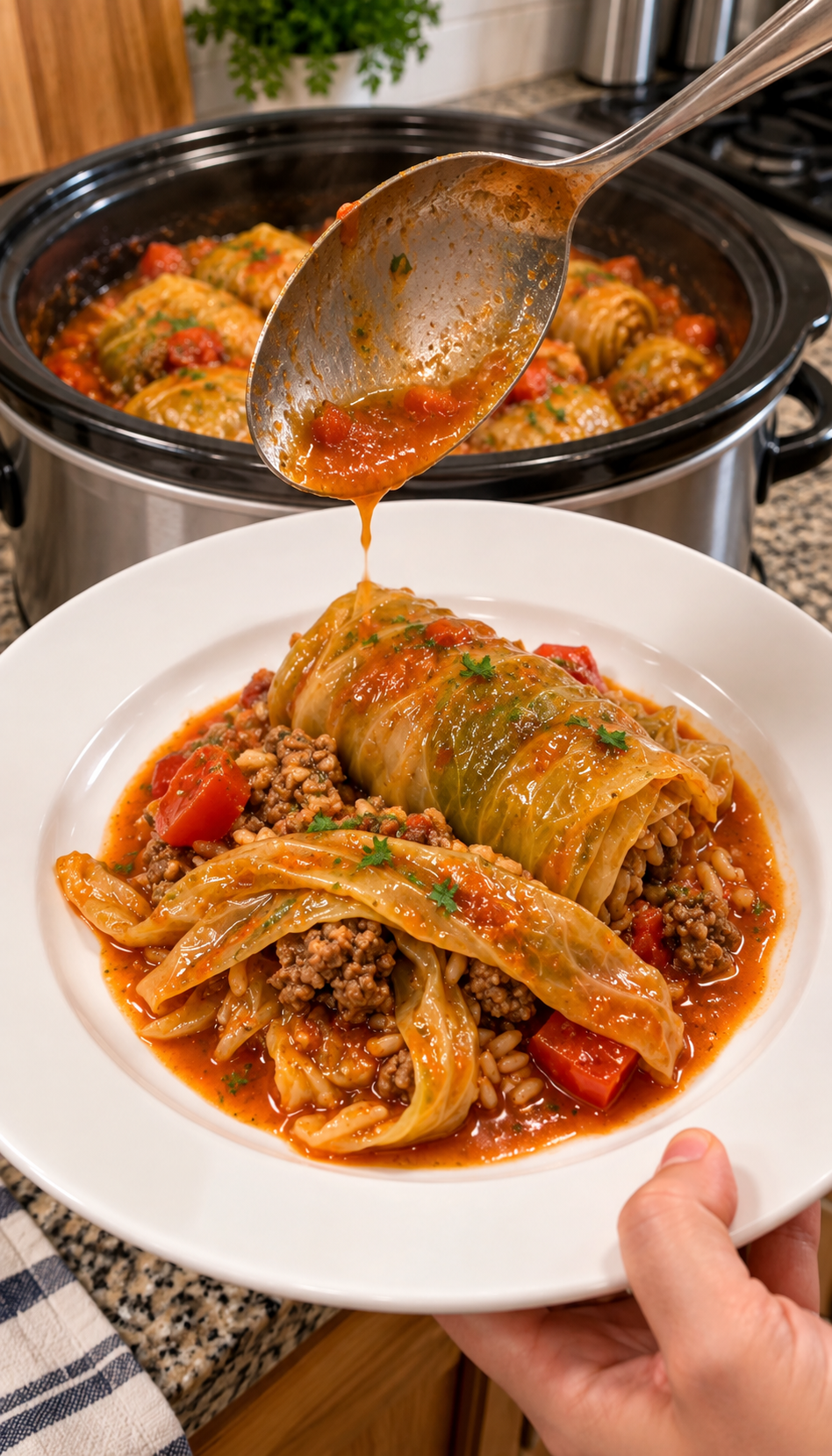
These Slow Cooker Stuffed Cabbage Rolls combine tender cabbage leaves with a savory ground beef and rice filling, all slowly cooked in a rich tomato sauce. The slow cooker does most of the work, giving the cabbage plenty of time to soften while the filling becomes juicy and flavorful.
It’s classic cold-weather comfort food and a great option when you want a filling family dinner that can cook gently for hours without needing constant attention.
Why You’ll Love These Cabbage Rolls
- Tender cabbage with savory beef filling
- Easy slow-cooker method
- Excellent family dinner
- Budget-friendly ingredients
- Great for meal prep
- Freezer-friendly
- Can be assembled ahead
- Rich homemade tomato sauce
- Easy to customize with different meats or grains
Ingredients
For the Cabbage Rolls
- 1 large green cabbage
- 1½ pounds lean ground beef
- 1 cup cooked white rice, cooled
- 1 small yellow onion, finely diced
- 3 garlic cloves, minced
- 1 large egg
- 1 tablespoon Worcestershire sauce
- 1 teaspoon paprika
- 1 teaspoon dried parsley
- ½ teaspoon garlic powder
- ½ teaspoon onion powder
- ½ teaspoon black pepper
- ¾ teaspoon salt
For the Tomato Sauce
- 1 can crushed tomatoes, 28 ounces
- 1 can tomato sauce, 15 ounces
- 2 tablespoons tomato paste
- 1 tablespoon brown sugar, optional
- 1 tablespoon Worcestershire sauce
- 1 teaspoon Italian seasoning
- ½ teaspoon paprika
- ½ teaspoon garlic powder
- ¼ teaspoon black pepper
- Salt, to taste
Optional Garnishes
- Fresh parsley
- Sour cream
- Cracked black pepper
What Are Stuffed Cabbage Rolls?
Stuffed cabbage rolls are made by wrapping softened cabbage leaves around a seasoned meat-and-grain filling.
Many cuisines have their own versions, with different combinations of meat, rice, seasonings, and sauces.
This version uses ground beef and cooked rice with a tomato-based sauce and is designed specifically for the slow cooker.
Why Use a Slow Cooker?
Cabbage benefits from long, gentle cooking.
As the rolls cook, the leaves become tender while the tomato sauce penetrates the filling.
The slow cooker is also convenient because you can assemble everything earlier and let it cook with relatively little hands-on work.
How to Prepare the Cabbage
Step 1: Remove the Core
Remove any damaged outer leaves.
Using a sharp knife, carefully cut around and remove the tough cabbage core.
Step 2: Soften the Leaves
Bring a large pot of water to a gentle boil.
Carefully lower the cabbage into the water.
As the outer leaves soften, remove them individually with kitchen tongs.
Usually, each layer needs only a few minutes before becoming flexible.
Step 3: Continue Removing Leaves
Continue until you have approximately 12–16 usable cabbage leaves.
Set them aside to cool.
Step 4: Trim the Thick Rib
Lay each leaf flat.
Use a small knife to carefully shave down the thick center rib without cutting completely through the leaf.
This makes rolling much easier.
Make the Beef and Rice Filling
Step 5: Combine the Ingredients
In a large bowl, combine:
- Ground beef
- Cooked rice
- Onion
- Garlic
- Egg
- Worcestershire sauce
- Paprika
- Parsley
- Garlic powder
- Onion powder
- Black pepper
- Salt
Mix gently.
Don’t aggressively compact the meat.
Why Use Cooked Rice?
Cooked rice gives you much better control over the amount of liquid inside the slow cooker.
Raw rice absorbs liquid as it cooks and can produce unpredictable results depending on the rice variety and slow cooker.
Using cooked, cooled rice makes this recipe more reliable.
Make the Tomato Sauce
In another bowl, combine:
- Crushed tomatoes
- Tomato sauce
- Tomato paste
- Worcestershire sauce
- Italian seasoning
- Paprika
- Garlic powder
- Black pepper
- Optional brown sugar
Taste the sauce and adjust the seasoning.
Remember that the meat filling is still raw, so keep utensils that contact it separate from anything you’ll taste.
How to Roll Stuffed Cabbage
Step 6: Position the Leaf
Place one cabbage leaf on a clean work surface with the stem end toward you.
Step 7: Add Filling
Place approximately ⅓ cup filling near the bottom of the leaf.
The exact amount depends on the size of the leaf.
Don’t overfill it.
Step 8: Fold
Fold the bottom of the cabbage over the filling.
Fold both sides inward.
Step 9: Roll
Roll forward into a neat package.
Place seam-side down.
Repeat with the remaining leaves.
Assemble the Slow Cooker
Step 10: Add Sauce
Spread a thin layer of tomato sauce over the bottom of the slow cooker.
This helps prevent sticking.
Step 11: Add Cabbage Rolls
Arrange the rolls seam-side down.
Fit them snugly together without crushing them.
If necessary, create a second layer.
Step 12: Add More Sauce
Spoon tomato sauce over the first layer before adding another layer of cabbage rolls.
Finish with the remaining sauce.
Step 13: Slow Cook
Cover and cook approximately:
LOW: 6–8 hours
or
HIGH: 3–4 hours
Slow cookers vary considerably, so these are ranges rather than guarantees.
The cabbage should be very tender and the filling thoroughly cooked.
Step 14: Check Doneness
Because the filling contains ground beef, verify that the center of the rolls reaches at least 160°F (71°C).
Insert an instant-read thermometer into the center of a large roll.
Step 15: Rest
Once cooked, turn off the slow cooker.
Let the cabbage rolls rest for approximately 10–15 minutes.
The sauce will settle slightly and the rolls become easier to serve.
Step 16: Serve
Spoon some tomato sauce into a shallow bowl or plate.
Add cabbage rolls.
Finish with parsley and, if desired, a spoonful of sour cream.
🌿 END OF PART 1 🌿
🌿 START OF PART 2 🌿
The Secret to Tender Cabbage Rolls That Don’t Fall Apart
The biggest difference between beautiful cabbage rolls and broken ones is proper leaf preparation.
The leaves need to be:
soft enough to bend but strong enough to hold the filling.
If they’re undercooked, they’ll crack when rolled.
If they’re cooked until extremely soft before filling, they can tear.
Don’t Skip Trimming the Thick Cabbage Rib
The center rib is much thicker than the rest of the leaf.
Trying to roll around it often causes cracking.
Shave some thickness from the rib while keeping the leaf intact.
You’ll immediately notice how much easier it becomes to roll.
An Easier Freezer Method for Softening Cabbage
There’s another technique some cooks prefer.
Freeze the whole cabbage, then thaw it completely in the refrigerator.
Freezing damages the cabbage’s cellular structure and makes the leaves softer and more flexible.
This method takes much longer but eliminates the large pot of boiling water.
For same-day cooking, blanching is faster.
Can You Microwave the Cabbage?
Yes.
Place a cored cabbage in a microwave-safe dish with a small amount of water.
Cover appropriately and microwave in stages, carefully removing softened outer leaves.
Because microwave power varies, check frequently rather than relying on one exact cooking time.
Best Cabbage for Cabbage Rolls
Green cabbage is the classic and easiest option.
Choose a head that feels firm and heavy.
Larger heads generally provide more leaves suitable for rolling.
Green vs. Savoy Cabbage
| Cabbage | Texture | Flavor | Rolling |
| Green | Firm | Classic | Very good after blanching |
| Savoy | Tender | Mild | Excellent |
| Napa | Very tender | Mild | More delicate |
| Red | Firm | Stronger | Less traditional |
Savoy cabbage is particularly easy to roll because its leaves are naturally flexible.
How Much Filling Should You Add?
It depends on the leaf.
Large outer leaves can handle approximately ⅓ cup.
Smaller leaves need less.
Overstuffing causes rolls to burst.
A slightly smaller, tightly wrapped roll is usually better than an oversized one.
Why Add an Egg?
The egg helps bind the beef and rice mixture.
It makes the cooked filling hold together more easily when you cut into a cabbage roll.
Why Rice Works So Well
Rice stretches the beef, absorbs flavor, and gives the filling a softer texture.
It also makes this an economical meal because you don’t need meat in every part of the filling.
White Rice vs. Brown Rice
Both work.
| Rice | Texture | Flavor | Preparation |
| White rice | Soft | Mild | Classic |
| Brown rice | Chewier | Nutty | Heartier |
| Jasmine | Soft | Aromatic | Flavorful variation |
| Cauliflower rice | Lighter | Vegetable-forward | Lower-carb variation |
For this recipe, use cooked rice rather than adding it raw.
Can You Use Ground Pork?
Yes.
A combination of beef and pork creates an especially flavorful filling.
Try:
- ¾ pound ground beef
- ¾ pound ground pork
Ground pork should also reach 160°F (71°C).
Can You Use Ground Turkey?
Absolutely.
Turkey makes a lighter-tasting version.
Because poultry is involved, cook the center of the filling to at least 165°F (74°C).
Can You Use Ground Chicken?
Yes.
Ground chicken works similarly to turkey.
Again, cook poultry fillings to 165°F (74°C).
Beef and Sausage Cabbage Rolls
For an especially savory version, replace part of the beef with raw Italian sausage.
If using pork or beef sausage, the filling should reach at least 160°F (71°C).
If using chicken or turkey sausage, use 165°F (74°C).
Don’t Pre-Cook the Ground Beef for This Version
The filling is designed to cook inside the cabbage.
Cooking the beef first can make the filling more crumbly and sometimes drier.
Use raw ground beef mixed with cooked rice and let everything cook together inside the rolls.
Why Tomato Paste Matters
Tomato paste adds concentrated tomato flavor and body.
Slow-cooker sauces can sometimes become thin because very little moisture evaporates under the lid.
Tomato paste helps create a richer sauce without requiring excessive reduction.
Should You Add Sugar?
Optional.
Some tomato sauces are naturally acidic.
A small amount of brown sugar can soften that acidity.
However, don’t automatically add a large amount.
Taste your sauce first.
Sweet-and-Sour Cabbage Rolls
For a sweeter traditional-inspired variation, add a little brown sugar and lemon juice to the tomato sauce.
Start conservatively and adjust to taste.
You want balance rather than dessert-level sweetness.
Garlic Tomato Cabbage Rolls
Increase the fresh garlic.
Add a little extra tomato paste and parsley.
This version is excellent if you prefer a stronger savory profile.
Spicy Cabbage Rolls
Add:
- Crushed red pepper
- Cayenne
- Hot paprika
You can also add a little hot sauce to the tomato mixture.
Italian-Inspired Cabbage Rolls
Season the filling with:
- Italian seasoning
- Garlic
- Parsley
Add a little Parmesan.
Use crushed tomatoes and finish the cooked rolls with fresh basil.
Cheesy Stuffed Cabbage Rolls
Cheese isn’t required, but it can be delicious.
Add a small amount of shredded mozzarella or cheddar inside each roll.
Alternatively, sprinkle cheese over the finished rolls shortly before serving.
Mushroom Cabbage Rolls
Finely chopped mushrooms can stretch the meat filling.
Cook them first so they release excess moisture.
Then cool before mixing with the beef.
Vegetable-Packed Cabbage Rolls
Add finely chopped:
- Carrots
- Mushrooms
- Bell peppers
- Celery
Sauté and cool the vegetables before mixing them into the raw meat filling.
Low-Carb Cabbage Rolls
Replace rice with finely chopped cauliflower.
For better texture, cook the cauliflower briefly and remove excess moisture before mixing.
The final filling will be different from traditional cabbage rolls but still flavorful.
Unstuffed Cabbage Roll Shortcut
Don’t feel like rolling individual leaves?
Turn the same ingredients into an unstuffed cabbage casserole.
Chop the cabbage and layer it with seasoned ground beef, cooked rice, and tomato sauce in the slow cooker.
This version is much faster to assemble.
Traditional Rolls vs. Unstuffed Version
| Version | Prep | Presentation | Best For |
| Stuffed rolls | Longer | Beautiful | Family dinner |
| Unstuffed | Quick | Rustic | Busy weekdays |
| Casserole | Moderate | Easy serving | Potlucks |
Why Is My Slow Cooker Sauce Watery?
Slow cookers trap steam.
Unlike an uncovered skillet or baking dish, very little water escapes.
Possible causes of watery sauce include:
- Very watery canned tomatoes
- Excess liquid added
- Wet vegetables
- Too much sauce
Avoid adding unnecessary broth or water.
How to Thicken the Sauce
If the rolls are done but the sauce seems thin, carefully transfer the sauce to a saucepan and simmer it separately until reduced.
Alternatively, remove the slow-cooker lid near the end if your appliance manufacturer permits that cooking method, though reduction will still be slower than on the stovetop.
Why Are My Cabbage Rolls Tough?
Usually the cabbage simply needs more cooking time.
The thickest portions take the longest to soften.
Also make sure you trimmed the thick center ribs before rolling.
Why Did My Rolls Fall Apart?
Common causes include:
- Leaves weren’t softened enough
- Leaves were torn
- Rolls were overfilled
- They were placed seam-side up
- They were handled too aggressively
Place them seam-side down and fit them snugly together.
Don’t Constantly Open the Slow Cooker
Every time you remove the lid, heat escapes.
Check toward the end rather than repeatedly opening the cooker during the first few hours.
What Size Slow Cooker Works Best?
A 6-quart slow cooker is convenient for a standard batch.
A slightly larger model also works.
If using a much smaller cooker, avoid packing the rolls too tightly or exceeding your appliance’s recommended fill level.
Slow Cooker vs. Oven
| Method | Texture | Convenience | Sauce |
| Slow cooker | Very tender | Excellent | Saucy |
| Oven | Tender | Moderate | More reduced |
| Stovetop | Tender | More attention | Easy to adjust |
The slow cooker is ideal when convenience and tender cabbage are priorities.
What to Serve with Stuffed Cabbage Rolls
These rolls are already substantial because they contain beef, rice, vegetables, and sauce.
Good sides include:
- Mashed potatoes
- Roasted potatoes
- Crusty bread
- Dinner rolls
- Green beans
- Cucumber salad
- Simple garden salad
Mashed Potatoes
Mashed potatoes are excellent with the tomato sauce.
Spoon extra sauce from the slow cooker over the potatoes.
Crusty Bread
A thick slice of crusty bread is another simple option.
It’s especially useful for soaking up the tomato sauce.
Sour Cream
A spoonful of cool sour cream provides a creamy contrast to the warm tomato sauce.
Greek yogurt can also work if you prefer.
Make-Ahead Cabbage Rolls
This recipe is excellent for advance preparation.
You can prepare the rolls the evening before.
Arrange them in the slow-cooker insert if your manufacturer permits refrigerated-insert preparation, or store them in a separate covered container.
Keep refrigerated.
Add sauce and begin cooking the next day.
Never leave raw meat filling sitting at room temperature for extended periods.
Meal Prep
Cook the full batch.
Cool leftovers promptly.
Divide into airtight meal-prep containers with extra tomato sauce.
One or two rolls per container can make a convenient lunch depending on their size.
How to Store Leftovers
Refrigerate leftovers promptly in airtight containers.
For best quality, enjoy within approximately 3–4 days.
How to Reheat
Microwave
Place cabbage rolls in a microwave-safe dish with some sauce.
Cover loosely and heat until thoroughly hot.
Stovetop
Place the rolls and sauce in a covered saucepan.
Warm gently over medium-low heat.
Oven
Arrange in a covered baking dish with sauce and reheat until hot.
Adding sauce helps prevent the cabbage from drying.
Can You Freeze Stuffed Cabbage Rolls?
Yes.
Cabbage rolls are excellent freezer meals.
Cool them completely first.
Pack them with some sauce in freezer-safe containers.
Freeze Individual Portions
For easier meal prep, freeze two rolls with sauce in each container.
Then you only need to thaw the amount you plan to eat.
How to Thaw
For the best texture, thaw frozen cabbage rolls overnight in the refrigerator.
Then reheat thoroughly.
Can You Freeze Them Before Cooking?
You can prepare and freeze cabbage rolls before cooking, but handling raw meat requires careful temperature control.
For most home cooks, cooking the complete batch first and freezing cooked portions is the simpler approach.
How to Make Cabbage Rolls for a Crowd
Double the recipe and use two slow cookers rather than dramatically overfilling one appliance.
This works well for:
- Family gatherings
- Potlucks
- Sunday dinners
- Holiday meals
Budget-Friendly Tips
Stuffed cabbage rolls are naturally economical.
To reduce the cost further:
- Buy ground beef on sale
- Use store-brand canned tomatoes
- Increase the cooked rice slightly
- Add sautéed mushrooms
- Use seasonal cabbage
- Freeze leftovers rather than wasting them
Cabbage and rice help stretch 1½ pounds of beef into multiple generous servings.
Useful Kitchen Tools
Helpful equipment includes:
- 6-quart slow cooker
- Large stockpot
- Sharp chef’s knife
- Cutting board
- Large mixing bowl
- Kitchen tongs
- Measuring cups
- Measuring spoons
- Silicone spatula
- Instant-read meat thermometer
- Airtight meal-prep containers
A reliable instant-read thermometer is particularly useful because it lets you check the center of the meat filling without guessing.
Common Mistakes to Avoid
Not Softening the Cabbage Enough
The leaves will crack while rolling.
Overcooking the Leaves Before Rolling
They can become fragile and tear.
Leaving the Thick Rib Intact
It makes tight rolling difficult.
Overfilling
The rolls can burst.
Using Raw Rice Without Adjusting the Recipe
This version is designed for cooked rice.
Adding Too Much Liquid
Slow cookers don’t evaporate much moisture.
Placing Rolls Seam-Side Up
They can unfold more easily.
Assuming Cook Time Alone Means They’re Done
Check the center of the meat filling with a thermometer.
Using the Same Utensil for Raw Meat and Tasting Sauce
Keep raw-meat utensils separate.
Frequently Asked Questions
What cabbage is best for stuffed cabbage rolls?
Large green cabbage is the classic choice. Savoy cabbage is another excellent option because its leaves are flexible.
Should the ground beef be cooked first?
Not for this recipe. The raw beef cooks inside the cabbage rolls.
Should the rice be cooked first?
Yes. This version uses cooked, cooled rice for more predictable results.
What temperature should the beef filling reach?
Ground beef should reach at least 160°F (71°C).
Can I use ground turkey?
Yes. Poultry fillings should reach 165°F (74°C).
Why are my cabbage leaves tough?
They may need additional cooking or the thick center ribs may not have been trimmed enough.
Can I prepare the rolls ahead?
Yes. Keep them refrigerated and cook them the following day.
Can I freeze leftovers?
Absolutely. Freeze them with some tomato sauce for better moisture.
Can I make them without rice?
Yes. Try cooked cauliflower rice or increase the meat and vegetables.
Can I make an unstuffed version?
Yes. Chop the cabbage and layer everything instead of rolling individual leaves.
Final Thoughts
These Slow Cooker Stuffed Cabbage Rolls turn simple ingredients—cabbage, ground beef, rice, tomatoes, onion, and garlic—into a hearty comfort-food dinner with plenty of homemade flavor.
The biggest secrets are to soften the cabbage leaves before rolling, trim the thick ribs, use cooked rice, avoid overfilling the rolls, and arrange them seam-side down beneath plenty of tomato sauce.
Then let the slow cooker handle the rest.
After several hours of gentle cooking, you’ll have tender cabbage wrapped around savory beef and rice with rich tomato sauce in every bite—a classic family-style dinner that’s especially good when served with mashed potatoes, crusty bread, or a spoonful of sour cream.