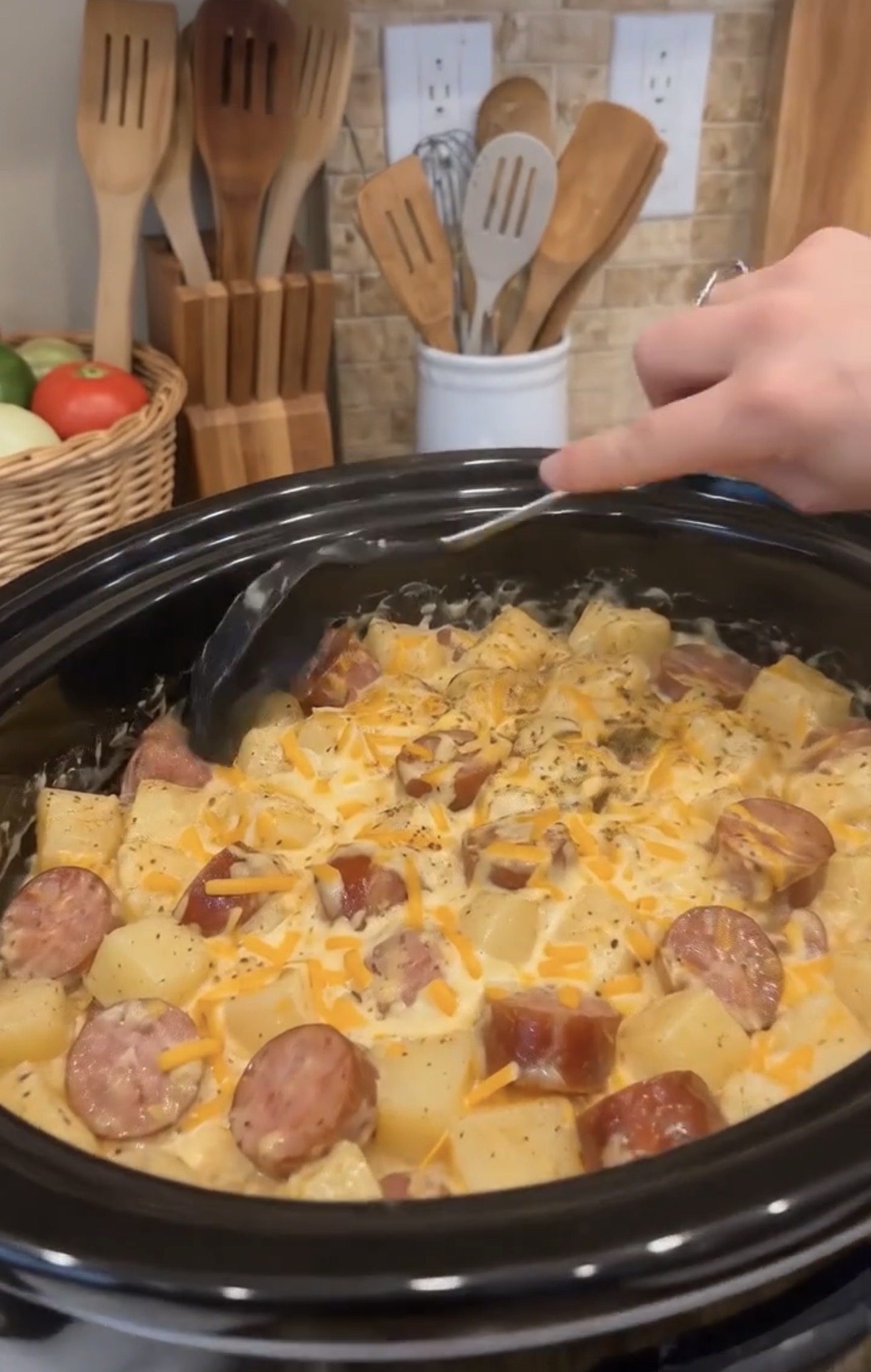
Few slow-cooker dinners are as satisfying as Cheesy Sausage & Potatoes. Tender potatoes, smoky sausage, and a creamy cheese sauce cook together into a hearty meal that requires very little hands-on work.
The combination is simple:
Smoked Sausage • Tender Potatoes • Melted Cheese
It’s an excellent choice for busy weeknights, cold-weather dinners, game day, potlucks, or weekends when you want something comforting without spending the evening standing over the stove.
Why You’ll Love This Recipe
- Easy slow-cooker preparation
- Creamy, cheesy sauce
- Hearty smoked sausage
- Tender potatoes
- Family-friendly ingredients
- Minimal prep
- Great for potlucks
- Easy to customize
- Reheats well
- Works as a main dish or substantial side
Ingredients
Main Ingredients
- 2 pounds Yukon Gold or red potatoes, cut into 1-inch pieces
- 14 ounces fully cooked smoked sausage, sliced
- 2 cups freshly shredded sharp cheddar cheese, divided
For the Creamy Sauce
- 1 can (10.5 ounces) condensed cream of chicken soup
- ½ cup sour cream
- ½ cup low-sodium chicken broth
- 1 small yellow onion, finely diced
- 2 garlic cloves, minced
- 1 teaspoon smoked paprika
- ½ teaspoon garlic powder
- ½ teaspoon onion powder
- ½ teaspoon black pepper
- Salt, to taste
Optional Finishing Ingredients
- 2 green onions, sliced
- Fresh parsley
- Cracked black pepper
- Extra shredded cheddar
- Cooked crumbled bacon
Best Potatoes for the Slow Cooker
Yukon Gold potatoes are an excellent choice because they become tender and creamy while generally maintaining their shape.
Red potatoes are another good option.
Russets can work, but they’re starchier and tend to break down more easily during extended cooking.
Try to cut all the potatoes into approximately the same size.
Uniform pieces cook much more evenly.
What Kind of Sausage Should You Use?
Fully cooked smoked sausage keeps this recipe especially convenient.
Good options include:
- Kielbasa
- Smoked beef sausage
- Smoked pork sausage
- Turkey smoked sausage
- Fully cooked chicken sausage
Check the package to determine whether your sausage is fully cooked or raw, because raw sausage requires different food-safety handling.
Should You Brown the Sausage First?
You don’t have to brown fully cooked smoked sausage before adding it to the slow cooker.
However, browning it can improve the finished dish.
A hot skillet creates caramelized edges and deeper savory flavor.
If you have an extra 5–7 minutes, it’s worthwhile.
Step 1: Prepare the Potatoes
Wash the potatoes thoroughly.
Peel them if desired, although Yukon Gold and red potato skins are thin enough to leave on.
Cut into roughly 1-inch pieces.
Avoid very large chunks because they’ll take longer to become tender.
Step 2: Slice the Sausage
Cut the sausage into approximately ½-inch rounds.
For more browned surface area, cut the sausage slightly on the diagonal.
Step 3: Optional Browning
Heat a skillet over medium-high heat.
Add the sausage in a single layer.
Cook briefly until browned around the edges.
Transfer to a plate.
Step 4: Make the Creamy Sauce
In a mixing bowl, combine:
- Cream of chicken soup
- Sour cream
- Chicken broth
- Onion
- Garlic
- Smoked paprika
- Garlic powder
- Onion powder
- Black pepper
Stir until relatively smooth.
Don’t add much salt yet.
Smoked sausage, condensed soup, broth, and cheese can all contribute significant sodium.
Step 5: Load the Slow Cooker
Lightly grease the inside of a 6-quart slow cooker.
Add the potatoes.
Add the sliced sausage.
Pour the creamy sauce over everything.
Stir gently until the potatoes are coated.
Step 6: Slow Cook
Cover.
Cook approximately:
LOW: 5–7 hours
or
HIGH: 2½–4 hours
These are ranges rather than guarantees. Slow cookers vary considerably.
The dish is ready for the next step when the potatoes are easily pierced with a fork.
Avoid repeatedly removing the lid because this releases heat.
Step 7: Add the Cheese
Once the potatoes are tender, stir in approximately 1½ cups shredded cheddar.
Sprinkle the remaining ½ cup over the top.
Cover again.
Cook another 10–20 minutes, just until the cheese melts.
Why Add Cheese Near the End?
Cheese doesn’t need several hours in the slow cooker.
Extended high-temperature cooking can make some cheeses:
- Oily
- Grainy
- Separated
Adding cheddar toward the end gives you a smoother, fresher cheese flavor.
Step 8: Check the Consistency
If the sauce is too thick, stir in a small splash of warm chicken broth.
If it seems thinner than you’d like, leave the lid slightly ajar for a short period while the slow cooker remains hot, if your appliance manufacturer allows it.
The sauce will also thicken somewhat as the dish rests.
Step 9: Finish
Top with:
- Green onions
- Parsley
- Cracked pepper
- Extra cheddar
For an especially indulgent version, add crispy bacon.
Step 10: Serve
Spoon into warm bowls while the cheese is creamy.
Serve as-is or add a simple vegetable or salad on the side.
How to Make the Best Cheesy Sausage & Potatoes
This recipe is forgiving, but several small details can make the difference between a good slow-cooker dinner and a great one.
The most important are:
Use evenly sized potatoes.
Don’t add excessive liquid.
Choose a flavorful fully cooked sausage.
Wait until the potatoes are tender before adding most of the cheese.
Yukon Gold vs. Red vs. Russet Potatoes
| Potato | Texture | Holds Shape | Best For |
| Yukon Gold | Creamy | Excellent | Best all-around choice |
| Red potatoes | Firm, creamy | Excellent | Chunkier texture |
| Russet | Soft, starchy | Moderate | Thicker, softer dish |
| Baby potatoes | Creamy | Excellent | Minimal preparation |
Yukon Gold is my favorite for this recipe because it gives you a naturally buttery texture without completely disappearing into the sauce.
Should You Peel the Potatoes?
Not necessarily.
Leaving thin potato skins on:
- Saves preparation time
- Adds texture
- Helps pieces maintain their shape
If you prefer an especially smooth, creamy result, peel them.
Why Potato Size Matters
Imagine one potato piece is ½ inch and another is 2 inches.
The smaller piece could become extremely soft before the larger one finishes cooking.
Aim for approximately 1-inch pieces throughout.
A sharp chef’s knife makes this considerably easier.
The Sausage Makes a Big Difference
Because sausage is one of the three primary ingredients, choose one you genuinely enjoy.
Smoked sausage provides a deep savory flavor without requiring many additional seasonings.
Kielbasa gives the recipe a classic smoky character.
Beef Smoked Sausage
Beef sausage creates a robust flavor that stands up well to sharp cheddar.
It can be particularly good with smoked paprika and caramelized onions.
Turkey Sausage
Turkey smoked sausage can make the dish somewhat lighter while retaining the convenient fully cooked format.
Check labels because brands differ considerably in sodium and fat.
Chicken Sausage
Fully cooked chicken sausage also works.
Garlic, herb, or mild varieties are especially compatible with potatoes and cheddar.
Raw Sausage Requires Different Handling
Don’t assume every sausage package is ready to eat.
If using raw pork or beef sausage, it needs to reach 160°F (71°C).
Raw chicken or turkey sausage should reach 165°F (74°C).
Follow package directions and verify doneness with an instant-read thermometer.
Why Browning Sausage Is Worth It
Slow cookers are excellent at gentle, moist cooking, but they don’t brown food effectively.
A skillet does.
Browning sausage before slow cooking creates:
- Caramelized edges
- Deeper flavor
- Better texture
- More attractive pieces
It’s optional, but useful when you have time.
Sharp Cheddar vs. Mild Cheddar
Sharp cheddar gives you more cheese flavor without requiring an enormous quantity.
Mild cheddar produces a softer flavor that children may prefer.
Freshly Shredded Cheese
When possible, shred cheddar directly from a block.
Pre-shredded cheese is convenient, but it often contains ingredients designed to prevent the shreds from clumping together.
Freshly grated cheese generally melts more smoothly.
Cheese Options
You don’t have to use only cheddar.
Try:
Cheddar + Monterey Jack
for a creamy melt.
Or:
Cheddar + Pepper Jack
for a little heat.
Other possibilities include:
- Colby Jack
- Gouda
- Mozzarella
- Provolone
Extra-Cheesy Version
Increase the total cheese slightly and use a combination of sharp cheddar and Monterey Jack.
Avoid adding all that cheese at the beginning.
Stir most of it in only after the potatoes are tender.
Loaded Baked Potato Version
Turn the recipe into a loaded-potato-inspired dinner.
Finish with:
- Cheddar
- Crispy bacon
- Sour cream
- Green onions
- Black pepper
Serve additional sour cream at the table.
Bacon Cheddar Sausage & Potatoes
Cook bacon separately until crisp.
Drain thoroughly.
Crumble it over the finished dish.
Adding bacon at the end keeps it crisp rather than allowing it to soften for hours in the slow cooker.
Garlic Parmesan Version
Reduce the cheddar slightly.
Add freshly grated Parmesan near the end along with extra garlic.
Finish with parsley.
Spicy Sausage & Potatoes
Use a spicy smoked sausage.
Add:
- Pepper Jack
- Crushed red pepper
- Jalapeños
- Cajun seasoning
Be careful with salt when using Cajun seasoning.
Cajun-Inspired Version
Use smoked sausage with:
- Cajun seasoning
- Bell peppers
- Onion
- Garlic
- Pepper Jack or cheddar
Start with a modest amount of seasoning and adjust after cooking.
Ranch Cheesy Sausage & Potatoes
Add a small amount of ranch seasoning to the creamy sauce.
Finish with cheddar and green onions.
Again, watch the sodium because sausage, cheese, soup, and ranch seasoning can all be salty.
Broccoli Cheddar Version
Add broccoli toward the end rather than at the beginning.
This helps preserve its color and texture.
Cook until tender, then add the cheese.
Green Bean Version
Green beans provide a nice contrast to the rich potatoes.
Fresh or frozen green beans can be incorporated depending on the texture you prefer.
Bell Pepper & Onion Version
Add diced red and green bell peppers.
They complement smoked sausage particularly well.
For a softer result, add them at the beginning.
For more texture, add them later.
Mushroom Version
For deeper savory flavor, brown sliced mushrooms in a skillet before adding them.
Cooking them first also removes excess moisture.
Cream of Chicken Soup
Condensed soup provides an easy creamy base and helps stabilize the sauce during slow cooking.
If you don’t want to use condensed soup, you can make a homemade creamy sauce.
Homemade Cream Sauce Alternative
Melt:
- 3 tablespoons butter
Whisk in:
- 3 tablespoons flour
Cook for about one minute.
Gradually whisk in:
- 1½ cups chicken broth
- ½ cup milk
Cook until lightly thickened.
Season with garlic powder, onion powder, pepper, and paprika.
Cool slightly before adding to the slow cooker.
This gives you greater control over salt and seasoning.
Why Sour Cream Works
Sour cream adds:
- Tanginess
- Richness
- Creaminess
It balances the smoky sausage and salty cheese.
For an even creamier finish, you can add a spoonful of sour cream just before serving.
Can You Use Cream Cheese?
Yes.
A few ounces of cream cheese added toward the end can make the sauce exceptionally rich.
Cut it into small cubes so it melts more evenly.
Don’t Add Too Much Liquid
Potatoes don’t need to be submerged.
The slow cooker traps moisture.
Sausage, onions, and other ingredients also release liquid as they cook.
Adding several cups of broth can turn what should be creamy potatoes into soup.
Start with the recipe amount.
You can always thin the finished sauce later.
What If the Sauce Is Too Thin?
Once the potatoes are completely tender, several options are available.
First, remember that adding cheese will naturally thicken the sauce.
You can also mash a few potato pieces directly into the sauce.
Their starch provides natural thickening.
What If the Sauce Is Too Thick?
Add warm broth or milk a few tablespoons at a time.
Stir gently.
Stop when the sauce reaches your preferred consistency.
Why Did My Cheese Become Oily?
Common causes include:
- Excessively high heat
- Cooking cheese for several hours
- Using a very oily cheese
- Overheating after the cheese is added
Add cheese near the end and heat only until melted.
Why Aren’t My Potatoes Tender?
Possible causes include:
- Pieces are too large
- Slow cooker runs cooler
- Lid was repeatedly opened
- Insufficient cooking time
Continue cooking until the potatoes are fork-tender.
Don’t simply follow the clock if the potatoes aren’t ready.
Why Are My Potatoes Mushy?
They likely cooked too long or were cut too small.
Russets also break down more readily than waxier potatoes.
Use Yukon Gold or red potatoes if maintaining distinct chunks is important.
LOW vs. HIGH
For many slow-cooker recipes, LOW tends to produce a more gradual result.
HIGH is useful when time is limited.
Because appliances vary, treat cooking times as ranges.
The real test here is potato tenderness.
Best Slow Cooker Size
A 6-quart slow cooker is ideal for the standard batch.
You want enough room for ingredients to cook comfortably without filling the appliance beyond the manufacturer’s recommended capacity.
Don’t Keep Opening the Lid
Every time you lift the lid, heat and steam escape.
Check only when necessary.
A slow cooker works best when allowed to maintain a stable cooking environment.
Can You Add Frozen Potatoes?
Frozen diced potatoes or hash brown-style potatoes can work in some variations, but they’ll change the texture and cooking time considerably.
For this particular chunky version, fresh Yukon Gold or red potatoes provide the best texture.
What to Serve with Cheesy Sausage & Potatoes
Because the main dish is rich, pair it with something fresh or green.
Good options include:
- Steamed broccoli
- Green beans
- Roasted Brussels sprouts
- Simple green salad
- Cucumber tomato salad
- Roasted asparagus
Turn It Into a Complete Bowl
Spoon sausage and potatoes into a bowl.
Add steamed broccoli.
Finish with green onions and black pepper.
You get creamy potatoes, smoky sausage, cheese, and vegetables in every serving.
Potluck Serving
This recipe is particularly convenient for potlucks because it can be served directly from the slow cooker.
Once everything is fully cooked, use the appliance’s warm setting according to manufacturer guidance rather than continuing to cook indefinitely.
Keep serving utensils nearby and place toppings separately.
Topping Bar
For gatherings, offer:
- Shredded cheddar
- Green onions
- Bacon
- Sour cream
- Jalapeños
- Parsley
- Cracked pepper
Guests can customize their bowls.
Make-Ahead Preparation
The night before, you can:
- Slice the sausage
- Dice the onion
- Measure the seasonings
- Shred the cheese
Potatoes are best cut closer to cooking unless they’re properly stored to prevent discoloration.
Meal Prep
Divide cooked sausage and potatoes into individual airtight containers.
Add a green vegetable on the side.
Store extra toppings separately.
This gives you easy lunches or dinners that can be reheated in portions.
Storing Leftovers
Cool leftovers promptly and refrigerate in airtight containers.
For best quality, use within approximately 3–4 days.
Reheating on the Stovetop
Place leftovers in a saucepan or skillet.
Add a small splash of milk or broth.
Warm gently over low to medium-low heat, stirring occasionally.
Microwave Reheating
Place an individual portion in a microwave-safe bowl.
Add a teaspoon or two of milk if the sauce has become very thick.
Heat in short intervals and stir between them.
Can You Freeze It?
You can, but potatoes and dairy-based sauces can change texture after freezing and thawing.
The dish is generally at its best fresh or refrigerated for short-term leftovers.
If freezing, use airtight freezer-safe containers and thaw in the refrigerator before reheating gently.
Doubling the Recipe
Don’t automatically double everything in the same slow cooker.
Slow cookers have maximum recommended capacities.
For a large crowd, two 6-quart slow cookers may provide more predictable results than severely overfilling one appliance.
Budget-Friendly Dinner
This recipe can stretch relatively modest ingredients into several generous servings.
Potatoes provide bulk.
Sausage contributes concentrated flavor.
Cheddar adds richness.
Serving a vegetable alongside creates a complete family meal without needing several expensive proteins.
Useful Kitchen Equipment
A few tools make preparation easier:
- 6-quart slow cooker
- Large skillet
- Chef’s knife
- Cutting board
- Cheese grater
- Mixing bowl
- Silicone spatula
- Measuring cups and spoons
- Instant-read thermometer when needed
- Airtight meal-prep containers
Common Mistakes to Avoid
Cutting Potatoes Too Large
They’ll take considerably longer to become tender.
Cutting Them Too Small
They can turn mushy.
Adding Too Much Broth
The finished sauce can become watery.
Adding All the Cheese at the Beginning
Long cooking can cause separation.
Using Too Much Salt Early
Sausage, soup, broth, and cheese already contribute sodium.
Constantly Opening the Lid
This releases heat.
Assuming All Sausage Is Fully Cooked
Always check the package.
Following Cook Time Instead of Checking Potatoes
The potatoes should determine when the dish is ready for cheese.
Frequently Asked Questions
What are the three main ingredients?
Smoked sausage, potatoes, and melted cheese.
What potatoes are best?
Yukon Gold and red potatoes are excellent because they become creamy while generally holding their shape.
Do I need to peel the potatoes?
No. It’s optional.
Should I brown the sausage?
It’s optional but recommended for deeper flavor.
Can I use kielbasa?
Yes. Fully cooked kielbasa is excellent in this recipe.
Can I use turkey sausage?
Absolutely.
Can I use chicken sausage?
Yes, provided you follow the package’s cooking and food-safety instructions.
When should I add the cheese?
Near the end, once the potatoes are tender.
Can I add bacon?
Yes. Cook it separately and sprinkle it over the finished dish for the best texture.
Can I add broccoli?
Yes. Add it later in the cooking process so it doesn’t become excessively soft.
Why is my sauce watery?
There may be too much liquid, or the potatoes and vegetables may have released more moisture than expected. Cheese and a few mashed potato pieces can help thicken it.
Why did my cheese separate?
It may have been cooked too long or at excessive heat.
What slow cooker size should I use?
A 6-quart slow cooker is a convenient size for this batch.
Final Thoughts
This Slow Cooker Cheesy Sausage & Potatoes recipe is built around a combination that’s difficult to resist:
Smoky Sausage • Tender Potatoes • Gooey Melted Cheese
The key is keeping the method simple. Cut the potatoes evenly, brown the sausage when you have time, avoid excessive liquid, let the potatoes become completely tender, and add the cheddar near the end so it stays creamy rather than cooking for hours.
Finish each bowl with green onions, cracked pepper, and a little extra cheese. Add crispy bacon for the loaded version or broccoli for an easy vegetable addition.
It’s warm, cheesy slow-cooker comfort food designed for the kind of dinner where everyone comes back looking for one more spoonful.