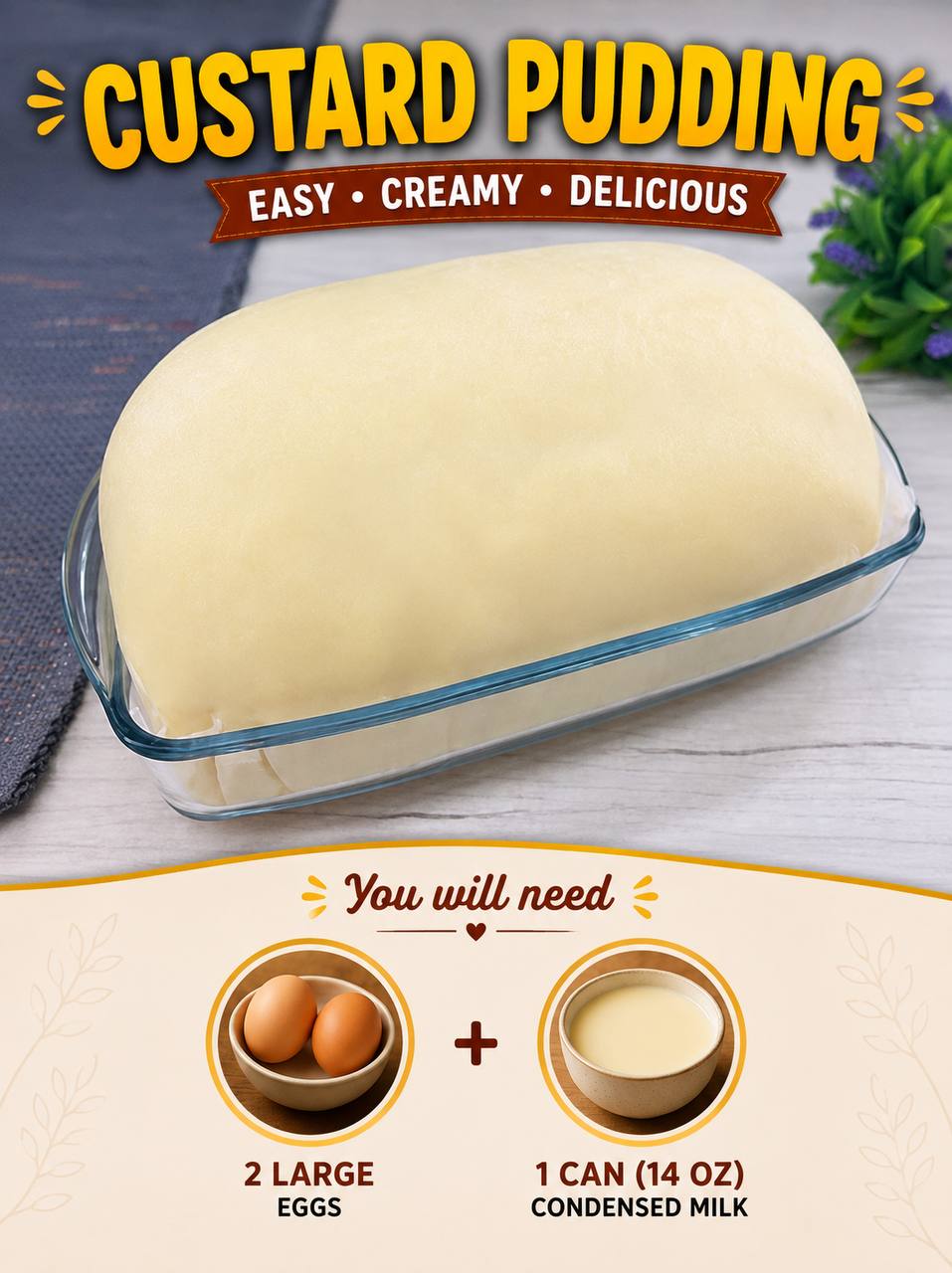
The Secret to Silky Custard
Custard texture depends heavily on temperature.
Eggs begin to set as they heat.
If the temperature rises gradually, the proteins form a smooth structure.
If they are exposed to excessive heat, they tighten too quickly.
That can produce a rubbery or grainy texture.
This is why a water bath is so useful.
Why Use a Water Bath?
A water bath surrounds the custard dish with warm water.
Water transfers heat more gently than the dry heat of the oven.
This helps protect the custard from sudden temperature changes.
A water bath can help create:
- Smoother texture
- More even cooking
- Fewer bubbles
- Less cracking
- Softer edges
It is one of the most useful techniques for baked custards and cheesecakes.
How to Avoid Bubbles in Custard
Bubbles can create small holes in the pudding.
For a smooth finish:
- Whisk gently
- Do not use a blender unless necessary
- Strain the mixture
- Remove surface foam
- Bake at moderate heat
- Use a water bath
If small bubbles appear on top before baking, skim them with a spoon.
Why Did My Custard Become Grainy?
The most likely cause is excessive heat.
Possible reasons include:
- Oven temperature too high
- Baking too long
- Water bath drying out
- Custard placed too close to a heating element
Bake gently and remove the pudding while the center still has a slight wobble.
It will continue setting as it cools.
How to Know When Custard Is Done
Do not wait until the center becomes completely firm.
A properly baked custard should jiggle slightly when the dish is moved.
Think of soft gelatin rather than liquid.
A knife inserted near the center should come out mostly clean.
Overbaking makes custard firmer and less creamy.
Vanilla Custard Pudding Variation
For a stronger vanilla flavor, add:
- Vanilla bean paste
- Seeds from a vanilla bean
- Extra vanilla extract
Vanilla bean paste also creates attractive tiny vanilla specks throughout the custard.
Coconut Custard Pudding
Replace part of the whole milk with coconut milk.
You can also add a small amount of shredded coconut.
Coconut pairs especially well with caramel.
For extra flavor, lightly toast coconut flakes and sprinkle them over the finished dessert.
Coffee Custard Pudding
Dissolve 1 to 2 teaspoons instant espresso powder in a small amount of warm milk.
Add it to the custard mixture.
Coffee balances the sweetness of condensed milk and creates a more grown-up dessert flavor.
Chocolate Custard Pudding
Add melted semisweet chocolate or sifted cocoa powder.
If using cocoa, whisk it thoroughly with a small amount of warm milk before adding it to the custard.
This helps prevent lumps.
Orange Custard Pudding
Fresh citrus can give the dessert a bright flavor.
Add a small amount of finely grated orange zest.
Avoid adding too much acidic juice because excessive acid can affect the texture of dairy-based custards.
Individual Custard Cups
Instead of making one large pudding, divide the mixture among ramekins.
Individual portions are excellent for:
- Dinner parties
- Birthdays
- Holiday meals
- Brunch
- Family gatherings
They also chill more quickly and are easier to serve.
Best Ramekins for Custard
Ceramic ramekins are a popular choice because they hold heat evenly and look attractive for individual desserts.
You can also use:
- Oven-safe glass dishes
- Small ceramic bowls
- Stainless steel molds
Make sure any container you use is rated for oven temperatures.
Can You Steam Custard Instead?
Yes.
Custard pudding can also be steamed.
Pour the mixture into a heatproof dish and cover loosely with foil.
Place it in a steamer over gently simmering water.
Steam until set.
Keep the heat moderate.
Aggressive boiling can create bubbles and an uneven texture.
Stovetop Steamed Custard
If you do not want to turn on the oven, a large covered pot can work.
Place a small rack or folded kitchen towel at the bottom.
Add enough water to produce steam without allowing the custard dish to float.
Cover and cook gently.
Check periodically.
Caramel Tips
Caramel is simple but requires attention.
Do Not Walk Away
Sugar can change from golden to burned very quickly.
Use a Light-Colored Pan
A stainless steel saucepan makes it easier to see the color.
Avoid Touching Hot Caramel
Melted sugar reaches extremely high temperatures.
Handle it carefully.
Do Not Overcook
Deep amber is ideal.
Very dark caramel may taste bitter.
What to Do If Caramel Hardens
Caramel will usually harden immediately after being poured into a cool dish.
Do not worry.
During baking and chilling, some of it will soften and become sauce.
When you invert the pudding, the caramel will flow over the custard.
Can You Skip the Caramel?
Absolutely.
The custard is delicious without it.
You can serve it with:
- Fresh berries
- Chocolate sauce
- Fruit compote
- Whipped cream
- Honey
- Maple syrup
Skipping the caramel also makes preparation even easier.
Make-Ahead Dessert
Custard pudding is excellent for entertaining because it should be chilled before serving.
You can make it the night before.
Keep it covered in the refrigerator.
Unmold shortly before serving.
This leaves more time to prepare the main meal.
How to Store Custard Pudding
Keep custard refrigerated in an airtight container or tightly covered dish.
Because it contains eggs and dairy, refrigeration is important.
For best quality, enjoy it within a few days.
Keep it chilled until close to serving time.
Can You Freeze Custard Pudding?
Freezing is generally not recommended.
Custard can release water and develop a grainy texture after freezing and thawing.
This dessert is best made fresh and stored in the refrigerator.
How to Get a Perfect Unmold
If the pudding does not release immediately:
- Run a thin knife around the edge.
- Dip the bottom of the dish briefly in warm water.
- Place a serving plate on top.
- Invert confidently.
Do not leave the dish in warm water too long because the custard can become too soft.
Best Toppings for Custard Pudding
Caramel is the classic choice, but you can also try:
- Strawberries
- Raspberries
- Blueberries
- Mango
- Whipped cream
- Chocolate curls
- Toasted coconut
- Chopped nuts
Fresh fruit provides a nice contrast to the creamy pudding.
Holiday Dessert Idea
Custard pudding is simple enough for everyday desserts but elegant enough for holidays.
It works especially well for:
- Easter
- Thanksgiving
- Christmas
- Mother’s Day
- Family celebrations
For a festive presentation, use individual ramekins and garnish each serving with berries.
Budget-Friendly Dessert
One advantage of custard pudding is the short ingredient list.
The main ingredients are common grocery staples:
- Eggs
- Milk
- Sweetened condensed milk
- Sugar
- Vanilla
Because the recipe does not require expensive specialty ingredients, it can be a practical dessert when cooking for a larger family.
Useful Kitchen Tools
Helpful kitchen equipment includes:
- Mixing bowls
- Whisk
- Fine-mesh strainer
- Measuring cups
- Measuring spoons
- Ramekins
- Baking dish
- Roasting pan
- Saucepan
- Silicone oven mitts
- Refrigerator storage containers
A fine-mesh strainer is particularly useful if you want an ultra-smooth texture.
Common Custard Mistakes
Beating the Eggs Too Aggressively
This creates excessive air.
Baking at High Heat
High temperatures can make the pudding grainy.
Skipping the Water Bath
You can bake without one, but the texture may be less even.
Overbaking
The center should still have a slight jiggle.
Cutting Into It Too Soon
Custard needs time to chill and fully set.
Using Hot Caramel Carelessly
Caramel can cause serious burns, so handle it with caution.
Frequently Asked Questions
Can I make custard pudding with only eggs and condensed milk?
You can make simplified versions, but adding milk creates a softer and more balanced custard texture.
Do I need to use whole milk?
Whole milk gives the richest result, but other milk varieties can work with texture differences.
Can I make it without caramel?
Yes. The caramel is optional.
Why does my custard have holes?
The temperature may have been too high, or too much air may have been incorporated into the mixture.
How long should custard chill?
At least 4 hours, although overnight is ideal.
Can I make it the day before?
Yes. It is an excellent make-ahead dessert.
Can I use ramekins?
Absolutely. Individual ramekins are convenient for serving.
Why is my custard still liquid?
It may need additional baking time. The edges should be set and the center should only jiggle slightly.
Can I use vanilla bean?
Yes. Vanilla bean or vanilla bean paste gives excellent flavor.
Should custard be served warm or cold?
This style of custard pudding is usually best served chilled.
Final Thoughts
Creamy Custard Pudding (Easy & Delicious) proves that a short ingredient list can create an impressive homemade dessert.
Eggs provide the delicate structure, sweetened condensed milk creates richness and sweetness, and whole milk gives the pudding its smooth, creamy consistency.
For the best results, mix gently, strain the custard, cook it slowly in a water bath, and avoid overbaking.
Once thoroughly chilled and topped with caramel, the pudding becomes silky, glossy, and easy to slice or spoon.
Serve it after dinner, prepare it ahead for a holiday gathering, or keep the recipe on hand whenever you want a simple creamy dessert made with everyday ingredients.