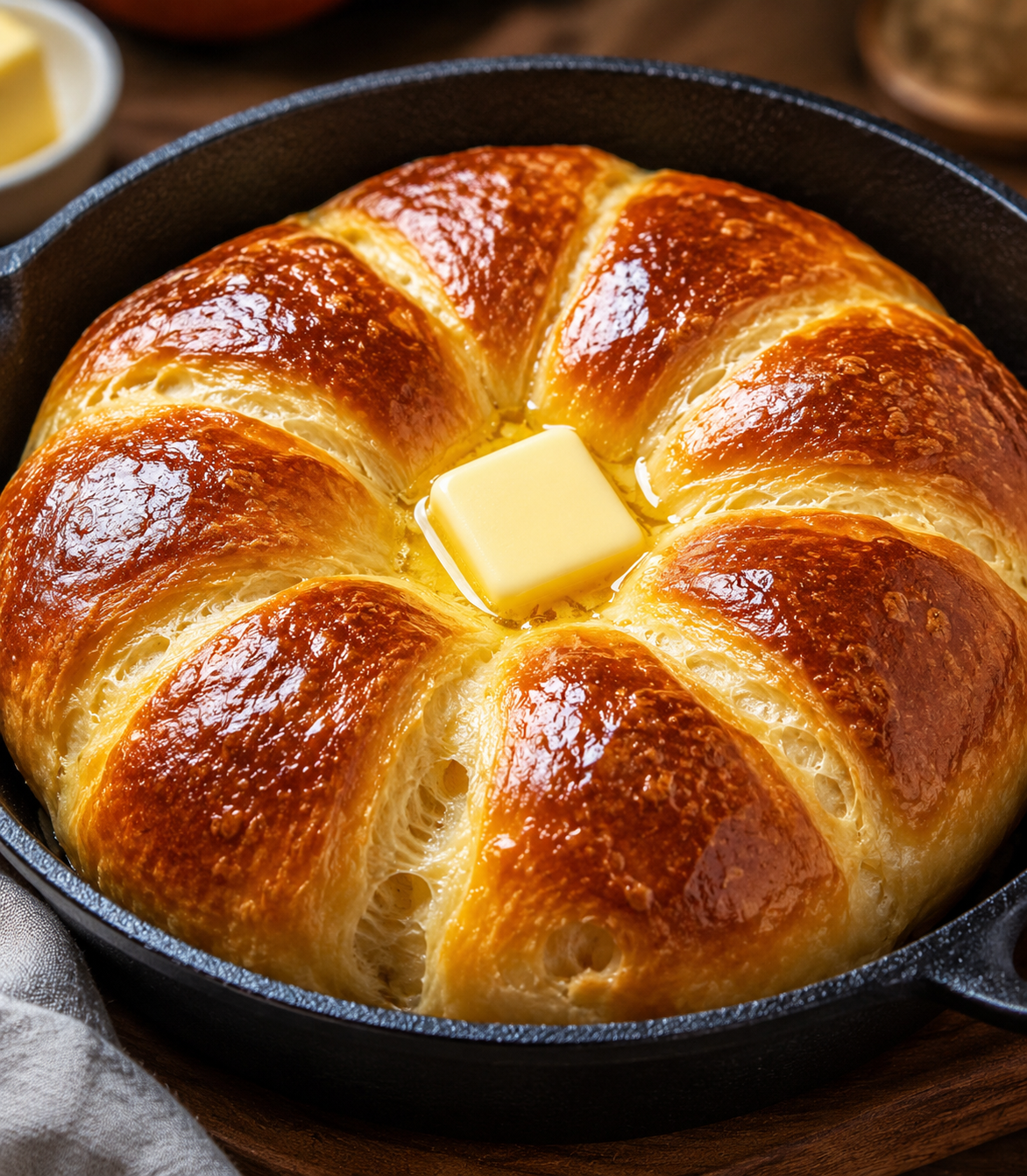
The Secret to Successful Stovetop Bread
The most important factor isn’t the dough.
It’s heat control.
An oven surrounds bread with relatively even heat.
A skillet concentrates most of its heat underneath.
If your burner is too hot, you’ll get:
Dark bottom + raw center
Low, controlled heat gives the inside enough time to cook.
Why Keep the Lid On?
The lid traps heat and moisture.
That creates a miniature oven-like environment inside the skillet.
Without a lid, the bottom can cook much faster than the top.
Use a lid that fits the skillet as closely as possible.
How to Prevent the Bottom from Burning
This is the most common problem with stovetop bread.
Try these strategies:
Keep the Burner Low
Don’t rush the process.
Use a Heavy Pan
Thin pans create hot spots.
Use a Heat Diffuser
If your stove runs very hot, a stovetop heat diffuser between the burner and skillet can help distribute heat.
Rotate the Pan
If your burner heats unevenly, carefully rotate the skillet periodically.
Cast Iron vs. Nonstick
| Pan | Advantage | Watch For |
| Cast iron | Excellent heat retention | Can become very hot |
| Heavy nonstick | Easy release | Follow temperature limits |
| Stainless steel | Durable | May require more grease |
| Thin skillet | Heats quickly | Higher risk of burning |
A thick-bottomed skillet is generally easier than a lightweight pan.
Why Is My Bread Raw in the Middle?
Possible causes include:
- Heat was too high
- Bread was shaped too thick
- Cooking time was too short
- Pan was too small
- Dough was underproofed
Lower the heat and give the loaf enough time.
An instant-read kitchen thermometer removes much of the guesswork.
Why Is My Stovetop Bread Dense?
Dense bread often comes from the dough rather than the cooking method.
Possible causes include:
- Inactive yeast
- Too much flour
- Insufficient kneading
- Short proofing time
- Very cold room
- Dough shaped too aggressively after rising
The dough should become visibly airy before cooking.
Why Didn’t My Dough Rise?
Check the yeast.
Old or improperly stored yeast may have reduced activity.
Also check your liquid temperature.
Liquid that’s excessively hot can damage yeast, while a cold environment makes fermentation much slower.
Instant Yeast vs. Active Dry Yeast
Both can work.
Instant Yeast
Can usually be mixed directly with flour.
Active Dry Yeast
Some brands recommend dissolving it in warm liquid first.
Follow the directions printed on your yeast package for best results.
Milk vs. Water
Using milk produces a slightly richer and softer bread.
Water creates a simpler, leaner loaf.
You can also use a combination.
| Liquid | Texture | Flavor |
| Water | Chewier | Neutral |
| Milk | Softer | Richer |
| Milk + water | Balanced | Mild and tender |
Butter vs. Olive Oil
Butter provides richer flavor.
Olive oil keeps preparation simple and works particularly well for savory bread.
Both are excellent choices.
Can You Make It Without Milk?
Yes.
Replace the milk with warm water.
The loaf will have a slightly different texture but will still work.
This is also useful if you want a dairy-free version using an appropriate oil.
Garlic Butter Stovetop Bread
Combine melted butter with:
- Minced garlic
- Parsley
- Pinch of salt
Brush over the freshly cooked bread.
For a milder garlic flavor, use garlic powder instead of raw garlic.
Herb Stovetop Bread
Mix dried herbs into the dough.
Good choices include:
- Oregano
- Rosemary
- Thyme
- Italian seasoning
Don’t overload the dough.
A modest amount gives plenty of flavor.
Cheese Stovetop Bread
Add shredded cheese to the dough or use cheese as a filling.
Good options include:
- Cheddar
- Mozzarella
- Parmesan
- Monterey Jack
If using cheese as a filling, seal the dough carefully to reduce leakage into the pan.
Parmesan Garlic Bread
Add grated Parmesan and garlic powder to the dough.
After cooking, brush with butter and sprinkle with additional Parmesan.
Serve warm with pasta or soup.
Rosemary Olive Oil Bread
Add chopped rosemary to the dough.
Brush the cooked bread with extra-virgin olive oil.
Finish with a small amount of flaky salt.
This creates a simple Mediterranean-inspired variation.
Everything Seasoning Bread
Before cooking, lightly moisten the top and add everything bagel seasoning.
Be careful with additional salt because commercial seasoning blends may already contain plenty.
Sesame Stovetop Bread
Sprinkle sesame seeds over the dough before cooking.
Press them gently into the surface so they adhere.
This variation is excellent with sandwiches.
Sweet Cinnamon Bread
For a sweeter version, increase the sugar slightly.
Add cinnamon.
Serve with:
- Butter
- Honey
- Fruit preserves
You can also add raisins to the dough.
Honey Butter Bread
Mix softened butter with a small amount of honey.
Spread it over warm slices.
This makes an easy breakfast or afternoon snack.
Stovetop Bread Rolls
Instead of making one large loaf, divide the dough into smaller portions.
Shape into rolls.
Smaller breads can be easier to cook evenly because the centers aren’t as thick.
Cook in batches if necessary.
Stovetop Flatbread Variation
For an even faster approach, divide the dough into smaller pieces and roll them relatively thin.
Cook each piece in a hot skillet.
Flatbreads don’t need the same long covered cooking process as a thick loaf.
They’re excellent for:
- Wraps
- Dips
- Sandwiches
- Breakfast
What to Serve with Stovetop Bread
Fresh skillet bread pairs beautifully with:
- Chili
- Tomato soup
- Chicken soup
- Zuppa Toscana
- Beef stew
- Lentil soup
- Pasta
- Eggs
- Salads
It’s especially useful for soaking up creamy soups and sauces.
Stovetop Bread with Zuppa Toscana
This is an excellent pairing with creamy soups.
Slice the bread into thick wedges.
Serve warm with butter.
The soft interior absorbs creamy broth while the golden exterior adds texture.
Breakfast Ideas
Toast leftover slices in a skillet.
Serve with:
- Butter
- Honey
- Jam
- Peanut butter
- Eggs
- Cream cheese
You can also use thick slices for French toast.
Sandwich Ideas
Once completely cooled, slice the loaf horizontally or into thick slices.
Use it for:
- Grilled cheese
- Turkey sandwiches
- Chicken sandwiches
- Egg sandwiches
- Vegetable sandwiches
If your loaf is very round and wide, cut it into wedges before splitting.
Stovetop Grilled Cheese
Slice the bread.
Add cheddar or another melting cheese.
Butter the outside.
Cook in a skillet over medium-low heat until the bread is golden and the cheese melts.
Garlic Bread from Leftovers
Mix softened butter with garlic powder and parsley.
Spread over sliced bread.
Toast in a skillet until golden.
Keep the heat moderate because butter and garlic can brown quickly.
Bread for Dipping
Cut the cooked loaf into wedges.
Serve alongside:
- Olive oil and herbs
- Hummus
- Garlic herb cheese spread
- Spinach dip
- Tomato dip
This makes an easy appetizer board.
Can You Make the Dough Ahead?
Yes.
Prepare the dough and allow fermentation to begin according to your recipe.
Then refrigerate it covered.
A slower refrigerated rise can develop additional flavor.
Before cooking, allow the dough enough time to become workable and complete its final proof.
Overnight Dough
Prepare the dough in the evening.
Refrigerate overnight in a covered container with enough room for expansion.
The next day, shape and proof before cooking.
Don’t cook refrigerator-cold dough immediately if the center is still very cold and dense.
How to Store Stovetop Bread
Let the bread cool completely.
Store it in an airtight bag or bread container.
For short-term storage, room temperature generally gives a better texture than refrigeration.
Refrigeration can make bread stale faster.
How to Keep Homemade Bread Soft
Once completely cool:
- Store airtight
- Don’t leave cut surfaces exposed
- Slice only what you need
- Avoid excessive flour during kneading
A small amount of butter or oil in the dough also helps keep the crumb tender.
Can You Freeze Stovetop Bread?
Yes.
Cool completely.
You can freeze the loaf whole, but sliced bread is more convenient.
Place parchment between slices if desired.
Seal in a freezer-safe bag and remove as much excess air as practical.
How to Reheat It
Skillet
Heat slices over low heat until warm.
Toaster
Excellent for individual slices.
Microwave
Quick but produces a softer texture.
A skillet is particularly useful when you want to restore a lightly crisp exterior.
Meal Prep
Prepare one or two loaves and slice after cooling.
Freeze individual portions.
You can then remove only what you need for:
- Breakfast
- Sandwiches
- Soup nights
- Snacks
This reduces waste.
How to Know When Bread Is Done Without a Thermometer
Look for several clues:
- Both sides are golden
- Bread feels lighter than when raw
- Center feels set rather than squishy
- Loaf sounds somewhat hollow when tapped
However, an inexpensive instant-read thermometer provides much greater certainty for a thick stovetop loaf.
Best Kitchen Tools for Stovetop Bread
Helpful equipment includes:
- Cast-iron skillet
- Heavy nonstick skillet
- Tight-fitting lid
- Digital kitchen scale
- Instant-read thermometer
- Mixing bowls
- Dough scraper
- Wooden spoon
- Silicone spatula
- Wire cooling rack
- Stand mixer with dough hook
A heavy skillet and instant-read thermometer are particularly useful for stovetop bread because temperature control is the biggest challenge.
Why a Digital Kitchen Scale Helps
Bread dough is sensitive to flour quantity.
Measuring cups can vary depending on how tightly flour is packed.
A digital scale gives more consistent results and makes it easier to reproduce a successful loaf.
Can You Double the Recipe?
Yes, but don’t cook a double-size loaf.
A very thick loaf may burn outside before cooking through.
Instead:
Double the dough → divide into two loaves → cook separately.
This gives much better results.
Making Bread for a Crowd
Prepare several dough portions.
Shape into smaller rounds or rolls.
Cook them sequentially.
Keep finished breads wrapped in a clean towel while the remaining batches cook.
Budget-Friendly Homemade Bread
This recipe uses inexpensive staples:
- Flour
- Yeast
- Salt
- Sugar
- Milk or water
- Oil
You don’t need specialty bread flour or expensive baking equipment.
A regular skillet with a lid can produce a satisfying homemade loaf.
Common Mistakes
Using High Heat
The exterior burns before the center cooks.
Making the Loaf Too Thick
A thick center is difficult to cook on a stovetop.
Adding Too Much Flour
This creates dense bread.
Using Inactive Yeast
The dough won’t rise properly.
Skipping the Second Rise
The bread may be dense.
Constantly Opening the Lid
Trapped heat is important.
Slicing Immediately
The hot crumb may become gummy.
Frequently Asked Questions
Can bread really be made without an oven?
Yes. A covered heavy skillet can cook yeast bread successfully when heat is carefully controlled.
What pan works best?
Cast iron or another heavy-bottomed skillet with a tight-fitting lid.
Why did my bread burn underneath?
The burner was probably too hot or the pan was too thin.
Why is the middle raw?
The loaf may be too thick, the heat too high, or the cooking time too short.
Can I use active dry yeast?
Yes. Follow the activation instructions on the package.
Can I use water instead of milk?
Yes. The bread will be slightly less rich but still delicious.
Can I add cheese?
Absolutely. Cheddar, mozzarella, and Parmesan are good options.
Can I make smaller rolls instead?
Yes, and smaller portions are often easier to cook evenly.
Can I freeze the bread?
Yes. Freeze it after cooling completely.
What internal temperature should I look for?
For this style of yeast bread, approximately 190–200°F (88–93°C) in the center is a useful doneness range.
Final Thoughts
No-Oven Stovetop Bread proves that you don’t need a traditional oven to make soft, fluffy homemade bread.
The most important technique is controlling the heat. Use a heavy covered skillet, keep the burner low, avoid making the loaf excessively thick, and give the center enough time to cook before chasing a darker crust.
Once you’ve mastered the basic dough, you can turn it into garlic-herb bread, cheese bread, sesame bread, rolls, or a sweeter breakfast loaf.
Serve it warm with butter, alongside a big bowl of soup or chili, or freeze individual slices for easy homemade bread whenever you need it.