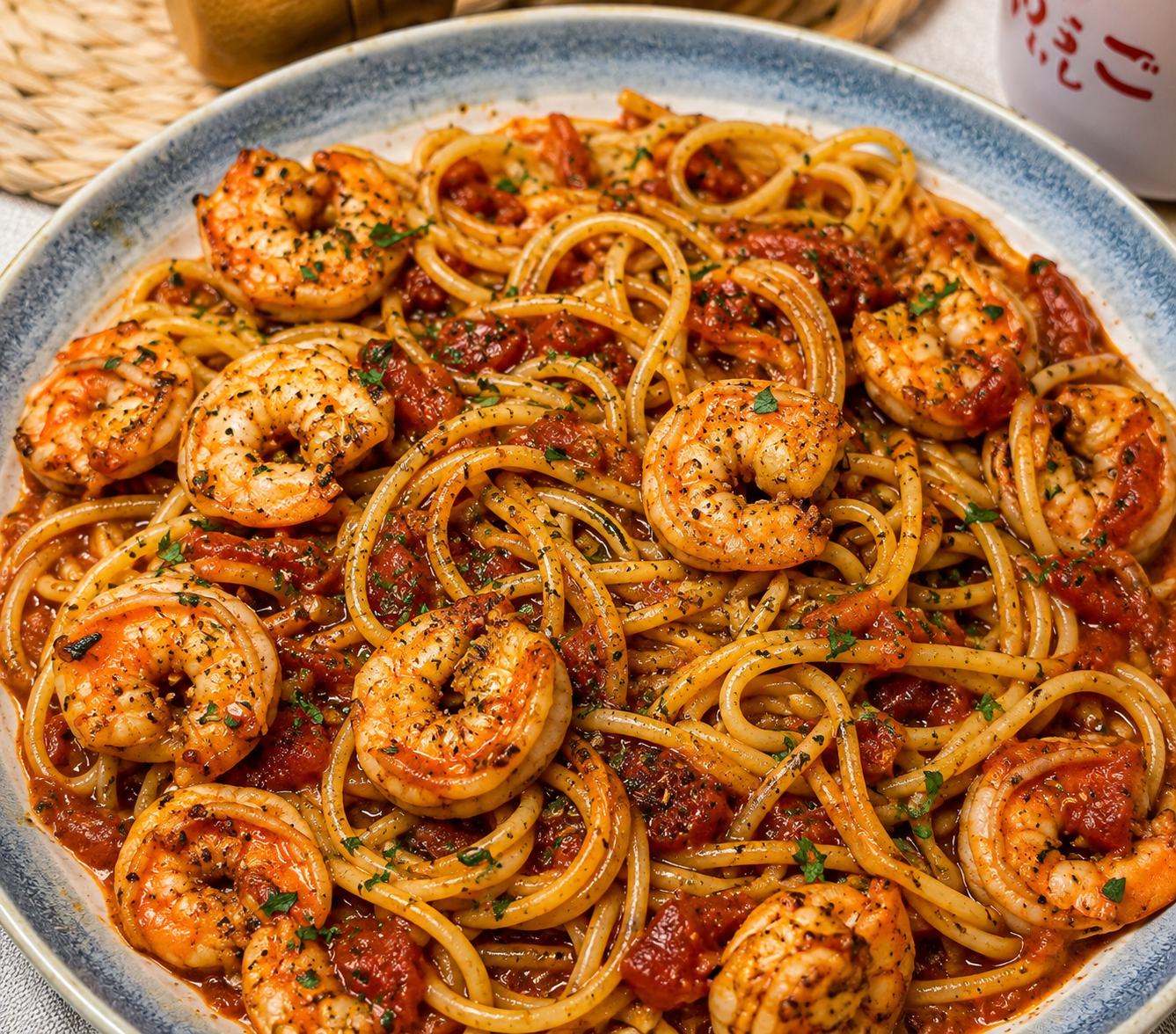
The Secret to Juicy Shrimp
Shrimp cook extremely fast.
One of the biggest mistakes is leaving them in the pan while the sauce and pasta are prepared.
Instead:
Cook shrimp → remove them → build sauce → return shrimp at the end
This helps prevent overcooking.
How Do You Know When Shrimp Are Done?
Cooked shrimp should be:
- Opaque
- Pink on the outside
- Firm but still tender
- Curved into a loose “C” shape
Shrimp curled tightly into an “O” shape are often overcooked.
For food safety, shrimp should reach 145°F (63°C).
Why Garlic Butter Works So Well with Shrimp
Shrimp are naturally mild and slightly sweet.
Butter adds richness.
Garlic adds savory depth.
Lemon adds acidity.
Together, they create a balanced sauce without hiding the shrimp.
Fresh Garlic vs. Garlic Powder
Use both if you want deeper flavor.
Fresh garlic provides aroma and sharpness.
Garlic powder helps season the shrimp themselves.
Don’t replace all the fresh garlic with garlic powder if you want that classic garlic-butter sauce.
Why Use Lemon Zest?
Lemon juice adds acidity.
Lemon zest adds concentrated citrus aroma without making the sauce watery.
That means you get more lemon flavor without needing excessive juice.
Always zest the lemon before juicing it.
How Much Lemon Should You Add?
Start with approximately 2 tablespoons.
Taste.
Add more only if needed.
Too much lemon can overpower the butter and Parmesan.
The goal is brightness, not sour pasta.
Best Pasta for Garlic Butter Shrimp
Spaghetti works beautifully, but several shapes work.
| Pasta | Texture | Best Feature |
| Spaghetti | Classic | Coats evenly |
| Linguine | Slightly wider | Great with seafood |
| Fettuccine | Richer bite | Holds creamy sauces |
| Angel hair | Delicate | Very quick cooking |
| Bucatini | Thick and hollow | Hearty texture |
Linguine is probably the easiest substitute for spaghetti.
Can You Use Angel Hair?
Yes.
Angel hair cooks much faster than spaghetti, so watch it carefully.
It also works best with a slightly lighter sauce.
Use less pasta water initially and add more only as needed.
Butter vs. Olive Oil
Using both gives the best balance.
Butter
Adds:
- Richness
- Flavor
- Silkiness
Olive Oil
Helps with:
- Searing shrimp
- Higher-heat cooking
- Preventing butter from browning too quickly
Can You Use Salted Butter?
Yes, but reduce added salt.
Shrimp, Parmesan, pasta water, and salted butter can add up quickly.
Taste before seasoning at the end.
Parmesan Cheese Tips
Freshly grated Parmesan melts more smoothly than many pre-shredded cheeses.
Pre-shredded cheese often contains anti-caking ingredients that can affect texture.
Add Parmesan over low heat and toss constantly.
Why Did My Parmesan Clump?
Common causes include:
- Pan was too hot
- Cheese was added all at once
- Not enough pasta water
- Pre-shredded cheese was used
- Sauce was boiling
Lower heat and add cheese gradually.
Creamy Garlic Butter Shrimp Spaghetti
For a richer version, add:
- ½ cup heavy cream
Add it after the garlic and pasta water.
Simmer gently for a few minutes.
Then add Parmesan.
This creates a creamy garlic shrimp pasta rather than a lighter butter sauce.
Garlic Parmesan Shrimp Spaghetti
Increase the Parmesan to approximately ¾ cup.
Reduce the lemon slightly.
Finish with:
- Black pepper
- Parsley
- Extra Parmesan
This produces a richer, cheesier sauce.
Spicy Shrimp Spaghetti
Add:
- Extra red pepper flakes
- Cayenne
- Chili oil
Start small and adjust after tasting.
Cajun Shrimp Spaghetti
Season the shrimp with Cajun seasoning.
Reduce the added salt because Cajun blends can already be salty.
A little cream works particularly well in this variation.
Tuscan Shrimp Spaghetti
Add:
- Sun-dried tomatoes
- Spinach
- Heavy cream
- Parmesan
This turns the recipe into a richer creamy Tuscan-style shrimp pasta.
Spinach Garlic Shrimp Pasta
Add several handfuls of fresh spinach after cooking the garlic.
Let the spinach wilt.
Then add the pasta water and continue with the recipe.
This is an easy way to add vegetables.
Broccoli Shrimp Spaghetti
Add small broccoli florets during the final few minutes of pasta cooking.
Drain them with the spaghetti.
Toss everything into the sauce together.
Mushroom Garlic Shrimp Pasta
Cook sliced mushrooms before the shrimp.
Remove when browned.
Prepare the shrimp and sauce.
Return the mushrooms at the end.
Mushrooms add a deep savory flavor.
Cherry Tomato Shrimp Pasta
Add halved cherry tomatoes after the garlic.
Cook until they soften slightly.
Their juices blend with the lemon butter and create a fresh sauce.
Shrimp Scampi-Style Variation
This recipe is already close to shrimp scampi.
For a more classic scampi-style version, add:
- Extra garlic
- Extra lemon
- Parsley
Some versions also use dry white wine.
If using wine, allow it to simmer before adding the pasta.
Can You Make It Without Wine?
Absolutely.
This recipe doesn’t need wine.
Pasta water, lemon, butter, and Parmesan create plenty of flavor.
Chicken or seafood broth can also be used for additional depth.
Lemon Garlic Shrimp Without Cheese
You can omit Parmesan entirely.
Increase the butter slightly if desired.
Add more fresh parsley and lemon zest.
This gives the dish a lighter seafood-pasta flavor.
How to Make the Sauce Silkier
Use three techniques:
- Reserve starchy pasta water.
- Toss the pasta vigorously with the butter sauce.
- Add Parmesan over low heat.
This helps the fat, starch, and cheese combine into an emulsified sauce.
Why Is My Pasta Dry?
Possible reasons include:
- Not enough pasta water
- Pasta sat too long before serving
- Too much Parmesan
- Sauce reduced too far
Add warm pasta water a little at a time while tossing.
Why Is My Sauce Watery?
You may have added too much pasta water.
Continue tossing over low heat until some liquid evaporates.
Parmesan will also help thicken the sauce.
Why Are My Shrimp Rubbery?
They were probably overcooked.
Large shrimp may need only a few minutes total.
Remove them from the skillet as soon as they’re cooked.
Why Didn’t My Shrimp Brown?
Shrimp release moisture when wet.
To improve browning:
- Pat them dry thoroughly
- Heat the skillet before adding them
- Don’t overcrowd the pan
- Cook in batches if necessary
Frozen Shrimp Tips
If using frozen shrimp:
- Thaw completely.
- Drain well.
- Pat dry.
- Season immediately before cooking.
Don’t put icy shrimp directly into the skillet unless a specific recipe is designed for it.
The extra water will interfere with searing.
What Size Shrimp Is Best?
Large or extra-large shrimp are ideal.
Smaller shrimp cook extremely quickly and are easier to overcook.
Larger shrimp also give the dish a more impressive presentation.
Should You Keep the Tails On?
Either works.
Tails On
- Better presentation
- Slightly more seafood flavor
Tails Off
- Easier to eat
- Better for family dinners
- No need to handle shrimp at the table
For spaghetti, tails removed are often more convenient.
What to Serve with Shrimp Spaghetti
This pasta is satisfying on its own, but side dishes can round out the meal.
Try:
- Garlic bread
- Breadsticks
- Caesar salad
- Garden salad
- Roasted asparagus
- Roasted broccoli
- Green beans
- Sautéed zucchini
Garlic Bread Pairing
Combine softened butter with:
- Garlic
- Parsley
- Parmesan
Spread over sliced bread.
Bake or toast until golden.
Garlic bread is excellent for soaking up leftover lemon butter sauce.
Simple Salad Pairing
A crisp salad helps balance the richness.
Try:
- Romaine
- Cucumber
- Tomatoes
- Red onion
- Parmesan
- Lemon vinaigrette
Keep the dressing light.
Date Night Dinner
Serve the spaghetti in shallow pasta bowls.
Arrange several shrimp neatly on top.
Finish with:
- Parmesan
- Parsley
- Lemon zest
- Black pepper
Add warm bread and a simple salad.
It looks restaurant-style without requiring complicated plating.
Family Dinner
For a larger family, increase the recipe.
However, cook the shrimp in batches.
Overcrowding a skillet makes it much harder to get good color.
How to Double the Recipe
For 2 pounds of shrimp and approximately 24 ounces of pasta, use a very large skillet or divide the sauce between two pans.
Don’t simply pile everything into one small skillet.
There should be enough room to toss the pasta properly.
Make-Ahead Tips
This pasta is best freshly cooked.
However, you can prepare several ingredients ahead.
Ahead of Time
- Peel and devein shrimp
- Chop parsley
- Mince garlic
- Grate Parmesan
- Zest lemon
Store everything refrigerated in separate airtight containers.
Cook the pasta and shrimp just before serving.
Can You Make the Sauce Ahead?
You can prepare a basic garlic butter mixture ahead, but the final sauce is best made with freshly reserved pasta water.
That starchy water is one of the keys to getting the right texture.
How to Store Leftovers
Allow leftovers to cool.
Transfer to an airtight food-storage container.
Refrigerate promptly.
For best flavor and shrimp texture, enjoy within a few days.
How to Reheat Shrimp Pasta
Shrimp can become tough when reheated aggressively.
Stovetop
Add a splash of water or broth.
Warm gently over low heat.
Microwave
Use shorter intervals and stir between each.
Don’t overheat.
Can You Freeze Shrimp Spaghetti?
You can, but it isn’t the ideal dish for freezing.
Shrimp may become firmer after thawing and reheating, and pasta can soften.
For best results, eat freshly prepared or refrigerated leftovers.
Meal Prep Tips
If meal prepping, slightly undercook the spaghetti.
Store individual portions.
When reheating, add a spoonful of water to loosen the sauce.
Avoid repeatedly reheating the shrimp.
Useful Kitchen Tools
Helpful equipment includes:
- Large pasta pot
- Large skillet
- Colander
- Kitchen tongs
- Microplane
- Citrus juicer
- Garlic press
- Instant-read thermometer
- Chef’s knife
- Cutting board
- Parmesan grater
- Airtight food-storage containers
A large stainless-steel or cast-iron skillet is especially useful for getting good color on shrimp.
Stainless Steel vs. Nonstick for Shrimp
| Skillet | Browning | Ease of Use | Best For |
| Stainless steel | Excellent | Moderate | Deep sear |
| Cast iron | Excellent | Moderate | Strong heat retention |
| Nonstick | Good | Easy | Beginner-friendly |
Don’t use extremely high heat with a nonstick skillet; follow the manufacturer’s temperature guidance.
Budget-Friendly Tips
Shrimp can be expensive, but there are several ways to keep this dinner affordable.
- Buy frozen shrimp when on sale
- Use store-brand spaghetti
- Buy Parmesan by the block
- Use seasonal lemons
- Serve with inexpensive garlic bread
- Add vegetables to stretch the pasta
Frozen shrimp in larger bags can offer better value than small fresh packages.
Common Mistakes
Overcooking Shrimp
Cook briefly and remove from the skillet.
Forgetting Pasta Water
Reserve it before draining.
Burning Garlic
Use moderate heat.
Adding Parmesan Over High Heat
This can cause clumping.
Using Bottled Lemon Juice Only
Fresh lemon gives a brighter flavor.
Overcrowding the Shrimp
Cook in batches if necessary.
Adding Too Much Lemon
Balance acidity with butter and Parmesan.
Letting the Pasta Sit Too Long
Garlic butter pasta is best served immediately.
Frequently Asked Questions
What shrimp should I use for spaghetti?
Large or extra-large peeled and deveined shrimp work particularly well.
Can I use frozen shrimp?
Yes. Thaw and dry them thoroughly before cooking.
Can I use linguine instead of spaghetti?
Absolutely. Linguine is one of the best substitutes.
Can I make it creamy?
Yes. Add about ½ cup heavy cream before the Parmesan.
Can I leave out Parmesan?
Yes. The lemon garlic butter sauce works without cheese.
How do I prevent rubbery shrimp?
Cook only until opaque and at least 145°F (63°C), then remove from the heat.
How do I keep the sauce from drying out?
Reserve plenty of pasta water and add it gradually while tossing.
Can I add spinach?
Yes. Wilt it in the skillet shortly before adding the pasta.
Can I use chicken instead?
Yes, but chicken requires a longer cooking time and should reach 165°F (74°C).
What bread goes best with it?
Garlic bread, focaccia, or warm crusty Italian bread all pair beautifully.
Final Thoughts
Shrimp Spaghetti with Garlic Butter & Lemon is a simple pasta that delivers big flavor with relatively few ingredients.
The key is timing: cook the shrimp quickly, remove them before they overcook, save the pasta water, keep the garlic from burning, and add the shrimp back only at the end.
Fresh lemon brightens the buttery sauce, Parmesan adds savory richness, and pasta water helps everything coat the spaghetti smoothly.
Serve it immediately with garlic bread and a fresh salad for an easy seafood dinner that feels much more elaborate than the preparation actually is.