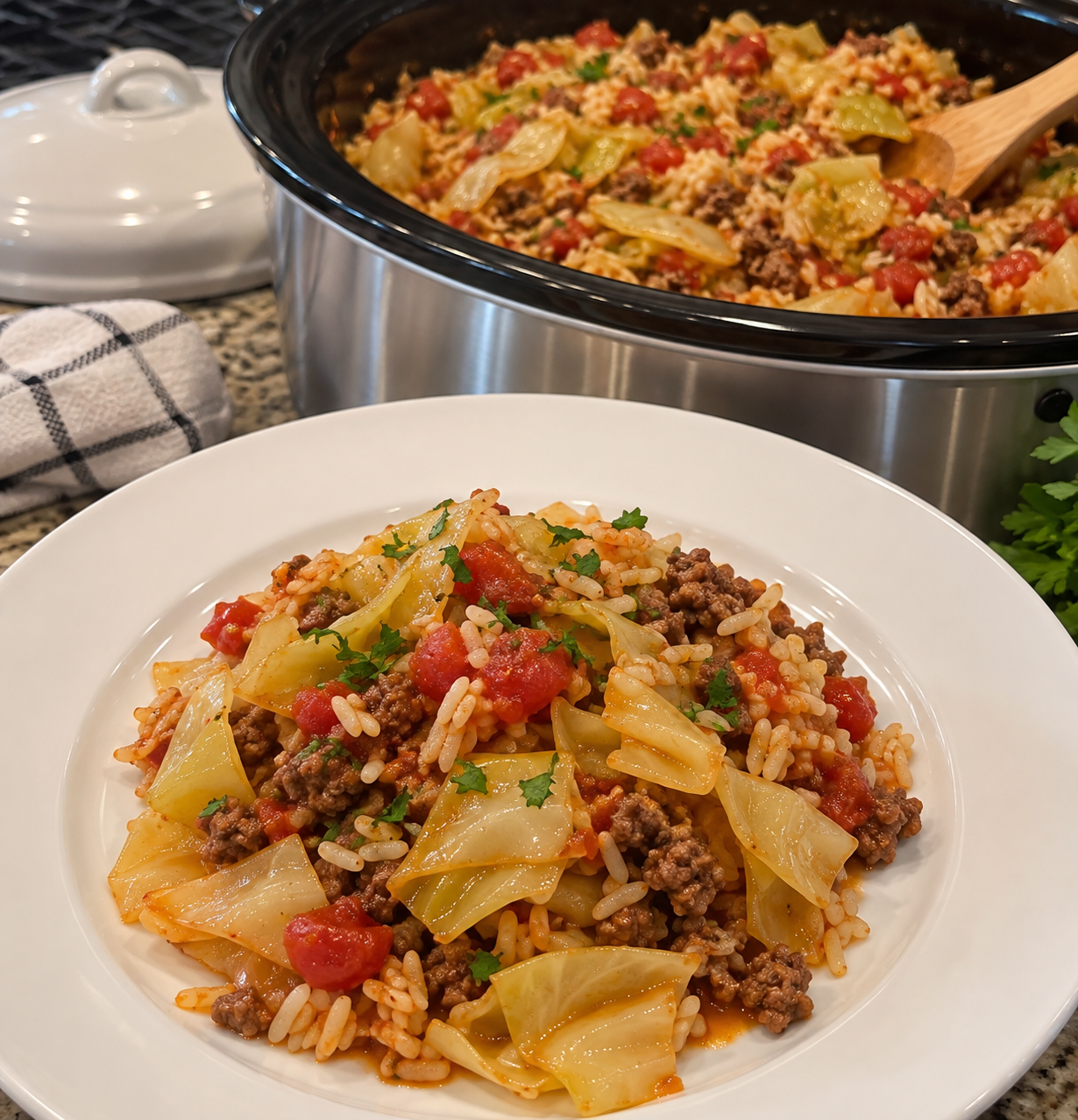
When you need a filling dinner without spending all evening in the kitchen, this Ground Beef & Cabbage Stir-Fry with Tomatoes is a recipe worth keeping. It combines browned ground beef, tender cabbage, juicy tomatoes, onion, garlic, and simple seasonings in one skillet for an affordable meal packed with savory flavor.
The cabbage cooks down and absorbs the beef and tomato juices, while the tomatoes create a light sauce without requiring a complicated list of ingredients. You can serve it on its own, spoon it over rice, or add cooked rice directly to the skillet for an even heartier dinner.
It’s particularly useful when you have half a head of cabbage waiting in the refrigerator and aren’t sure what to make with it.
Why You’ll Love This Recipe
- Easy one-pan dinner
- Ready in about 30 minutes
- Budget-friendly ingredients
- Great way to use cabbage
- Plenty of protein
- Easy to double for a family
- Works well for meal prep
- Delicious with rice, potatoes, or noodles
- Simple ingredients available at most grocery stores
Ingredients
For the Ground Beef & Cabbage
- 1½ pounds ground beef
- 1 medium head green cabbage, chopped
- 1 medium yellow onion, diced
- 3 garlic cloves, minced
- 1 can (14.5 ounces) diced tomatoes, undrained
- 2 tablespoons tomato paste
- 1 tablespoon olive oil, if needed
- 1 teaspoon smoked paprika
- 1 teaspoon Italian seasoning
- ½ teaspoon garlic powder
- ½ teaspoon onion powder
- ½ teaspoon black pepper
- ½ teaspoon salt, plus more to taste
- 1 tablespoon Worcestershire sauce
- ½ cup low-sodium beef broth
Optional Additions
- 1 cup cooked rice
- ½ teaspoon crushed red pepper flakes
- 1 diced bell pepper
- 1 cup sliced mushrooms
- Shredded cheddar or Parmesan
- Fresh parsley
Choosing the Best Ground Beef
For a skillet recipe like this, 85/15 or 90/10 ground beef is an excellent choice.
An 85/15 blend provides more richness, while 90/10 gives you a leaner skillet with less fat to drain.
If you use 80/20 beef, that’s fine too. Simply drain excess grease after browning so the final dish doesn’t become oily.
Ground beef should reach 160°F (71°C) for food safety.
Why Cabbage Works So Well with Ground Beef
Cabbage is one of those inexpensive vegetables that can stretch a pound or two of meat into a substantial family meal.
Raw cabbage looks enormous in the skillet, but it loses considerable volume as it cooks.
It also absorbs flavor beautifully.
Instead of tasting like plain boiled cabbage, the pieces become coated with beef juices, tomato, garlic, Worcestershire sauce, and spices.
Fresh Tomatoes vs. Canned Tomatoes
Both work.
Canned diced tomatoes are convenient because they provide consistent flavor and enough liquid to help soften the cabbage.
During tomato season, however, fresh tomatoes can be excellent.
Use approximately 2 cups chopped ripe tomatoes in place of the canned tomatoes.
You may need a little additional beef broth because fresh tomatoes vary in moisture.
How to Make Ground Beef & Cabbage Stir-Fry with Tomatoes
Step 1: Prepare the Vegetables
Remove any damaged outer cabbage leaves.
Cut the cabbage into quarters and remove the hard core.
Chop the leaves into bite-size pieces.
Dice the onion and mince the garlic.
Having everything ready before heating the skillet makes cooking much easier.
Step 2: Heat a Large Skillet
Place a large skillet or Dutch oven over medium-high heat.
If you’re using lean ground beef, add about 1 tablespoon olive oil.
With fattier beef, you probably won’t need additional oil.
Step 3: Brown the Ground Beef
Add the ground beef.
Spread it across the skillet and allow some of it to remain undisturbed briefly so it can develop browned edges.
Break it apart with a wooden spoon or meat chopper.
Cook until browned and safely cooked through to 160°F (71°C).
Step 4: Drain Excess Fat
If there’s a significant amount of grease in the skillet, carefully drain it.
Leave a small amount behind because it contributes flavor.
Step 5: Cook the Onion
Add the diced onion.
Cook for approximately 3–4 minutes, stirring occasionally, until it begins to soften.
Step 6: Add Garlic
Add the minced garlic.
Cook for approximately 30 seconds.
Garlic burns quickly, so don’t walk away from the skillet at this stage.
Step 7: Toast the Tomato Paste
Add the tomato paste directly to the skillet.
Cook for about 1 minute, stirring it into the beef.
Briefly cooking tomato paste helps deepen its flavor.
Step 8: Add the Tomatoes
Pour in the diced tomatoes with their juices.
Add:
- Worcestershire sauce
- Smoked paprika
- Italian seasoning
- Garlic powder
- Onion powder
- Black pepper
Stir well.
Step 9: Add the Cabbage
Add the chopped cabbage.
It may look like far too much.
That’s normal.
If your skillet isn’t large enough to hold it all at once, add half, let it wilt for a few minutes, then add the remainder.
Step 10: Add Beef Broth
Pour in approximately ½ cup low-sodium beef broth.
Stir everything together.
Step 11: Cover and Cook
Reduce to medium heat.
Cover and cook for approximately 8–12 minutes, stirring a few times.
The exact cooking time depends on how tender you like your cabbage.
For cabbage with some bite, stop earlier.
For very soft cabbage, cook longer.
Step 12: Uncover and Reduce
Remove the lid.
If there’s excess liquid, increase the heat slightly.
Cook uncovered for several minutes until the sauce reaches your preferred consistency.
Step 13: Taste Before Adding More Salt
This is important because Worcestershire sauce, broth, canned tomatoes, and any cheese you add can contribute sodium.
Taste first.
Then adjust with additional:
- Salt
- Black pepper
- Paprika
- Worcestershire sauce
Step 14: Finish and Serve
Sprinkle with fresh parsley.
Serve immediately as-is or over rice.
For an extra-comforting dinner, add shredded cheese while the skillet is still hot.
How to Make This Simple Skillet Taste Better
Ground beef, cabbage, and tomatoes are inexpensive ingredients, but technique can transform them into a much more flavorful dinner.
Three steps make the biggest difference:
Brown the beef properly, cook the tomato paste briefly, and don’t drown the cabbage in liquid.
Let’s look at each one.
1. Brown the Beef Instead of Steaming It
If you constantly stir ground beef from the moment it enters the skillet, you’ll get cooked meat but very little browning.
Instead, spread the beef across a hot pan.
Allow sections to stay in contact with the skillet briefly before breaking everything apart.
Those browned areas develop deeper savory flavor.
2. Cook the Tomato Paste
Don’t simply mix tomato paste into the liquid.
Give it approximately a minute against the hot skillet.
Its flavor becomes deeper and less raw.
It’s a small step that makes a noticeable difference.
3. Don’t Add Too Much Broth
Cabbage and tomatoes both release liquid.
You don’t need several cups of broth.
Start with about half a cup.
You can always add more.
Removing excess liquid later is harder.
How Tender Should the Cabbage Be?
That’s completely personal.
Some people prefer cabbage with a noticeable bite.
Others grew up eating cabbage cooked until extremely soft.
For crisp-tender cabbage, cook it uncovered or only briefly covered.
For soft comfort-food cabbage, cover the skillet and give it additional time.
Why Does Cabbage Release So Much Water?
Cabbage naturally contains a lot of moisture.
As it heats, the cells soften and release water.
Tomatoes contribute even more.
That’s why this recipe needs only a modest amount of broth.
How to Fix a Watery Skillet
Don’t automatically add flour or cornstarch.
First, remove the lid.
Increase the heat moderately and allow excess water to evaporate.
Stir occasionally.
As the liquid reduces, the flavor also becomes more concentrated.
How to Make the Sauce Thicker
If you want a noticeably thicker tomato sauce, combine:
- 1 teaspoon cornstarch
- 1 tablespoon cold water
Stir until smooth.
Add it toward the end and simmer briefly.
For this particular recipe, though, simple reduction is usually enough.
Ground Beef & Cabbage with Rice
This is one of the easiest variations.
You have two options.
Serve Over Rice
Prepare rice separately and spoon the beef mixture over it.
This gives you better control over the rice texture.
Mix Cooked Rice into the Skillet
Add approximately 1–2 cups cooked rice after the cabbage is tender.
Stir until everything is hot.
The rice absorbs the tomato-beef sauce and turns the dish into an especially hearty one-pan meal.
Don’t Add Uncooked Rice Without Adjusting the Recipe
Raw rice requires significantly more liquid and cooking time.
Adding dry rice directly without changing the broth ratio can leave you with either crunchy rice or an overly watery skillet.
For the easiest version, use cooked rice.
Ground Beef, Cabbage & Tomato Soup Variation
Want something warmer and brothier?
Increase the beef broth to approximately 4–5 cups.
Add:
- Carrots
- Celery
- Extra tomatoes
Simmer until the vegetables are tender.
You now have an easy ground beef and cabbage soup.
Unstuffed Cabbage Roll Variation
This skillet is also an excellent starting point for unstuffed cabbage rolls.
Add:
- Cooked rice
- Additional tomato sauce
- A little paprika
You’ll get many of the familiar flavors of cabbage rolls without individually rolling cabbage leaves.
Cheesy Ground Beef & Cabbage
Once everything is cooked, sprinkle shredded cheese over the top.
Try:
- Cheddar
- Mozzarella
- Monterey Jack
- Parmesan
Cover for a minute or two until melted.
Cheddar creates the richest comfort-food version.
Spicy Ground Beef & Cabbage
Add:
- Crushed red pepper flakes
- Cayenne
- Hot sauce
- Diced jalapeño
Start small.
You can always add additional heat at the table.
Mexican-Inspired Variation
Replace the Italian seasoning with:
- Chili powder
- Ground cumin
- Smoked paprika
- Oregano
Finish with cheddar and cilantro.
Serve with avocado and lime.
Italian-Style Variation
Increase the Italian seasoning.
Add:
- Basil
- Oregano
- Parmesan
- Mozzarella
You can also add cooked Italian sausage alongside the beef.
Ground Beef & Cabbage with Potatoes
Dice potatoes into small cubes.
Partially cook them before adding them to the skillet, or add them earlier with enough broth to become tender.
Potatoes make this already-filling recipe even more substantial.
Ground Beef & Cabbage with Carrots
Thinly sliced or shredded carrots add sweetness and color.
Cook them with the onion before adding the cabbage.
They’re especially useful when you’re trying to stretch the recipe into additional servings.
Bell Pepper Variation
Red or yellow bell peppers work particularly well.
Slice them and sauté with the onion.
They contribute:
- Sweetness
- Color
- Texture
Green bell pepper gives the dish a stronger, more savory pepper flavor.
Mushroom Variation
Mushrooms make this recipe even more savory.
Use:
- Cremini
- Baby bella
- White button mushrooms
Brown them before adding the cabbage.
If you add mushrooms directly to an overcrowded skillet, they’ll release water instead of browning.
Ground Beef vs. Other Proteins
You aren’t limited to beef.
| Protein | Flavor | Cooking Temperature | Best Feature |
| Ground beef | Rich and savory | 160°F | Classic version |
| Ground pork | Rich and mild | 160°F | Excellent with cabbage |
| Ground turkey | Mild | 165°F | Leaner option |
| Ground chicken | Mild | 165°F | Light flavor |
Choose whichever works best for your household.
Can You Use Ground Turkey?
Absolutely.
Ground turkey has less richness than beef, so you may want to add a tablespoon of olive oil.
Use plenty of:
- Garlic
- Onion
- Paprika
- Worcestershire
Ground poultry should reach 165°F (74°C).
Can You Use Ground Pork?
Yes.
Pork and cabbage are naturally delicious together.
Ground pork also works particularly well with tomatoes and paprika.
Cook ground pork to 160°F (71°C).
Can You Use Sausage?
Yes.
Try Italian sausage.
Remove it from the casing if necessary.
Use half sausage and half ground beef for a particularly flavorful combination.
Remember that sausage can contain considerable sodium, so reduce added salt until you’ve tasted the finished dish.
Green Cabbage vs. Napa vs. Savoy
| Type | Texture | Flavor | Cooking |
| Green cabbage | Firm | Mild | Holds shape well |
| Napa cabbage | Tender | Slightly sweet | Cooks quickly |
| Savoy cabbage | Tender | Mild | Softer texture |
| Red cabbage | Firm | Earthier | Changes dish color |
Green cabbage is the best all-purpose option for this recipe.
Can You Use Coleslaw Mix?
Yes—and it’s one of the best shortcuts.
A bagged coleslaw mixture usually contains shredded cabbage and carrots.
Because it’s thinly sliced, it cooks much faster than hand-chopped cabbage.
Add it later and check frequently.
Fresh Garlic vs. Garlic Powder
Use both if you like.
Fresh garlic provides stronger aroma.
Garlic powder distributes evenly throughout the sauce.
Using a little of each creates more layered garlic flavor without requiring an excessive amount.
Why Worcestershire Sauce Works Here
Worcestershire sauce adds concentrated savory flavor and acidity.
It complements beef particularly well.
You don’t need much.
One tablespoon can make a simple tomato-and-beef skillet taste considerably deeper.
Can You Leave Out Worcestershire?
Yes.
Try:
- Low-sodium soy sauce
- Beef broth concentrate used according to its directions
- A small splash of balsamic vinegar
These won’t taste identical, but they can add savory depth.
Smoked Paprika vs. Regular Paprika
Smoked paprika adds subtle smokiness.
Regular paprika is milder.
Either works.
If you’re making the Mexican-inspired variation, smoked paprika is especially good.
What to Serve with Ground Beef & Cabbage
This dish is flexible enough to work with many sides.
Try:
- Steamed white rice
- Brown rice
- Mashed potatoes
- Egg noodles
- Crusty bread
- Cornbread
- Roasted potatoes
- Side salad
Best Choice for a Quick Dinner
Use a rice cooker while preparing the skillet.
By the time the beef and cabbage are ready, the rice can be ready too.
This keeps the meal hands-off and makes timing easier.
Mashed Potatoes
For a comfort-food dinner, spoon the tomato-beef-and-cabbage mixture over creamy mashed potatoes.
The potatoes absorb the savory sauce.
This works especially well during colder months.
Crusty Bread
Serve with warm bread for soaking up the tomato juices.
Try:
- French bread
- Sourdough
- Dinner rolls
- Garlic bread
It’s one of the simplest ways to complete the meal.
Meal Prep
This recipe works very well for meal prep because the flavors continue to blend as the dish rests.
Divide into airtight containers with:
Ground beef & cabbage + cooked rice
Keep fresh garnishes separate.
Add parsley or cheese after reheating.
How to Store Leftovers
Transfer leftovers to shallow airtight containers and refrigerate promptly.
For best quality, enjoy them within about 3–4 days.
How to Reheat on the Stovetop
Place the desired amount in a skillet.
Add a tablespoon or two of:
- Beef broth
- Water
- Tomato sauce
Heat gently, stirring occasionally, until thoroughly hot.
Microwave Reheating
Place one serving in a microwave-safe container.
Cover loosely.
Reheat in intervals, stirring between them so the food heats evenly.
Can You Freeze It?
Yes.
Ground beef, cabbage, and tomato dishes generally freeze reasonably well.
However, the cabbage will become softer after thawing.
If texture matters to you, slightly undercook the cabbage when preparing a batch specifically for freezing.
Freezer Meal Tip
Freeze individual portions rather than one enormous container.
Smaller portions:
- Freeze faster
- Thaw faster
- Make convenient lunches
Freezer-safe glass or plastic storage containers are particularly useful for meal prep.
How to Double the Recipe
You can double it, but pan size becomes important.
A small skillet won’t provide enough room for two heads of cabbage.
Use:
- Extra-large skillet
- Dutch oven
- Large braiser
Alternatively, brown the beef in two batches.
Why Pan Size Matters
Overcrowding traps steam.
Instead of browning, ingredients begin simmering in released moisture.
For this recipe, a 12-inch skillet, large sauté pan, braiser, or Dutch oven is ideal.
Cast Iron vs. Stainless Steel vs. Nonstick
| Cookware | Advantage | Consideration |
| Cast iron | Excellent heat retention | Heavy |
| Stainless steel | Great browning | Requires heat control |
| Nonstick | Easy cleanup | Less aggressive browning |
| Dutch oven | Large capacity | Great for big batches |
For a family-size batch with lots of cabbage, a Dutch oven is particularly convenient.
Useful Kitchen Tools
You don’t need specialized equipment, but these make preparation easier:
- Large skillet or Dutch oven
- Sharp chef’s knife
- Large cutting board
- Meat chopper
- Wooden spoon
- Kitchen tongs
- Digital meat thermometer
- Measuring spoons
- Rice cooker
- Airtight meal-prep containers
A large pan may be the most important tool because cabbage takes up considerable space before it wilts.
Budget-Friendly Dinner Tips
Cabbage is one of the best ingredients for stretching ground beef.
To make the meal go further:
- Add carrots
- Add cooked rice
- Add potatoes
- Add beans
- Serve with bread
You can also use one pound of beef instead of 1½ pounds and increase the vegetables.
Common Mistakes to Avoid
Using Too Small a Skillet
The cabbage won’t have room to cook properly.
Adding Too Much Liquid
Cabbage and tomatoes already release moisture.
Not Browning the Beef
Browning creates flavor.
Burning the Garlic
Garlic only needs a short cooking time.
Overcooking the Cabbage
Unless you deliberately want very soft cabbage, stop while it still has some texture.
Oversalting Too Early
Broth, Worcestershire, tomatoes, and cheese can all add sodium.
Forgetting to Reduce the Sauce
If there’s too much liquid at the end, cook uncovered.
Frequently Asked Questions
Can I make this with only one pound of ground beef?
Yes. The cabbage gives the recipe plenty of volume, so one pound still makes a substantial meal.
Can I use fresh tomatoes?
Yes. Use approximately 2 cups chopped ripe tomatoes and adjust the broth as necessary.
Can I use canned tomato sauce?
Yes. Replace some of the diced tomatoes with tomato sauce for a smoother, saucier dish.
Can I add rice?
Absolutely. Serve over rice or mix cooked rice directly into the finished skillet.
Can I use frozen cabbage?
Fresh is preferable for texture, but frozen cabbage can work. Expect it to release more moisture.
How do I keep cabbage from becoming mushy?
Cook it only until it reaches your preferred tenderness and avoid unnecessary simmering after that.
Why is my skillet watery?
The cabbage and tomatoes released moisture. Remove the lid and simmer uncovered until the excess liquid evaporates.
Can I make this spicy?
Yes. Add red pepper flakes, cayenne, jalapeños, or hot sauce.
Can I make it ahead?
Yes. It’s an excellent meal-prep dinner and reheats well.
Can I freeze it?
Yes, although thawed cabbage will have a softer texture.
Final Thoughts
This Ground Beef & Cabbage Stir-Fry with Tomatoes is exactly the kind of recipe that makes weeknight cooking easier: inexpensive ingredients, straightforward preparation, one main pan, and plenty of ways to customize it.
The biggest difference comes from technique. Brown the beef instead of simply steaming it, briefly cook the tomato paste, give the cabbage enough room, and reduce excess liquid before serving.
Serve it over fluffy rice for a filling family dinner, add cheese for a richer comfort-food version, or prepare individual containers for easy lunches during the week.
Sometimes the recipes built around everyday ingredients—ground beef, cabbage, tomatoes, onion, and garlic—are the ones that earn a permanent place in the dinner rotation.