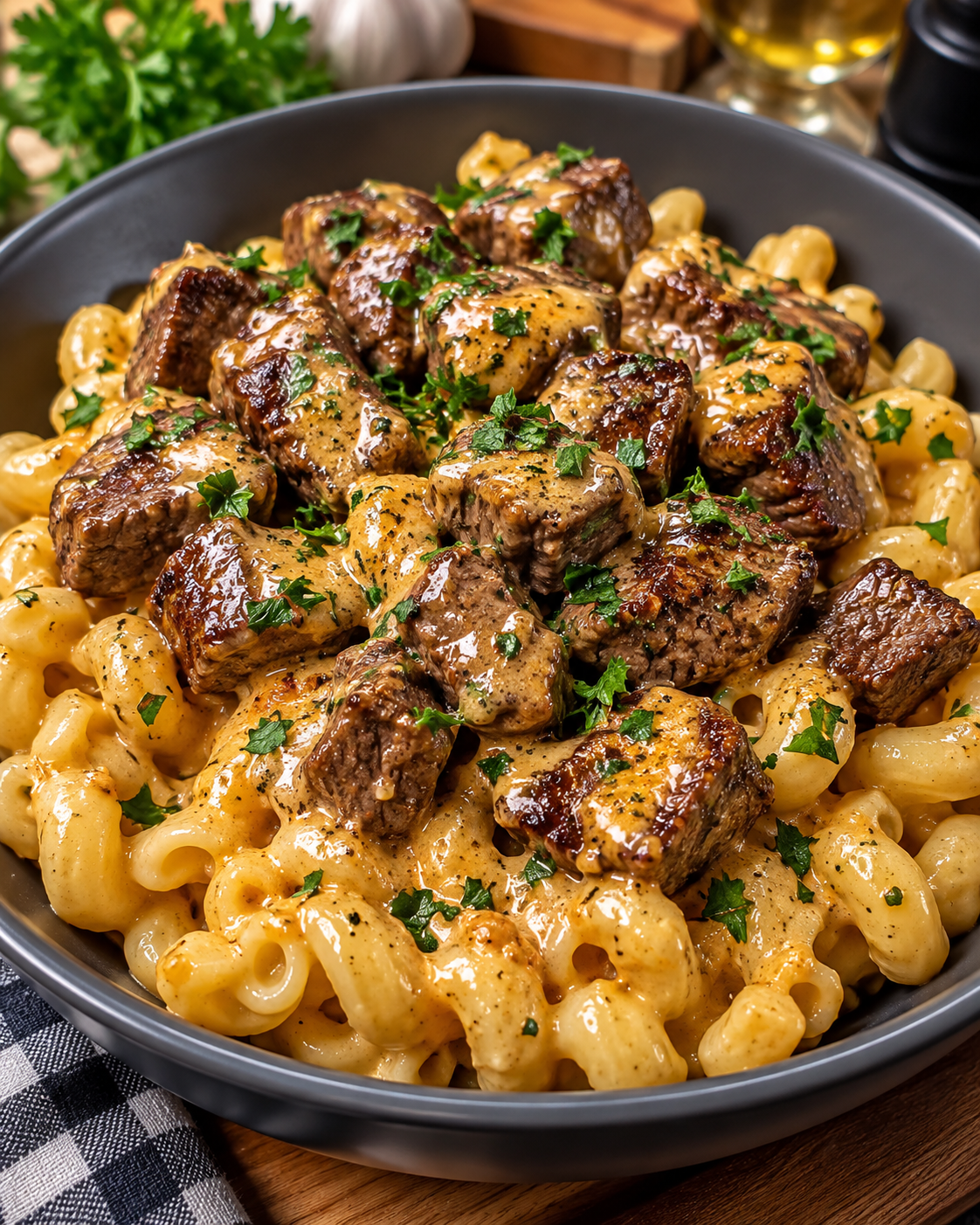
This Creamy Steak Pasta combines juicy, golden-browned steak bites with tender pasta and a silky garlic Parmesan cream sauce. It’s rich enough for a special dinner but straightforward enough to make on a busy weeknight.
The key is cooking the steak separately, building the sauce in the same skillet to capture all those flavorful browned bits, and returning the beef only at the end. That keeps the steak tender while giving the creamy sauce deep steakhouse-style flavor.
Why You’ll Love This Creamy Steak Pasta
- Tender, juicy steak bites
- Rich garlic Parmesan sauce
- Ready in about 35 minutes
- Easy one-skillet sauce
- Perfect for date night or family dinner
- Restaurant-style flavor at home
- Easy to customize
- Great with penne, rigatoni, fettuccine, or linguine
Ingredients
For the Steak
- 1½ pounds sirloin steak or ribeye
- 1 tablespoon olive oil
- 1 tablespoon unsalted butter
- 1 teaspoon kosher salt
- ½ teaspoon black pepper
- 1 teaspoon garlic powder
- ½ teaspoon smoked paprika
For the Pasta
- 12 ounces penne, rigatoni, or fettuccine
- Salt for pasta water
- 1 cup reserved pasta water
For the Creamy Garlic Parmesan Sauce
- 2 tablespoons unsalted butter
- 5 garlic cloves, minced
- 1 cup heavy cream
- ½ cup low-sodium beef broth
- 1 cup freshly grated Parmesan cheese
- ½ teaspoon Italian seasoning
- ¼ teaspoon black pepper
- ¼ teaspoon crushed red pepper flakes, optional
- 1 teaspoon Worcestershire sauce
- 1 tablespoon chopped fresh parsley
Optional Finishing Ingredients
- Extra Parmesan
- Fresh parsley
- Cracked black pepper
- Red pepper flakes
What’s the Best Steak for Creamy Steak Pasta?
You don’t need the most expensive steak at the grocery store.
Sirloin
My favorite all-around option.
It’s flavorful, relatively lean, and easy to cut into bite-size pieces.
Ribeye
Richer because of its marbling.
It creates an especially luxurious pasta but also releases more fat.
New York Strip
Another excellent option with strong beef flavor and good texture.
Tenderloin
Extremely tender but expensive. Save it for when you want a special-occasion version.
Cut the Steak Against the Grain
Before cooking, look at the direction of the muscle fibers.
Slice across those fibers rather than parallel to them.
Cutting against the grain shortens the fibers and makes each bite easier to chew.
For steak bites, aim for pieces roughly 1 to 1½ inches across.
How to Make Creamy Steak Pasta
Step 1: Bring the Steak Toward Room Temperature Briefly
Remove the steak from the refrigerator while you prepare the other ingredients.
Pat it thoroughly dry with paper towels.
A dry surface browns much better than a wet one.
Step 2: Season the Steak
Season with:
- Salt
- Black pepper
- Garlic powder
- Smoked paprika
Toss until evenly coated.
Step 3: Boil the Pasta
Bring a large pot of salted water to a boil.
Cook the pasta until al dente, following the package timing as a guide.
Before draining, reserve about 1 cup pasta water.
Don’t rinse the pasta.
Don’t Forget the Pasta Water
The cloudy cooking water contains starch released from the pasta.
That starch can help:
- Loosen an overly thick sauce
- Help sauce cling to pasta
- Create a smoother consistency
Reserve it before draining.
Step 4: Heat the Skillet
Place a large cast-iron or stainless-steel skillet over medium-high to high heat.
Add olive oil.
Allow the skillet to become properly hot.
Step 5: Sear the Steak
Add steak in a single layer.
Don’t overcrowd the pan.
Sear until deeply browned, turning as needed.
Add 1 tablespoon butter toward the end.
For whole-cut beef, USDA guidance uses 145°F (63°C) followed by a 3-minute rest as the minimum safe internal temperature.
Transfer the steak to a clean plate and let it rest.
Why Cook the Steak Separately?
If you leave steak in the skillet while making the cream sauce, it keeps cooking.
By the time the pasta is ready, those tender steak bites can become tough.
Instead:
Sear → remove → make sauce → return at the end.
This is one of the most important techniques in the recipe.
Step 6: Lower the Heat
Reduce to medium-low.
Leave the flavorful browned bits in the skillet.
Those browned bits are valuable.
Step 7: Add Butter and Garlic
Add 2 tablespoons butter.
Once melted, add the minced garlic.
Cook for approximately 30–60 seconds.
Don’t brown the garlic aggressively.
Step 8: Deglaze the Pan
Pour in the beef broth.
Use a wooden spoon to scrape the browned bits from the skillet.
Add Worcestershire sauce.
Simmer briefly.
Step 9: Add Heavy Cream
Reduce the heat.
Pour in the heavy cream.
Add:
- Italian seasoning
- Black pepper
- Optional red pepper flakes
Stir gently.
Bring the sauce to a gentle simmer rather than an aggressive boil.
Step 10: Add Parmesan
Reduce the heat to low.
Gradually add freshly grated Parmesan while stirring.
Let each handful melt before adding more.
The sauce should become creamy and smooth.
Step 11: Add the Pasta
Transfer the drained pasta directly into the sauce.
Toss until every piece is coated.
If the sauce seems too thick, add reserved pasta water a few tablespoons at a time.
Step 12: Return the Steak
Add the rested steak and any juices from the plate.
Toss gently.
Only heat long enough to warm the steak.
Don’t simmer it in the sauce for several minutes.
Step 13: Finish
Turn off the heat.
Add:
- Fresh parsley
- Extra Parmesan
- Cracked black pepper
Taste before adding additional salt because Parmesan and Worcestershire already contribute saltiness.
Step 14: Serve Immediately
Cream sauces are at their silkiest immediately after preparation.
Divide among warm bowls.
Top with a few steak bites and Parmesan.
The Secret to Restaurant-Style Creamy Steak Pasta
This dish looks simple—and it is—but several techniques separate excellent creamy steak pasta from an average one.
The biggest are:
High-heat steak searing + proper pan deglazing + low-heat Parmesan + starchy pasta water.
Each solves a different problem.
Get a Real Sear on the Steak
Browning creates flavor.
For good browning:
- Pat the steak dry.
- Preheat the skillet.
- Don’t crowd the pan.
- Don’t constantly move the meat.
- Work in batches if necessary.
If the skillet is packed with cold beef, the temperature drops and the steak releases water.
Instead of searing, it steams.
Why Stainless Steel and Cast Iron Work So Well
Both pans tolerate high heat and develop excellent browning.
| Pan | Browning | Heat Retention | Cleanup |
| Cast iron | Excellent | Excellent | Moderate |
| Stainless steel | Excellent | Very good | Moderate |
| Nonstick | Moderate | Varies | Easy |
A 12-inch stainless-steel or cast-iron skillet gives the steak enough surface area to brown properly.
Don’t Throw Away the Browned Bits
After searing steak, you’ll see dark golden-brown material attached to the skillet.
That’s fond.
Adding broth loosens it and incorporates its concentrated beef flavor into the cream sauce.
This is why making the sauce in the steak skillet is so effective.
How to Keep Cream Sauce Smooth
The most important rule is:
Don’t aggressively boil Parmesan cheese.
High temperatures can cause cheese proteins to tighten and separate, producing a grainy or oily sauce.
Once the cream is hot, lower the heat before gradually adding Parmesan.
Why Freshly Grated Parmesan Is Better
Pre-shredded Parmesan can contain anti-caking ingredients that affect melting.
Freshly grated Parmesan usually melts more smoothly.
For creamy sauces, buy a wedge and grate it shortly before cooking when practical.
Why Is My Sauce Too Thick?
Cream sauces continue thickening as they cool.
If yours becomes too thick, add:
reserved pasta water, 1–2 tablespoons at a time.
Toss after each addition.
You can also use a little warm beef broth.
Why Is My Sauce Too Thin?
Let it gently simmer before adding the Parmesan.
Don’t immediately add flour.
Heavy cream naturally thickens as some water evaporates, and Parmesan provides additional body.
Also remember that the sauce will thicken once mixed with pasta.
Best Pasta Shapes for Creamy Steak Pasta
Different pasta shapes change the eating experience.
Penne
Easy, familiar, and excellent for catching sauce.
Rigatoni
Larger tubes with plenty of surface area.
Fettuccine
Ideal when you want a classic creamy restaurant-style presentation.
Linguine
Slightly lighter than fettuccine.
Shells
The cups catch little pools of creamy sauce.
Penne vs. Rigatoni vs. Fettuccine
| Pasta | Sauce Holding | Texture | Best For |
| Penne | Excellent | Firm | Easy family dinner |
| Rigatoni | Excellent | Hearty | Steak-heavy pasta |
| Fettuccine | Very good | Silky | Date-night presentation |
| Linguine | Good | Lighter | Elegant version |
| Shells | Excellent | Tender | Extra-saucy pasta |
For this recipe, rigatoni or penne are especially good.
Garlic Parmesan Steak Pasta
For a stronger garlic flavor, increase the garlic to 6 cloves.
Add some garlic while making the sauce and finish with a tiny amount of roasted garlic.
Don’t simply burn extra minced garlic in the skillet.
Creamy Cajun Steak Pasta
Replace the standard steak seasoning with Cajun seasoning.
Add:
- Cajun seasoning
- Smoked paprika
- Red pepper flakes
Taste before adding salt because commercial Cajun blends vary considerably in sodium.
Spicy Steak Pasta
Increase the crushed red pepper.
You can also add:
- Chili flakes
- Calabrian chili
- Hot sauce
Add heat gradually so it doesn’t overwhelm the steak and Parmesan.
Steak Alfredo Pasta
For an Alfredo-inspired version, simplify the sauce around:
- Butter
- Heavy cream
- Parmesan
- Garlic
- Black pepper
Skip the tomato ingredients entirely.
Finish with plenty of freshly grated Parmesan.
Creamy Mushroom Steak Pasta
This is one of the best variations.
After removing the steak, add sliced mushrooms to the hot skillet.
Cook until deeply browned.
Then make the sauce.
Good choices include:
- Cremini
- Baby bella
- White button mushrooms
Mushrooms reinforce the savory beef flavor.
Steak & Spinach Pasta
Stir several handfuls of baby spinach into the cream sauce immediately before adding the pasta.
It wilts quickly.
This is an easy way to add vegetables without substantially changing the recipe.
Sun-Dried Tomato Steak Pasta
Add chopped sun-dried tomatoes.
Their concentrated sweet-tart flavor cuts through the richness of the cream.
Use a moderate amount so they don’t overpower the beef.
Creamy Steak Pasta with Broccoli
Steam or blanch broccoli separately.
Add it with the pasta.
Keeping the broccoli separate until the end helps preserve its color and prevents the cream sauce from becoming watery.
Steak Pasta with Bell Peppers
Sauté sliced red and yellow peppers after removing the steak.
Add onions if desired.
This creates a creamy steak-and-peppers pasta.
Philly Cheesesteak-Inspired Pasta
Add:
- Sautéed onions
- Bell peppers
- Mushrooms
Use Parmesan in the sauce and finish with a little provolone.
This isn’t a traditional cheesesteak, but it creates a delicious cheesesteak-inspired pasta dinner.
Creamy Garlic Steak & Shrimp Pasta
Want a special-occasion version?
Add shrimp.
Cook shrimp separately after searing the steak.
Remove once cooked, then return both steak and shrimp at the end.
Shrimp should be opaque and reach 145°F (63°C).
Can You Use Leftover Steak?
Absolutely.
In fact, creamy pasta is an excellent way to use leftover steak.
Make the sauce and pasta first.
Slice the cooked steak thinly.
Add it during the final minute just long enough to warm through.
Overheating leftover steak can make it tough.
Can You Use Ground Beef?
Yes, although the finished dish becomes more like creamy beef pasta.
Brown the ground beef thoroughly to 160°F (71°C).
Drain excess grease before making the sauce.
Can You Use Chicken?
Yes.
Chicken makes an excellent substitute.
Cut boneless chicken into bite-size pieces, season, and sauté.
Poultry should reach 165°F (74°C).
Heavy Cream vs. Half-and-Half
Heavy cream produces the most reliable rich sauce.
Half-and-half creates a lighter sauce but doesn’t thicken as strongly.
If substituting, use gentler heat because lower-fat dairy is generally more susceptible to separation.
Can You Use Milk?
You can make a lighter milk-based sauce, but it requires a different approach.
Milk doesn’t have enough fat to behave exactly like heavy cream.
A roux made from butter and flour can help thicken a milk-based sauce.
Don’t simply replace heavy cream with the same amount of skim milk and expect identical results.
Add Cream Cheese?
Yes.
A small amount of softened cream cheese can make the sauce thicker and tangier.
Use it sparingly because too much can overwhelm the Parmesan and steak.
Why Worcestershire Sauce?
Worcestershire provides:
- Umami
- Acidity
- Savory depth
It works particularly well with beef.
You only need a teaspoon.
What to Serve with Creamy Steak Pasta
Because this pasta is rich, lighter sides work particularly well.
Try:
- Garden salad
- Caesar salad
- Roasted broccoli
- Asparagus
- Green beans
- Garlic bread
- Roasted Brussels sprouts
Garlic Bread
Garlic bread is an obvious favorite because it catches the leftover Parmesan sauce.
For an especially rich dinner, make homemade garlic bread with butter, garlic, parsley, and Parmesan.
Best Salad Pairing
Choose something fresh and acidic.
A simple salad with:
- Mixed greens
- Tomatoes
- Cucumber
- Red onion
- Vinaigrette
helps balance the creamy pasta.
Date-Night Dinner
For two people, halve the recipe or prepare the full amount and save leftovers.
Serve with:
- Salad
- Garlic bread
- Creamy steak pasta
- Simple dessert
Fettuccine or linguine gives the dish an especially restaurant-style appearance.
Family Dinner Version
Use penne or rigatoni.
They’re easier to serve and eat than long pasta.
Add broccoli or spinach to stretch the meal and provide vegetables in the same dish.
Make-Ahead Preparation
You can prepare several components ahead:
- Cut the steak
- Grate Parmesan
- Chop garlic
- Measure seasonings
However, creamy steak pasta is best when cooked shortly before serving.
Meal Prep
You can still use it for meal prep.
Divide the cooled pasta into airtight containers.
Store refrigerated.
For the best texture, slightly undercook the pasta so it doesn’t become overly soft during reheating.
How to Store Leftovers
Refrigerate leftovers promptly in airtight containers.
For best quality, enjoy within approximately 3–4 days.
How to Reheat Creamy Steak Pasta
Cream sauces thicken dramatically in the refrigerator.
Stovetop
Place pasta in a skillet.
Add a splash of:
- Milk
- Cream
- Beef broth
Warm gently over low heat while tossing.
Microwave
Add a small splash of liquid.
Reheat in short intervals, stirring between each one.
Avoid overheating the steak.
Can You Freeze Creamy Steak Pasta?
Technically yes, but cream sauces can change texture after freezing and thawing.
For the best quality, freeze the cooked steak separately and prepare fresh pasta and cream sauce later.
If you do freeze the complete dish, thaw in the refrigerator and reheat gently.
Why Did My Steak Become Tough?
Common reasons include:
- Overcooking
- Cutting with the grain
- Simmering it too long in the sauce
- Using very small steak pieces
Sear the steak, remove it, and return it only at the end.
Why Didn’t My Steak Brown?
Possible causes:
- Wet steak
- Cold skillet
- Overcrowded pan
- Constant stirring
Pat the steak dry and cook in batches.
Why Is My Parmesan Clumping?
The sauce may be too hot.
Reduce the heat before adding cheese.
Add freshly grated Parmesan gradually while stirring.
Why Is My Sauce Greasy?
Possible causes include:
- Excess steak fat
- Too much butter
- Cheese added over excessive heat
- Sauce separated
Drain excessive fat after searing a very marbled steak and keep the cream sauce over controlled heat.
How to Make the Dish Look Restaurant-Quality
Don’t bury everything under sauce.
Plate the creamy pasta first.
Arrange several browned steak bites on top.
Finish with:
- Parmesan
- Parsley
- Black pepper
A shallow white pasta bowl creates an especially clean presentation.
Useful Kitchen Tools
Helpful equipment includes:
- 12-inch skillet
- Large pasta pot
- Sharp chef’s knife
- Cutting board
- Kitchen tongs
- Colander
- Cheese grater
- Instant-read meat thermometer
- Measuring cups
- Measuring spoons
- Airtight meal-prep containers
A heavy stainless-steel or cast-iron skillet is particularly useful because high-quality browning is one of the biggest flavor-building steps in this recipe.
Budget-Friendly Tips
You don’t need ribeye.
Sirloin provides excellent flavor for less money.
You can also:
- Use 1 pound steak instead of 1½ pounds
- Increase pasta slightly
- Add mushrooms
- Add broccoli
- Buy Parmesan by the block
- Use store-brand heavy cream
Adding vegetables helps stretch the steak across more servings without making the dinner feel skimpy.
Common Mistakes
Overcrowding the Steak
Cook in batches if necessary.
Forgetting Pasta Water
Reserve it before draining.
Overcooking the Pasta
Keep it al dente.
Boiling the Parmesan
Use low heat.
Simmering Steak in the Sauce
Return it at the end.
Using Pre-Grated Cheese That Doesn’t Melt Well
Freshly grate Parmesan when possible.
Adding Too Much Salt Early
Parmesan, broth, and Worcestershire all contribute sodium.
Waiting Too Long to Serve
Cream pasta is at its best while freshly made and silky.
Frequently Asked Questions
What steak is best for creamy steak pasta?
Sirloin offers an excellent combination of tenderness, flavor, and price. Ribeye and New York strip are richer alternatives.
What pasta works best?
Penne, rigatoni, fettuccine, and linguine are all excellent.
Can I use leftover steak?
Yes. Add it near the end only long enough to warm through.
Can I add mushrooms?
Absolutely. Brown them after removing the steak and before making the sauce.
Can I use milk instead of heavy cream?
Not as a direct one-to-one substitute if you want the same sauce. A milk version benefits from a roux for thickening.
How do I keep the Parmesan sauce smooth?
Reduce the heat and gradually stir in freshly grated Parmesan.
Why do I need pasta water?
Its starch helps adjust the sauce consistency and helps the sauce cling to the pasta.
Can I make it spicy?
Yes. Add crushed red pepper, Cajun seasoning, or chili.
Can I add vegetables?
Broccoli, spinach, mushrooms, bell peppers, and asparagus all work well.
Can I prepare this ahead?
You can prep the ingredients ahead, but the complete pasta is best cooked close to serving time.
Final Thoughts
This Creamy Steak Pasta delivers the combination that makes restaurant-style comfort food so satisfying: deeply browned steak, tender pasta, garlic, Parmesan, and a silky cream sauce.
The biggest secret is not an expensive ingredient. It’s the cooking order. Sear the steak first and remove it, deglaze the same skillet for maximum flavor, keep the heat gentle when adding Parmesan, and return the steak only at the very end.
Serve it with garlic bread and a crisp salad for a complete dinner, or add mushrooms, broccoli, spinach, or Cajun seasoning to create your own version.
When those juicy steak bites meet the creamy garlic Parmesan pasta, this is one dinner that’s very hard to leave on the plate.