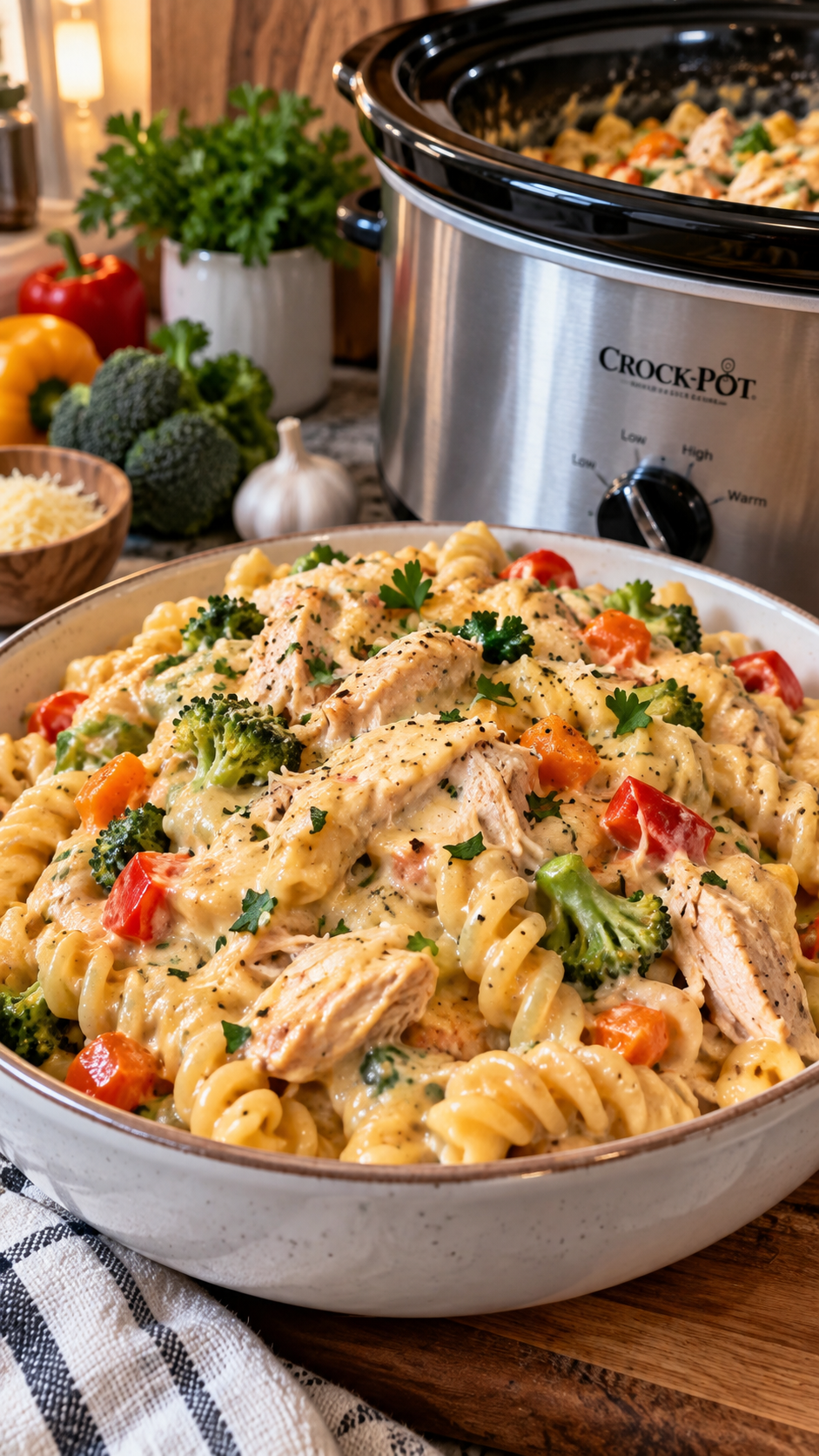
This Creamy Cheesy Chicken Pasta is the kind of dinner that feels indulgent without being complicated. Tender chicken, perfectly cooked pasta, garlic, cream, and plenty of melted cheese come together in one rich, silky sauce that clings to every bite.
It works especially well for busy weeknights, family dinners, meal prep, or those nights when you want something warm and filling without spending hours in the kitchen.
Why You’ll Love This Recipe
- Creamy and extra cheesy
- Tender chicken in every bite
- Easy to make in about 30–35 minutes
- Family-friendly
- Great for meal prep
- Simple grocery-store ingredients
- Easy to customize
- Works with several pasta shapes
- Perfect with broccoli, spinach, or mushrooms
Ingredients
For the Chicken
- 1½ pounds boneless, skinless chicken breast
- 1 tablespoon olive oil
- 1 tablespoon unsalted butter
- 1 teaspoon garlic powder
- 1 teaspoon paprika
- ½ teaspoon onion powder
- ½ teaspoon black pepper
- ½ teaspoon salt
For the Pasta
- 12 ounces penne, rotini, rigatoni, or fettuccine
- Salt for the pasta water
- 1 cup reserved pasta water
For the Creamy Cheese Sauce
- 2 tablespoons unsalted butter
- 4 garlic cloves, minced
- 1 cup heavy cream
- ¾ cup low-sodium chicken broth
- 1 cup freshly grated Parmesan cheese
- 1 cup shredded mozzarella or Monterey Jack
- ½ teaspoon Italian seasoning
- ¼ teaspoon black pepper
- ¼ teaspoon crushed red pepper flakes, optional
Optional Garnish
- Fresh parsley
- Extra Parmesan
- Cracked black pepper
- Red pepper flakes
Best Chicken for Creamy Pasta
Chicken breast is the most common choice because it cooks quickly and has a mild flavor that works well with creamy sauces.
Chicken thighs are another excellent option.
They are slightly richer and tend to stay juicier, making them especially useful if you are worried about overcooking the chicken.
If using leftover or rotisserie chicken, skip the raw-chicken cooking step and add the cooked chicken near the end.
How to Make Creamy Cheesy Chicken Pasta
Step 1: Cut the Chicken
Cut the chicken into bite-size pieces.
Try to keep the pieces similar in size so they cook evenly.
Pat them dry with paper towels.
Step 2: Season the Chicken
Season with:
- Garlic powder
- Paprika
- Onion powder
- Black pepper
- Salt
Toss until evenly coated.
Step 3: Cook the Pasta
Bring a large pot of salted water to a boil.
Add the pasta and cook until al dente, following the package instructions as a guide.
Before draining, reserve about 1 cup of pasta water.
Do not rinse the pasta.
Step 4: Heat the Skillet
Place a large skillet over medium-high heat.
Add the olive oil.
Once hot, add the chicken in a single layer.
Avoid overcrowding the pan.
Step 5: Cook the Chicken
Cook the chicken until browned and cooked through.
Poultry should reach 165°F (74°C) internally.
Add 1 tablespoon butter toward the end for extra flavor.
Transfer the chicken to a clean plate.
Step 6: Lower the Heat
Reduce the skillet to medium-low heat.
Leave the browned bits in the pan.
They will add extra flavor to the sauce.
Step 7: Add Butter and Garlic
Add 2 tablespoons butter.
Once melted, add the minced garlic.
Cook for approximately 30 seconds, just until fragrant.
Do not burn the garlic.
Step 8: Add Chicken Broth
Pour in the chicken broth.
Use a wooden spoon to scrape up the browned bits from the skillet.
Let the broth simmer briefly.
Step 9: Add Heavy Cream
Pour in the heavy cream.
Add:
- Italian seasoning
- Black pepper
- Optional red pepper flakes
Bring the sauce to a gentle simmer.
Avoid a hard boil.
Step 10: Add Parmesan
Reduce the heat to low.
Gradually stir in the freshly grated Parmesan.
Let it melt slowly into the sauce.
Step 11: Add Mozzarella
Add the shredded mozzarella or Monterey Jack.
Stir until smooth and creamy.
The sauce should now be rich, glossy, and cheesy.
Step 12: Add the Pasta
Add the drained pasta directly to the skillet.
Toss until thoroughly coated.
If the sauce seems too thick, add reserved pasta water a few tablespoons at a time.
Step 13: Return the Chicken
Add the cooked chicken back to the skillet.
Toss gently.
Heat only until everything is warmed through.
Step 14: Taste and Adjust
Taste before adding more salt.
Parmesan and broth already contain sodium.
Add extra black pepper or red pepper flakes if desired.
Step 15: Serve
Turn off the heat.
Finish with:
- Fresh parsley
- Parmesan
- Cracked black pepper
Serve immediately while the sauce is still creamy and silky.
The Secret to Creamy Chicken Pasta That Doesn’t Turn Grainy
The biggest mistake with cheesy pasta sauces is excessive heat.
Once cheese is added, keep the temperature low.
High heat can cause the cheese proteins to tighten and separate, leaving the sauce:
- Grainy
- Oily
- Stringy
Gentle heat gives you a much smoother result.
Freshly Grated Cheese Works Best
Pre-shredded cheese is convenient, but many varieties contain anti-caking ingredients.
Those coatings can interfere with smooth melting.
Freshly grated Parmesan and block mozzarella generally melt more evenly.
Why Pasta Water Is So Useful
Reserved pasta water contains starch from the noodles.
That starch helps the sauce cling to the pasta and gives you more control over consistency.
If your sauce becomes too thick, don’t immediately pour in a lot of milk.
Add pasta water slowly.
Best Pasta Shapes
Several shapes work well with a rich cheesy sauce.
| Pasta | Sauce Holding | Texture | Best Use |
| Penne | Excellent | Firm | Family dinner |
| Rotini | Excellent | Ridged | Extra sauce |
| Rigatoni | Excellent | Hearty | Rich version |
| Fettuccine | Very good | Silky | Restaurant-style |
| Shells | Excellent | Tender | Maximum cheese sauce |
For a family-style dinner, penne or rotini are especially convenient.
Creamy Garlic Chicken Pasta
Want stronger garlic flavor?
Increase the garlic to 5 or 6 cloves.
You can also add a small amount of roasted garlic for a sweeter, deeper flavor.
Chicken Alfredo-Inspired Version
For a more Alfredo-style sauce, simplify the ingredients around:
- Butter
- Heavy cream
- Parmesan
- Garlic
- Black pepper
Skip the mozzarella if you want a lighter, more Parmesan-forward sauce.
Extra-Cheesy Version
Use a combination of:
- Parmesan
- Mozzarella
- Monterey Jack
- Small amount of sharp cheddar
Avoid adding too many different cheeses at once.
A balanced blend melts more smoothly and keeps the flavor from becoming muddy.
Cheddar Chicken Pasta
Replace the mozzarella with sharp cheddar.
This creates a stronger comfort-food flavor.
Cheddar works especially well with:
- Broccoli
- Bacon
- Ranch seasoning
Chicken Broccoli Pasta
Add about 2 cups of small broccoli florets.
Steam or blanch them separately until just tender.
Drain well.
Add them with the pasta at the end.
Chicken Spinach Pasta
Add several handfuls of fresh spinach to the sauce.
It wilts quickly.
This is one of the easiest ways to add vegetables without adding much preparation time.
Chicken Mushroom Pasta
Sauté sliced mushrooms after cooking the chicken.
Allow them to brown properly before making the sauce.
If you crowd the pan, the mushrooms release water and steam instead of browning.
Sun-Dried Tomato Chicken Pasta
Add chopped sun-dried tomatoes.
Their concentrated flavor adds acidity and sweetness that balances the creamy sauce.
A small amount goes a long way.
Cajun Chicken Pasta
Season the chicken with Cajun seasoning.
Add a little smoked paprika and red pepper flakes.
Taste before adding extra salt because commercial Cajun seasonings vary in sodium.
Buffalo Chicken Pasta
Add Buffalo-style hot sauce to the cream sauce.
Use cheddar or Monterey Jack.
Top with green onions.
Bacon Chicken Pasta
Add cooked, crumbled bacon.
The salty, smoky flavor pairs beautifully with chicken and cheese.
Reduce added salt because bacon and Parmesan already contribute plenty.
Chicken Bacon Ranch Pasta
Add:
- Cooked bacon
- Ranch seasoning
- Cheddar
- Green onions
Use ranch seasoning moderately and taste before adding salt.
Creamy Chicken Pasta with Peas
Frozen peas are an easy addition.
Stir them into the sauce near the end.
They cook quickly and add a little sweetness.
Roasted Red Pepper Chicken Pasta
Slice roasted red peppers and fold them into the sauce.
They add color, sweetness, and a slightly smoky flavor.
Can You Use Rotisserie Chicken?
Absolutely.
Rotisserie chicken is one of the easiest shortcuts.
Prepare the pasta and sauce first.
Add the cooked chicken during the final few minutes.
Heat only until warmed through.
Can You Use Leftover Chicken?
Yes.
This recipe is excellent for leftover chicken.
Avoid cooking it twice for too long.
Add it near the end to prevent drying.
Chicken Breast vs. Chicken Thighs
| Chicken | Flavor | Texture | Best Feature |
| Breast | Mild | Lean | Quick cooking |
| Thighs | Rich | Juicier | More forgiving |
| Rotisserie | Savory | Tender | Fastest option |
Both raw breast and thighs should reach 165°F (74°C).
Heavy Cream vs. Half-and-Half
Heavy cream gives the most reliable rich sauce.
Half-and-half can work for a lighter version, but the sauce will be thinner.
Keep the heat gentle because lower-fat dairy can separate more easily.
Can You Use Milk?
Yes, but don’t expect the exact same result.
For a milk-based sauce, make a light roux:
- 2 tablespoons butter
- 2 tablespoons flour
Cook briefly.
Then gradually whisk in milk.
This helps create enough body without heavy cream.
Can You Add Cream Cheese?
Yes.
A small amount of softened cream cheese can make the sauce thicker and slightly tangy.
About 2–4 ounces is usually plenty.
Too much can overpower the Parmesan.
How to Fix Sauce That Is Too Thick
Add:
- Pasta water
- Chicken broth
- Milk
Use small amounts at a time.
Remember that cream sauce thickens as it cools.
How to Fix Sauce That Is Too Thin
Let it simmer gently before adding the cheese.
Once the Parmesan and pasta are added, the sauce should thicken further.
Avoid dumping extra flour directly into the sauce because it can create lumps.
Why Is My Sauce Grainy?
Common reasons include:
- Heat was too high
- Cheese was added too quickly
- Pre-shredded cheese didn’t melt well
- Sauce boiled after cheese was added
Keep the heat low and add cheese gradually.
Why Is My Sauce Oily?
Possible causes include:
- Excessive heat
- Too much cheese
- Too much butter
- Cheese separating
Remove the pan from intense heat and toss with a small amount of pasta water to help bring the sauce back together.
Why Is My Chicken Dry?
Chicken breast becomes dry when overcooked.
Cut the pieces evenly and remove them from the skillet once they reach 165°F (74°C).
Return them only at the end.
Don’t Cook the Chicken in the Sauce for Too Long
The chicken is already cooked.
Its job at the end is simply to warm through.
Several extra minutes of simmering can turn juicy chicken into dry chicken.
What to Serve with Creamy Cheesy Chicken Pasta
This dish is rich, so fresh sides work well.
Try:
- Garden salad
- Caesar salad
- Garlic bread
- Roasted broccoli
- Green beans
- Asparagus
- Roasted Brussels sprouts
Garlic Bread
Garlic bread is particularly good because it absorbs the extra cheese sauce.
Use:
- Baguette
- Italian bread
- Dinner rolls
Brush with garlic butter and toast until golden.
Best Salad Pairing
A bright vinaigrette helps cut through the creaminess.
Try greens with:
- Tomato
- Cucumber
- Red onion
- Lemon or balsamic vinaigrette
Family Dinner Version
Use penne or rotini.
Add broccoli.
Serve with garlic bread.
This gives you an easy meal that is filling without requiring several separate dishes.
Date-Night Version
Use fettuccine.
Add mushrooms and spinach.
Finish with freshly grated Parmesan and cracked black pepper.
Serve in shallow pasta bowls.
How to Make It Look Restaurant-Style
Plate the creamy pasta first.
Place a few browned chicken pieces on top.
Finish with:
- Parmesan
- Parsley
- Black pepper
Avoid drowning everything in sauce.
A glossy coating looks better than a pool of cream.
Make-Ahead Preparation
You can prepare several ingredients ahead:
- Cut the chicken
- Grate the cheese
- Mince garlic
- Measure seasonings
The finished pasta, however, is best cooked shortly before serving.
Meal Prep
This pasta can still be meal-prepped.
Divide cooled portions into airtight containers.
Slightly undercook the pasta initially so it stays firmer after reheating.
How to Store Leftovers
Refrigerate leftovers promptly in airtight containers.
For best quality, enjoy within approximately 3–4 days.
How to Reheat Creamy Chicken Pasta
Stovetop
Place the pasta in a skillet.
Add a small splash of milk, cream, broth, or water.
Heat over low heat while stirring gently.
Microwave
Add a spoonful of liquid.
Heat in short intervals, stirring between each one.
This helps prevent the sauce from drying out.
Can You Freeze It?
You can, but dairy sauces may change texture after freezing.
For the best results, freeze cooked chicken separately and make fresh pasta and sauce later.
If freezing the complete meal, thaw in the refrigerator and reheat gently.
Why Cream Sauces Change After Freezing
Fat and water can separate when frozen and thawed.
The sauce may look grainy initially.
Gentle reheating with a splash of milk or cream can sometimes improve the texture.
Best Skillet for This Recipe
A large skillet with enough surface area works best.
Good options include:
- Stainless steel
- Cast iron
- Deep sauté pan
A 12-inch skillet is ideal for most batches.
Stainless Steel vs. Nonstick
| Pan | Browning | Sauce Making | Cleanup |
| Stainless steel | Excellent | Excellent | Moderate |
| Cast iron | Excellent | Good | Moderate |
| Nonstick | Moderate | Very easy | Easy |
Stainless steel gives you excellent browned bits from the chicken, which adds flavor to the sauce.
Useful Kitchen Tools
Helpful equipment includes:
- Large skillet
- Large pasta pot
- Colander
- Cheese grater
- Sharp chef’s knife
- Cutting board
- Kitchen tongs
- Wooden spoon
- Instant-read thermometer
- Measuring cups
- Airtight meal-prep containers
A digital meat thermometer makes it much easier to cook the chicken safely without drying it out.
Budget-Friendly Tips
To make the meal more affordable:
- Buy chicken breasts in larger packs
- Use store-brand pasta
- Buy block cheese and grate it
- Add broccoli or peas to stretch the meal
- Use chicken thighs when priced lower
- Use leftover chicken
You can also reduce the chicken to 1 pound and increase the pasta slightly.
How to Double the Recipe
Use a larger skillet or prepare the chicken in two batches.
Do not crowd the chicken.
Double the sauce ingredients and pasta.
You may need slightly more pasta water to keep the sauce loose enough.
Common Mistakes to Avoid
Overcooking the Chicken
Remove it once safely cooked.
Forgetting Pasta Water
Reserve it before draining.
Rinsing the Pasta
The surface starch helps the sauce cling.
Boiling the Cheese Sauce
Use gentle heat.
Adding All the Cheese at Once
Add it gradually.
Overcooking the Pasta
Keep it al dente.
Using Too Small a Pan
A crowded skillet makes cooking harder.
Adding Too Much Salt Early
Broth and cheese can already be salty.
Frequently Asked Questions
What pasta is best?
Penne, rotini, rigatoni, fettuccine, and shells all work very well.
Can I use rotisserie chicken?
Yes. Add it near the end just long enough to warm through.
Can I add broccoli?
Absolutely. Blanch or steam it separately and add it with the pasta.
Can I use cheddar?
Yes. Cheddar gives the sauce a stronger, more comfort-food flavor.
Can I use milk instead of cream?
Yes, but a roux helps create the proper thickness.
Why is my cheese sauce grainy?
The heat was probably too high or the cheese was added too quickly.
Can I make this spicy?
Yes. Add Cajun seasoning, red pepper flakes, or hot sauce.
How do I make it extra creamy?
Add a little cream cheese or extra heavy cream.
Can I prepare it ahead?
Prepare the ingredients ahead, but cook and assemble the pasta close to serving time for the best texture.
How long do leftovers keep?
For best quality, refrigerate and enjoy within about 3–4 days.
Final Thoughts
This Creamy Cheesy Chicken Pasta delivers everything you want from a comforting weeknight meal: juicy chicken, tender pasta, garlic, Parmesan, and a rich cheese sauce that coats every bite.
For the best result, remember the key steps: brown the chicken without overcooking it, reserve the pasta water, keep the heat low when adding cheese, and return the chicken only at the end.
Serve it with garlic bread and salad for a complete dinner, or add broccoli, mushrooms, spinach, bacon, or Cajun seasoning to make it your own.
Simple ingredients, one creamy skillet, and plenty of melted cheese—that’s a dinner worth making again.