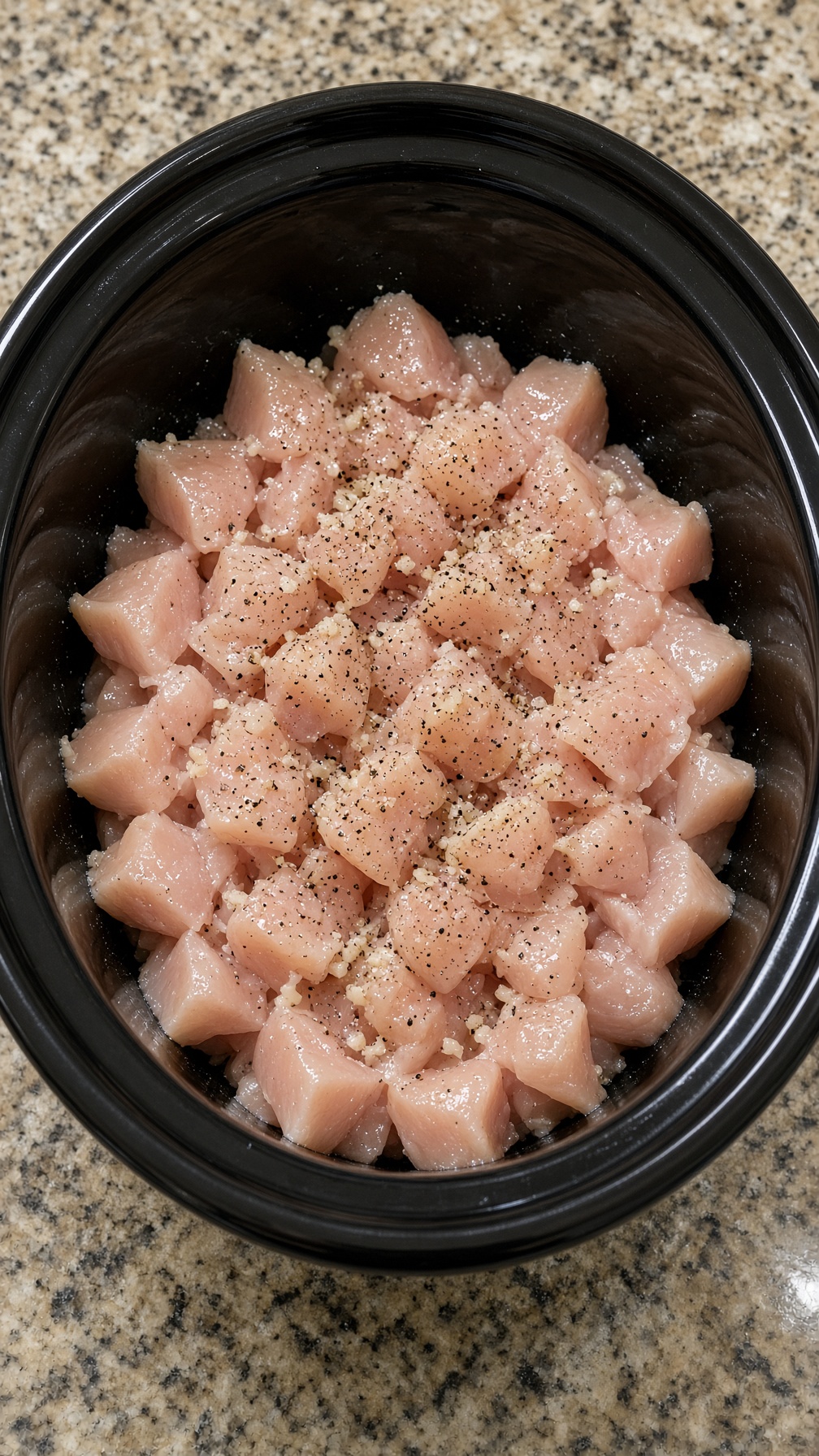
These Slow Cooker Beef Tips with Onion Gravy turn an affordable cut of beef into a deeply savory, fork-tender dinner surrounded by rich onion gravy. With browned beef, slowly softened onions, beef broth, Worcestershire sauce, garlic, and herbs, this is classic comfort food made easier in the slow cooker.
Serve the beef tips over creamy mashed potatoes, egg noodles, rice, or buttered pasta and spoon plenty of that homemade onion gravy over the top.
Why You’ll Love This Recipe
- Tender, slow-cooked beef
- Rich homemade onion gravy
- Easy slow-cooker dinner
- Excellent with mashed potatoes
- Uses budget-friendly chuck roast
- Great for family dinners
- Freezer and meal-prep friendly
- Simple pantry seasonings
- Easy mushroom variation
- Minimal hands-on cooking after prep
Ingredients
For the Beef Tips
- 2½ pounds beef chuck roast, cut into 1½-inch pieces
- 1½ tablespoons olive oil
- 1 teaspoon kosher salt
- ¾ teaspoon black pepper
- 1 teaspoon garlic powder
- 1 teaspoon onion powder
- ½ teaspoon smoked paprika
- 2 tablespoons all-purpose flour
For the Onion Gravy
- 2 large yellow onions, thinly sliced
- 3 garlic cloves, minced
- 2 tablespoons unsalted butter
- 2½ cups low-sodium beef broth
- 2 tablespoons Worcestershire sauce
- 1 tablespoon tomato paste
- 1 teaspoon dried thyme
- ½ teaspoon dried rosemary
- ½ teaspoon black pepper
- 1 tablespoon soy sauce, optional
For Thickening the Gravy
- 3 tablespoons cornstarch
- 3 tablespoons cold water
Optional Finishing Ingredients
- 1 tablespoon butter
- Fresh parsley
- Freshly cracked black pepper
What Are Beef Tips?
“Beef tips” can refer to several different cuts of beef.
Some recipes use sirloin tips, while slow-cooker versions are often better with tougher, well-marbled cuts such as chuck roast.
Chuck contains connective tissue that benefits from long, gentle cooking.
Instead of becoming dry quickly, it gradually becomes tender as the connective tissue breaks down.
Best Beef for Slow Cooker Beef Tips
Chuck Roast
My first choice for this recipe.
Chuck is:
- Flavorful
- Well marbled
- Relatively affordable
- Excellent for slow cooking
Stew Meat
Convenient because it’s already cut.
The disadvantage is that packages labeled “stew meat” may contain pieces from different cuts, so tenderness can vary.
Sirloin
Sirloin can work, but it’s leaner and doesn’t require the same long cooking process as chuck.
For a true all-day slow-cooker version, chuck roast is usually the better choice.
How to Make Slow Cooker Beef Tips with Onion Gravy
Step 1: Cut the Beef
Trim only large pieces of hard exterior fat.
Leave some marbling because it contributes flavor and moisture.
Cut the beef into approximately 1½-inch chunks.
Try to keep the pieces reasonably uniform.
Step 2: Dry the Beef
Pat the beef thoroughly dry with paper towels.
This seemingly small step makes a major difference when browning.
Wet beef tends to steam.
Dry beef develops a better crust.
Step 3: Season
Season the beef with:
- Salt
- Pepper
- Garlic powder
- Onion powder
- Smoked paprika
Sprinkle with 2 tablespoons flour and toss lightly.
The flour encourages browning and contributes a little body to the gravy.
Step 4: Heat the Skillet
Heat a large cast-iron or stainless-steel skillet over medium-high heat.
Add olive oil.
Wait until the skillet is properly hot before adding the beef.
Step 5: Sear in Batches
Add the beef in a single layer.
Don’t overcrowd the pan.
Brown the pieces on several sides.
You’re not trying to cook them completely at this stage.
You’re developing flavor.
Transfer the browned beef to the slow cooker.
Repeat with the remaining beef.
Is Searing Really Necessary?
Technically, you can put everything directly into the slow cooker.
But browning produces flavors that slow cooking alone doesn’t create as effectively.
If you have an extra 10 minutes, sear the beef.
It’s one of the most worthwhile steps in the recipe.
Step 6: Cook the Onions
Reduce the skillet to medium.
Add butter and sliced onions.
Cook approximately 5–7 minutes, stirring occasionally.
You don’t need to fully caramelize them.
You simply want them softened with some golden edges.
Step 7: Add Garlic
Add the minced garlic.
Cook for about 30 seconds, until fragrant.
Step 8: Add Tomato Paste
Stir in 1 tablespoon tomato paste.
Cook for approximately 1 minute.
Cooking tomato paste briefly helps deepen its flavor.
Step 9: Deglaze the Skillet
Pour about ½ cup beef broth into the skillet.
Scrape the browned bits from the bottom with a wooden spoon.
Those browned bits contain concentrated beef flavor.
Step 10: Transfer Everything
Pour the onion mixture over the beef in the slow cooker.
Add the remaining broth.
Then add:
- Worcestershire sauce
- Thyme
- Rosemary
- Black pepper
- Optional soy sauce
Stir gently.
Step 11: Slow Cook
Cover and cook approximately:
LOW: 6–8 hours
or
HIGH: 3–4 hours
These are ranges because slow cookers and beef cuts vary.
For chuck, LOW generally produces the most forgiving texture.
Don’t Judge Chuck Roast Only by the Clock
The beef is ready when it becomes genuinely fork-tender.
If chuck is still tough after the expected cooking time, it often needs more time, not less.
For shreddable/tender chuck, the internal temperature frequently ends up around 195–205°F (90–96°C) as connective tissue breaks down. That’s a tenderness range, not the minimum safe temperature for beef.
Step 12: Make the Cornstarch Slurry
Once the beef is tender, combine:
- 3 tablespoons cornstarch
- 3 tablespoons cold water
Whisk until completely smooth.
Never add dry cornstarch directly to hot gravy.
Step 13: Thicken the Onion Gravy
Stir the slurry into the hot cooking liquid.
Cover and cook on HIGH for approximately 10–20 minutes, or until the gravy thickens.
The exact time depends on your slow cooker.
Step 14: Finish the Gravy
Taste.
Adjust:
- Salt
- Pepper
- Worcestershire sauce
For an extra glossy finish, stir in 1 tablespoon butter.
Step 15: Serve
Spoon the beef tips and onion gravy over:
- Mashed potatoes
- Egg noodles
- Rice
- Buttered pasta
Finish with parsley and cracked black pepper.
The Secret to Fork-Tender Slow Cooker Beef Tips
There are two different goals in this recipe:
Deep beef flavor and tender texture.
Searing helps with the first.
Long, gentle cooking helps with the second.
Trying to rush chuck roast can leave you with beef that’s technically cooked but still unpleasantly chewy.
Why Chuck Roast Works So Well
Chuck comes from the shoulder area.
It contains connective tissue and intramuscular fat.
During slow cooking, collagen gradually converts into gelatin, contributing to the rich mouthfeel associated with pot roast and braised beef.
That’s why chuck can become beautifully tender after several hours.
Chuck vs. Sirloin vs. Stew Meat
| Beef | Flavor | Slow-Cooker Texture | Best Use |
| Chuck roast | Rich | Very tender | Best overall |
| Sirloin | Beefy, leaner | Firmer | Shorter cooking |
| Stew meat | Varies | Varies | Convenience |
| Round | Lean | Can be firmer | Budget option |
For this recipe, chuck roast offers the most reliable combination of price, flavor, and tenderness.
Why Searing Adds So Much Flavor
When beef hits a sufficiently hot pan, browning reactions create hundreds of new flavor compounds.
That’s why browned beef tastes different from boiled beef.
The dark golden crust eventually contributes to the gravy.
Don’t Crowd the Skillet
If you add 2½ pounds of cold beef to a small skillet all at once, the pan temperature drops.
The meat releases moisture.
Instead of browning, it steams.
Cook in 2–3 batches if necessary.
The Brown Bits Are Valuable
After searing, you’ll see browned material stuck to the skillet.
Don’t wash it away.
Add broth and scrape those bits into the liquid.
This process—deglazing—is one of the easiest ways to make homemade gravy taste more complex.
Why Onions Matter
The onions aren’t merely a garnish.
Over several hours they soften into the cooking liquid and become part of the gravy itself.
Yellow onions work especially well because they become sweeter as they cook.
Want Stronger Onion Flavor?
Use three onions instead of two.
You can also cook them longer in the skillet before transferring them to the slow cooker.
For a deeper onion flavor, sauté until they’re golden rather than merely softened.
French Onion-Inspired Beef Tips
For a French onion-inspired variation, use plenty of deeply browned onions.
Finish with:
- Gruyère
- Provolone
- Swiss cheese
Serve over mashed potatoes or toasted bread.
It’s not traditional French onion soup, but the flavor combination works beautifully.
Mushroom Beef Tips
Mushrooms are one of the easiest additions.
Use approximately 8–12 ounces sliced cremini or baby bella mushrooms.
For maximum flavor, brown the mushrooms in the skillet before transferring them to the slow cooker.
Why Brown Mushrooms First?
Raw mushrooms contain a lot of water.
If you put a large quantity directly into the slow cooker, they release that water into your gravy.
Browning them first:
- Concentrates flavor
- Removes excess moisture
- Improves texture
Garlic Butter Beef Tips
Increase the garlic slightly.
At the end, stir in:
- 1–2 tablespoons butter
- Fresh parsley
- Small amount of minced or roasted garlic
This creates a richer steakhouse-inspired finish.
Peppercorn Beef Tips
Increase the coarsely cracked black pepper.
Add a small splash of cream at the end for a creamy peppercorn-style gravy.
Use the pepper gradually so it doesn’t overwhelm the dish.
Creamy Beef Tips
Once the beef is tender and the gravy has thickened, stir in:
- ½ cup heavy cream
or
- ½ cup sour cream
If using sour cream, reduce the heat and stir it in gently rather than boiling aggressively.
Sour Cream Beef Tips
This variation moves the dish toward beef stroganoff territory.
Finish the gravy with sour cream and serve over egg noodles.
Add mushrooms for an especially comforting version.
Beef Tips and Noodles
Prepare wide egg noodles separately.
Place them in shallow bowls.
Spoon the beef and gravy over the noodles.
Don’t cook egg noodles in the slow cooker for the entire cooking period—they’ll become overly soft.
Beef Tips Over Mashed Potatoes
This may be the ultimate serving option.
The potatoes absorb the onion gravy and make the dish especially satisfying.
For creamy mashed potatoes, use:
- Yukon Gold potatoes
- Butter
- Warm milk or cream
- Salt
- Pepper
Beef Tips and Rice
White rice is a simple, inexpensive option.
Brown rice works too.
Cook the rice separately so you can control its texture.
Beef Tips with Buttered Pasta
Penne, rotini, or wide noodles can all work.
Toss freshly cooked pasta with a little butter and parsley before adding the beef gravy.
How to Make Really Good Onion Gravy
A flavorful gravy needs balance.
You want:
beefiness + onion sweetness + umami + seasoning + proper thickness.
Beef broth provides the base.
Onions add sweetness.
Worcestershire and optional soy sauce provide savory depth.
Tomato paste adds concentration.
Cornstarch controls thickness.
Why Use Low-Sodium Beef Broth?
Slow cooking concentrates flavors.
Worcestershire and soy sauce also contain sodium.
Starting with low-sodium broth gives you more control.
You can always add salt at the end.
Removing excess salt is much harder.
Cornstarch vs. Flour for Gravy
| Thickener | Texture | Method | Best Feature |
| Cornstarch | Glossy | Cold-water slurry | Quick |
| Flour | Classic | Roux or slurry | Traditional |
| Reduction | Intense | Simmer liquid | Concentrated flavor |
Cornstarch is especially convenient for slow-cooker recipes.
How Thick Should Onion Gravy Be?
It should coat the back of a spoon without becoming gelatinous.
Remember that gravy thickens slightly as it cools.
Don’t keep adding cornstarch immediately.
Give each addition time to work.
What If My Gravy Is Too Thin?
Make another small slurry:
- 1 tablespoon cornstarch
- 1 tablespoon cold water
Stir it into the hot gravy.
Give it time to thicken before adding more.
What If My Gravy Is Too Thick?
Add a small amount of warm beef broth.
Stir.
Repeat until the consistency is right.
Why Is My Gravy Lumpy?
Usually because dry flour or cornstarch was added directly to hot liquid.
Always mix cornstarch with cold water first.
Whisk until completely smooth before adding it.
Why Is My Gravy Greasy?
Chuck roast contains fat.
Some is desirable because it contributes flavor, but excessive fat can make the gravy oily.
If necessary, spoon excess fat from the surface before thickening.
A fat separator is also useful if you make gravies frequently.
Can You Use Onion Soup Mix?
Yes, as a shortcut.
However, packaged onion soup mixes can contain significant sodium.
If using one, choose low-sodium broth and reduce or omit added salt until you’ve tasted the finished gravy.
Can You Use Gravy Packets?
You can, but they’re unnecessary.
The beef broth, onions, browned beef, Worcestershire, and cornstarch already create a flavorful gravy.
A homemade gravy also gives you greater control over sodium and thickness.
Can You Add Red Wine?
Yes.
After searing the beef and onions, deglaze with a modest amount of dry red wine and let it reduce briefly before adding broth.
Use wine only if you enjoy the flavor; it isn’t required.
For an alcohol-free version, simply use additional beef broth.
Can You Add Potatoes?
Yes.
Cut Yukon Gold or baby potatoes into reasonably large pieces and add them around the beef.
However, if you plan to serve the beef over mashed potatoes, there’s little reason to add potatoes inside the slow cooker too.
Can You Add Carrots?
Absolutely.
Large carrot pieces hold up well during slow cooking.
They add sweetness and make the meal more pot-roast-like.
Beef Tips with Carrots and Mushrooms
Add:
- Carrots
- Mushrooms
- Extra onions
You now have an easy all-in-one slow-cooker beef dinner.
Can You Put Frozen Beef Directly in the Slow Cooker?
For a large frozen roast or frozen chunks, thaw the beef safely in the refrigerator before slow cooking.
Starting with properly thawed meat promotes more predictable cooking and follows safer slow-cooker practices.
LOW vs. HIGH
LOW is generally my preference for chuck.
| Setting | Approx. Range | Result |
| LOW | 6–8 hours | Most forgiving |
| HIGH | 3–4 hours | Faster |
| Keep Warm | After cooking only | Holding, not primary cooking |
Exact performance varies by slow-cooker model and how full it is.
Why Is My Beef Still Tough?
This surprises many people.
With chuck roast, tough meat often means it hasn’t cooked long enough for the connective tissue to soften.
If it’s still firm and chewy, continue cooking and check again later.
Why Did My Beef Become Dry?
Possible reasons include:
- Pieces were too small
- Beef was very lean
- Cooking continued long after tenderness
- Not enough cooking liquid
- Wrong cut for long slow cooking
Use reasonably large chunks of well-marbled chuck.
Should Beef Tips Fall Apart?
They should be fork-tender, but they don’t necessarily need to completely shred.
For attractive serving, stop when the chunks can be easily cut with a fork while still holding some shape.
Make-Ahead Preparation
The evening before, you can:
- Cut the beef
- Slice onions
- Mince garlic
- Measure seasonings
Store everything properly refrigerated.
For the deepest flavor, do the searing shortly before starting the slow cooker.
Can You Prepare the Entire Dish the Night Before?
You can prepare components ahead, but avoid leaving partially cooked meat sitting for long periods.
The simplest approach is to prep the raw ingredients separately, refrigerate them, and cook the next day.
Meal Prep
Beef tips are excellent for meal prep because the gravy protects the beef from drying during reheating.
Divide into containers with:
- Mashed potatoes
- Rice
- Egg noodles
Add vegetables on the side.
How to Store Leftovers
Cool leftovers promptly and refrigerate in airtight containers.
For best quality, use within approximately 3–4 days.
How to Reheat Beef Tips
Stovetop
Place beef and gravy in a saucepan.
Add a small splash of broth if necessary.
Warm gently over medium-low heat.
Microwave
Place one serving in a microwave-safe container.
Cover loosely.
Heat in intervals and stir the gravy between intervals.
Can You Freeze Beef Tips and Gravy?
Yes.
This recipe freezes very well.
Allow the beef and gravy to cool completely.
Transfer to freezer-safe containers.
For convenient meals, freeze individual portions.
What Should You Freeze Separately?
If possible, freeze the beef and gravy without noodles.
Freshly cooked noodles generally have a better texture.
Mashed potatoes can be frozen, but their texture may change depending on the recipe.
Best Slow Cooker Size
A 6-quart slow cooker works particularly well for this quantity.
You want enough room for the beef to cook evenly without filling the appliance beyond its manufacturer’s recommended level.
Useful Kitchen Tools
Helpful equipment includes:
- 6-quart slow cooker
- 12-inch stainless-steel or cast-iron skillet
- Sharp chef’s knife
- Large cutting board
- Kitchen tongs
- Wooden spoon
- Measuring cups and spoons
- Instant-read thermometer
- Fat separator, optional
- Airtight meal-prep containers
A good heavy skillet and reliable slow cooker are particularly useful because they handle the two most important parts of the recipe: browning and slow tenderizing.
Budget-Friendly Tips
Chuck roast is usually a better value than premium steak for this cooking method.
You can stretch the meal further by:
- Adding mushrooms
- Adding extra onions
- Serving over mashed potatoes
- Serving over rice
- Serving over egg noodles
- Adding carrots
Because the gravy is so flavorful, you don’t need an enormous portion of beef on every plate.
How Much Should You Make for a Family?
Approximately 2½ pounds of beef generally works well for 6–8 servings, depending on portion size and side dishes.
For a larger gathering, double the recipe and use two slow cookers rather than overfilling one.
Dinner Party Presentation
For a more polished presentation:
Spoon creamy mashed potatoes into shallow bowls.
Make a small well in the center.
Add several beef tips.
Spoon onion gravy generously over the top.
Finish with:
- Fresh parsley
- Cracked pepper
The result looks much more impressive than the effort required.
Common Mistakes to Avoid
Skipping the Sear
The recipe still works, but you lose a major layer of flavor.
Crowding the Skillet
Cook the beef in batches.
Using Too Much Liquid
Slow cookers trap moisture.
Adding Too Much Salt Early
Broth, Worcestershire, and soy sauce all contribute sodium.
Using Dry Cornstarch
Always make a cold-water slurry.
Assuming Tough Beef Is Overcooked
Chuck may simply need more time.
Cutting Beef Too Small
Small pieces can become dry.
Using Very Lean Steak for an All-Day Cook
Choose chuck for long cooking.
Starting with Frozen Beef
Thaw it safely in the refrigerator first.
Frequently Asked Questions
What cut of beef is best for slow cooker beef tips?
Chuck roast is an excellent choice because its marbling and connective tissue respond well to long, gentle cooking.
Do I have to brown the beef first?
No, but browning adds considerable flavor.
Can I add mushrooms?
Yes. Brown them first for the best flavor and to reduce excess moisture.
Why is my beef still tough?
Chuck often needs additional cooking time before its connective tissue has softened sufficiently.
How do I thicken the gravy?
Use a slurry of equal parts cornstarch and cold water.
Can I use onion soup mix?
Yes, but reduce other salty ingredients accordingly.
Can I make the gravy creamy?
Yes. Add a little heavy cream or sour cream near the end.
What should I serve with beef tips?
Mashed potatoes, egg noodles, rice, and buttered pasta are excellent choices.
Can I make this ahead?
Yes. It reheats very well and is excellent for meal prep.
Can I freeze it?
Yes. Freeze the beef together with plenty of gravy for the best reheated texture.
Final Thoughts
These Slow Cooker Beef Tips with Onion Gravy are all about turning simple ingredients into a deeply satisfying comfort-food dinner.
For the best results, use well-marbled chuck roast, dry and sear the beef in batches, soften the onions, deglaze the skillet to capture the browned flavor, and let the slow cooker work until the beef is truly fork-tender.
Finish the cooking liquid with a simple cornstarch slurry and you’ll have thick, glossy onion gravy ready to spoon over everything.
Pile the beef tips over creamy mashed potatoes or buttery egg noodles, add plenty of gravy, and finish with fresh parsley for an easy slow-cooker dinner that tastes like it spent all day being carefully tended—because, in a way, it did.