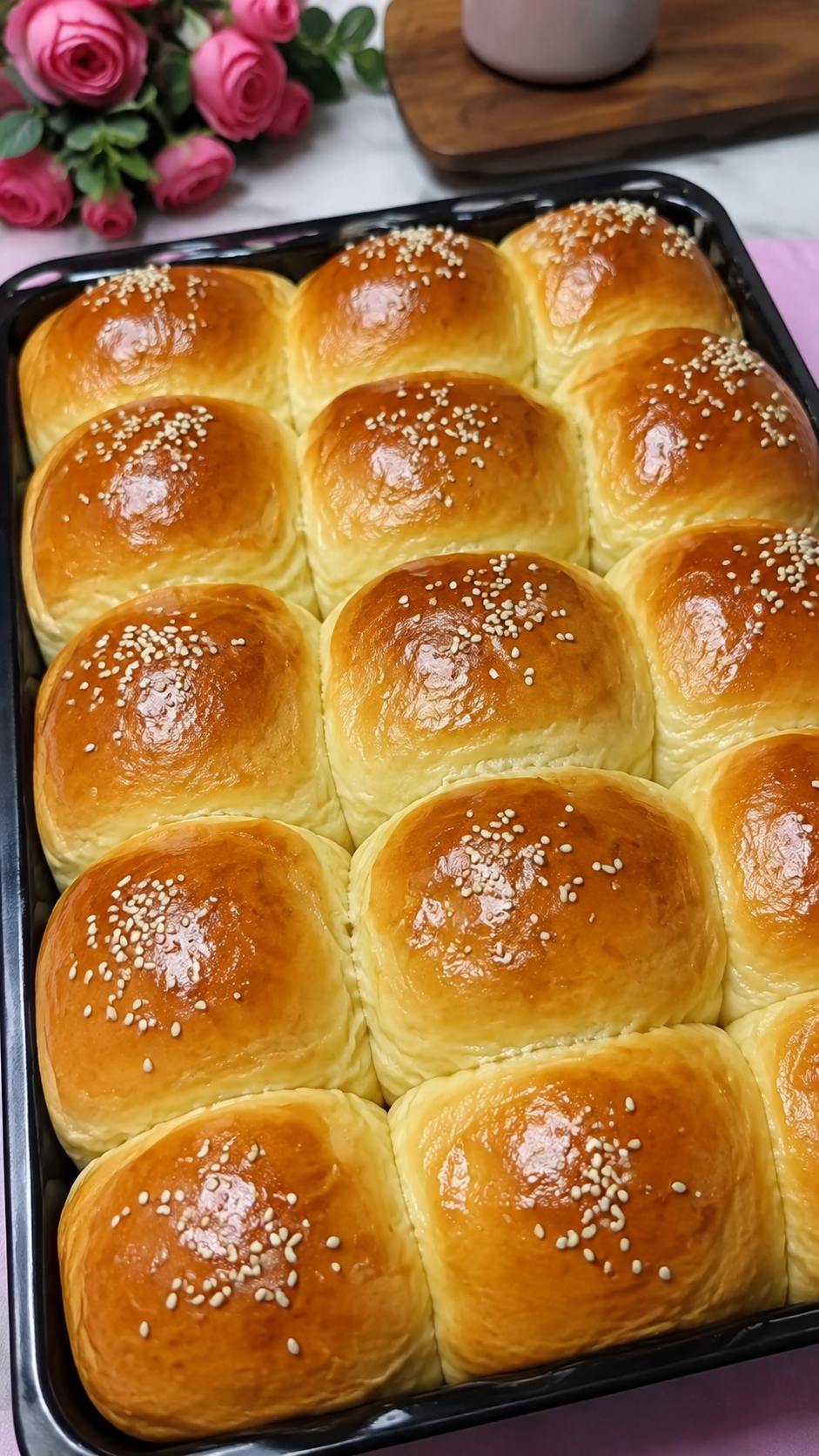
These Soft Pull-Apart Milk Bread Rolls are light, fluffy, buttery, and incredibly tender. Each roll pulls apart easily, revealing a soft, pillowy interior that makes them perfect for family dinners, holiday meals, breakfast, brunch, or homemade sandwiches.
The secret is a milk-enriched dough combined with butter and eggs. For an even softer result, this recipe uses a simple tangzhong, a cooked flour-and-milk mixture that helps the bread retain moisture.
Serve these rolls warm with butter and honey, alongside soups and roasts, or use the leftovers for breakfast sandwiches and sliders.
Why You’ll Love These Milk Bread Rolls
- Extra soft and fluffy
- Beautiful pull-apart texture
- Rich buttery flavor
- Stay soft longer
- Perfect for Thanksgiving and Christmas
- Great for sliders and sandwiches
- Freezer-friendly
- Easy to prepare ahead
Ingredients
For the Tangzhong
- 3 tablespoons all-purpose or bread flour
- ½ cup whole milk
For the Dough
- 3½ cups bread flour, plus more if needed
- 2¼ teaspoons instant yeast
- ¼ cup granulated sugar
- 1 teaspoon salt
- ¾ cup whole milk, lukewarm
- 1 large egg, room temperature
- 4 tablespoons unsalted butter, softened
- Prepared tangzhong
For Finishing
- 1 egg + 1 tablespoon milk for egg wash
- 2 tablespoons melted butter for brushing
What Makes Milk Bread So Soft?
Milk bread is different from a basic dinner roll because the dough is enriched with ingredients that contribute both flavor and tenderness.
These include:
- Whole milk
- Butter
- Egg
- Sugar
But the ingredient technique that really makes this recipe special is tangzhong.
Tangzhong helps flour absorb and retain more moisture, giving the finished rolls their signature soft, almost cloud-like texture.
What Is Tangzhong?
Tangzhong is a simple mixture of flour and liquid that is cooked before being added to bread dough.
Heating flour with milk causes the starches to gelatinize.
This helps the dough hold more moisture during and after baking.
The result can be:
- Softer bread
- More tender crumb
- Better moisture retention
- Longer-lasting freshness
It sounds technical, but preparing tangzhong takes only a few minutes.
How to Make Soft Pull-Apart Milk Bread Rolls
Step 1: Make the Tangzhong
Place 3 tablespoons flour and ½ cup whole milk in a small saucepan.
Whisk until smooth.
Cook over medium-low heat, stirring constantly.
After a few minutes, the mixture will become thick and pudding-like.
Remove it from the heat.
Allow it to cool until just warm.
Do not add piping-hot tangzhong directly to the yeast dough.
Step 2: Combine the Dry Ingredients
In the bowl of a stand mixer, combine:
- Bread flour
- Instant yeast
- Sugar
- Salt
Mix briefly.
If your yeast package gives different instructions, follow the manufacturer’s directions.
Step 3: Add the Milk
The milk should be lukewarm rather than hot.
Add it to the dry ingredients.
Very hot milk can damage yeast and prevent proper rising.
Step 4: Add Egg and Tangzhong
Add the room-temperature egg and cooled tangzhong.
Mix on low speed with the dough hook until a rough dough forms.
At this point, the dough may look sticky.
Avoid adding lots of extra flour immediately.
Step 5: Knead the Dough
Continue kneading for approximately 5 minutes.
The dough should gradually become smoother.
Step 6: Add the Butter
Add softened butter gradually, one tablespoon at a time.
Allow each addition to become incorporated before adding more.
The dough may briefly look slippery or separated.
Keep kneading.
As gluten develops, it should become smooth and elastic again.
Why Add Butter Later?
Fat can coat flour proteins and slow gluten development.
Allowing the dough to develop some structure before incorporating all the butter can make kneading easier.
This technique is common with enriched breads such as:
- Brioche
- Milk bread
- Sweet rolls
Step 7: Continue Kneading
Knead for approximately another 8 to 10 minutes.
The finished dough should be:
- Smooth
- Elastic
- Soft
- Slightly tacky
It should not feel extremely wet.
Avoid adding unnecessary flour, because too much can make the rolls dense.
The Windowpane Test
Take a small piece of dough.
Stretch it gently between your fingers.
If you can stretch it into a thin, almost translucent membrane without it tearing immediately, the gluten has developed well.
This is called the windowpane test.
It is especially useful for enriched bread dough.
Step 8: First Rise
Shape the dough into a ball.
Place it in a lightly greased bowl.
Cover with plastic wrap or a clean kitchen towel.
Let it rise in a warm place for approximately 1 to 1½ hours, or until roughly doubled in size.
The exact time depends on room temperature.
Best Temperature for Rising Bread
Yeast likes a comfortably warm environment.
If your kitchen is cold, rising will simply take longer.
Avoid placing dough somewhere extremely hot in an attempt to speed things up.
Slow, steady fermentation generally gives better results.
Step 9: Divide the Dough
Gently press the risen dough to release large air pockets.
Transfer it to a clean work surface.
Divide into 12 equal portions.
For perfectly even rolls, use a digital kitchen scale.
Step 10: Shape the Rolls
Take one portion.
Pull the edges toward the bottom to create surface tension.
Turn it over.
Cup your hand around the dough and roll gently against the counter until smooth and round.
Repeat with the remaining pieces.
Step 11: Arrange in the Pan
Lightly grease a 9×13-inch baking dish.
Arrange the 12 dough balls evenly inside.
Leave a little space between them.
As they rise and bake, the rolls will expand until they touch, creating the classic pull-apart appearance.
Step 12: Second Rise
Cover loosely.
Allow the rolls to rise for approximately 40 to 60 minutes.
They should become noticeably puffy and begin touching each other.
Do not rely only on the clock.
Watch the dough.
Step 13: Preheat the Oven
Preheat the oven to 350°F (175°C).
Step 14: Add Egg Wash
Whisk together:
- 1 egg
- 1 tablespoon milk
Brush a thin layer gently over the tops.
Do not press down on the risen dough.
The egg wash creates the beautiful shiny golden surface.
Step 15: Bake
Bake for approximately 20 to 25 minutes, or until the tops are beautifully golden brown.
If the tops brown too quickly, cover them loosely with aluminum foil toward the end.
The center rolls should be fully baked.
Step 16: Brush With Butter
As soon as the rolls come out of the oven, brush the tops with melted butter.
This adds flavor and helps keep the crust soft.
Allow them to cool slightly before pulling them apart.