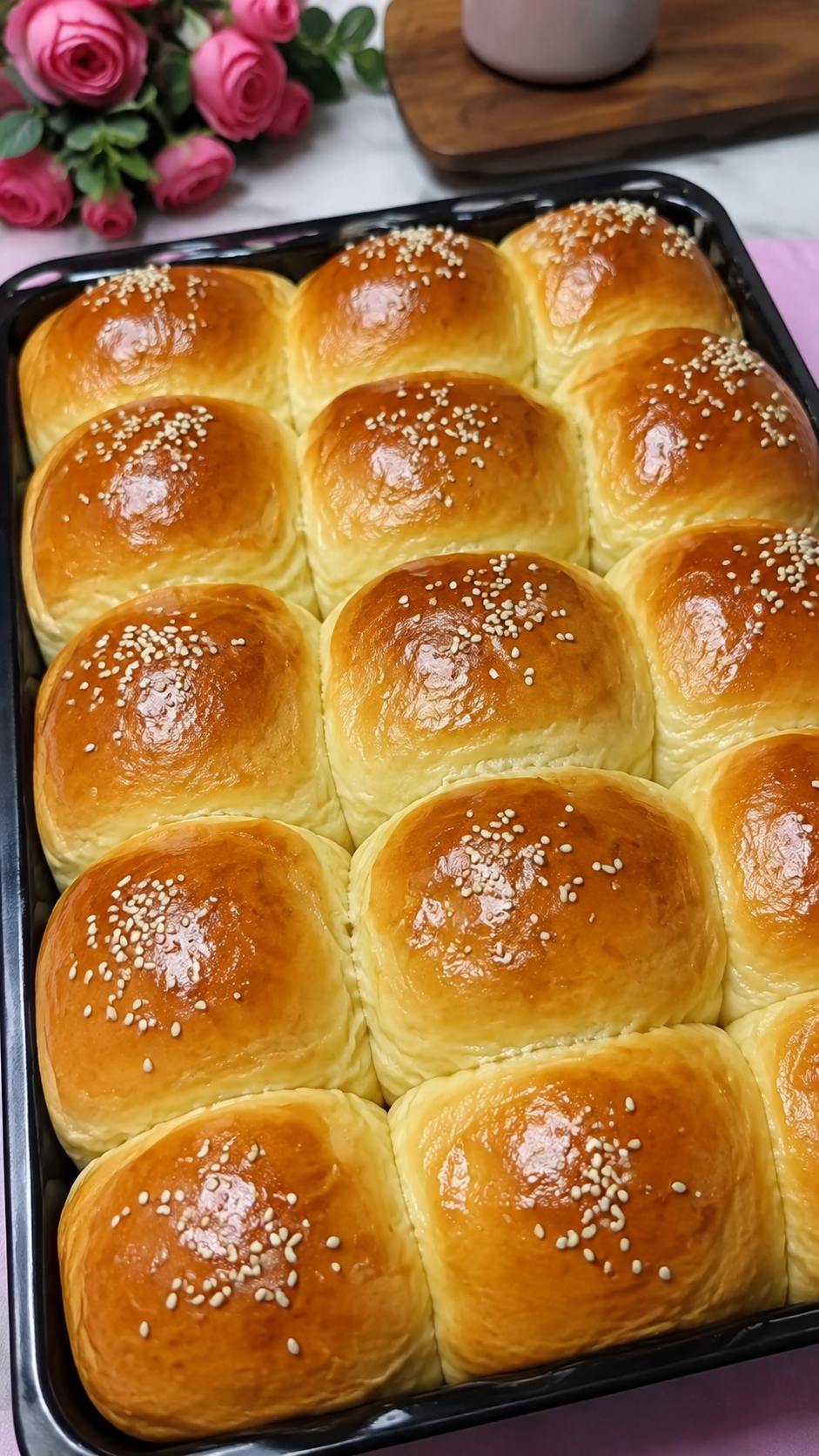
The Secret to Super-Fluffy Dinner Rolls
Soft bread depends on several things working together.
Don’t Add Too Much Flour
The dough should remain soft.
Develop the Gluten
Proper kneading creates the structure needed to trap gas from the yeast.
Give the Dough Enough Time
Under-proofed rolls can be dense.
Don’t Overbake
Extra oven time removes moisture.
Brush With Butter
Butter keeps the surface tender and adds flavor.
Bread Flour vs. All-Purpose Flour
Both can work, but bread flour is an excellent choice for this recipe.
Bread Flour
Contains more protein, which helps create stronger gluten structure.
All-Purpose Flour
Produces good rolls but may create a slightly different crumb.
For especially stretchy, fluffy milk bread, bread flour is worth trying.
How to Measure Flour Correctly
Too much flour is one of the easiest ways to ruin otherwise good dinner rolls.
A digital kitchen scale provides the most consistent results.
If using cups:
- Fluff the flour.
- Spoon it into the measuring cup.
- Level the top.
- Do not pack it.
The dough should feel soft rather than stiff.
Why Whole Milk Works Best
Whole milk contributes:
- Fat
- Protein
- Flavor
- Tenderness
Lower-fat milk can work, but whole milk generally creates a richer roll.
For the classic milk-bread texture, it is the preferred option.
Why Eggs Are Added
Eggs contribute richness, structure, color, and tenderness.
They also help create the beautiful golden interior associated with enriched breads.
Use room-temperature eggs when possible so they combine more easily with the dough.
Instant Yeast vs. Active Dry Yeast
Both can make excellent rolls.
Instant Yeast
Usually mixes directly with flour and works quickly.
Active Dry Yeast
Traditionally gets dissolved in warm liquid before mixing.
Always check your yeast package because instructions vary by manufacturer.
How to Tell if Your Yeast Is Still Good
If you are unsure about active dry yeast, test it with warm milk or water and a small amount of sugar.
After several minutes, you should see activity and foam.
If nothing happens, the yeast may be old.
Fresh yeast is critical for light rolls.
Why Didn’t My Rolls Rise?
Possible causes include:
- Old yeast
- Liquid was too hot
- Kitchen was very cold
- Dough contained too much flour
- Dough wasn’t given enough time
Enriched dough often rises more slowly than basic bread dough because butter, eggs, milk, and sugar affect fermentation.
Give it time.
Why Are My Rolls Dense?
Dense rolls can result from:
- Too much flour
- Insufficient kneading
- Under-proofing
- Old yeast
- Overbaking
If the dough feels stiff before the first rise, you may already have added too much flour.
Milk-bread dough should remain soft.
Why Did My Rolls Turn Out Dry?
The most common causes are:
Too Much Flour
Measure carefully.
Overbaking
Remove the rolls once they are properly baked and golden.
Not Enough Fat or Liquid
Follow the ingredient measurements accurately.
Improper Storage
Cover the rolls after they have cooled.
How to Get a Shiny Golden Top
Egg wash creates the bakery-style finish.
For a slightly softer, less glossy surface, skip the egg wash and brush only with melted butter after baking.
For maximum shine, use the egg-and-milk wash before baking and melted butter afterward.
Honey Butter Milk Rolls
For a sweeter finish, mix:
- 2 tablespoons softened butter
- 1 tablespoon honey
Brush it over the warm rolls.
This variation is especially good for breakfast or brunch.
Garlic Butter Dinner Rolls
Turn the same milk bread into savory garlic rolls.
Mix melted butter with:
- Minced garlic
- Chopped parsley
- Pinch of salt
Brush over the rolls immediately after baking.
Serve alongside pasta, chicken, steak, or soup.
Parmesan Garlic Milk Rolls
Add grated Parmesan to the garlic-butter topping.
Brush the rolls with garlic butter and sprinkle with Parmesan.
Return them to the warm oven briefly if you want the cheese to melt slightly.
Cheesy Pull-Apart Rolls
For a cheesy center, flatten each dough portion slightly.
Place a small cube of mozzarella or cheddar in the middle.
Seal the dough completely around the cheese.
Shape into a ball and proceed with the second rise.
When pulled apart warm, the rolls reveal a melted cheese center.
Cinnamon Sugar Milk Rolls
The same soft dough can be adapted into a sweet breakfast version.
Brush the shaped dough lightly with butter and add cinnamon sugar.
You can also shape the dough into traditional cinnamon rolls rather than individual balls.
Slider Rolls
These rolls make excellent sliders.
Slice them horizontally and fill with:
- Turkey and cheese
- Ham and Swiss
- Roast beef
- Chicken
- Cheeseburger filling
Because the rolls are connected, you can even slice an entire group horizontally and make party sliders in one pan.
Thanksgiving Dinner Rolls
These rolls are ideal for Thanksgiving because the dough can be prepared ahead.
Serve them with:
- Roast turkey
- Mashed potatoes
- Gravy
- Stuffing
- Green beans
- Cranberry sauce
Warm rolls are especially useful for soaking up gravy.
Christmas Dinner Rolls
For Christmas dinner, serve them alongside:
- Roast beef
- Ham
- Chicken
- Turkey
- Potatoes
- Roasted vegetables
Brush the tops with butter just before serving for a fresh bakery-style appearance.
Breakfast Milk Rolls
These rolls are also delicious the next morning.
Split one open and add:
- Butter
- Honey
- Jam
- Peanut butter
- Scrambled eggs
- Cheese
Warm the roll briefly first for an especially soft texture.
Can You Make the Dough Ahead?
Yes.
One convenient method is overnight refrigeration.
After preparing the dough, cover it carefully and refrigerate.
The cold temperature slows fermentation.
The next day, shape the rolls, allow them to become puffy at room temperature, and bake.
Exact timing will vary because cold dough takes longer to warm and rise.
Make-Ahead Holiday Strategy
For a large holiday dinner, you can prepare much of the work ahead.
The evening before:
- Make the dough
- Complete the first rise
- Shape the rolls
- Arrange them in the pan
- Cover tightly
- Refrigerate
The next day, remove the pan and allow the rolls enough time to become properly proofed before baking.
This keeps last-minute preparation manageable.
Can You Freeze Unbaked Rolls?
Yes, although yeast performance and final texture can vary depending on the freezing method and duration.
For the most reliable home-baking results, freezing fully baked rolls is often easier.
Can You Freeze Baked Milk Bread Rolls?
Absolutely.
Allow them to cool completely.
Place them in a freezer-safe bag or airtight container.
For additional protection, wrap them before placing them in the container.
Thaw at room temperature and warm gently before serving.
How to Store Homemade Rolls
Once completely cool, place the rolls in an airtight container or resealable food-storage bag.
Keep air exposure to a minimum.
Tangzhong helps the bread stay soft longer than many basic homemade rolls, but proper storage still matters.
Best Way to Reheat Dinner Rolls
Oven
Wrap several rolls loosely in foil and warm gently.
Microwave
Heat one roll for only a short period.
Covering it with a slightly damp paper towel can help prevent drying.
Avoid overheating, as bread can become tough.
What to Serve With Milk Bread Rolls
These rolls work with almost any comfort-food dinner.
Try them with:
- Roast chicken
- Meatloaf
- Beef stew
- Pot roast
- Chicken noodle soup
- Creamy soups
- Pasta
- Holiday turkey
- Baked ham
- Mashed potatoes
Their mild buttery flavor makes them extremely versatile.
Stand Mixer vs. Hand Kneading
A stand mixer is convenient because enriched dough can be sticky.
Stand Mixer
Advantages:
- Easier butter incorporation
- Consistent kneading
- Less hands-on work
Hand Kneading
Still completely possible.
Expect the dough to feel sticky initially.
Avoid solving every bit of stickiness by adding more flour.
As gluten develops, the dough becomes easier to handle.
Helpful Bread-Baking Tools
Useful equipment includes:
- Stand mixer with dough hook
- Digital kitchen scale
- 9×13-inch baking dish
- Bench scraper
- Pastry brush
- Instant-read thermometer
- Mixing bowls
- Cooling rack
- Airtight bread-storage container
A digital scale and stand mixer can be particularly useful if you bake bread frequently.
Why a Bench Scraper Is Helpful
A bench scraper makes dividing sticky dough easier.
You can use it to:
- Divide dough portions
- Lift dough from the counter
- Clean the work surface
- Portion rolls accurately
Pairing a bench scraper with a digital scale makes uniform rolls much easier.
How to Make Every Roll the Same Size
Weigh the entire dough.
Divide that weight by 12.
Then weigh each portion.
Equal rolls:
- Rise more evenly
- Bake more evenly
- Look more professional
This is one of the simplest bakery-style techniques to use at home.
How to Know When Rolls Are Fully Baked
Color is useful, but it isn’t always enough.
The tops should be golden and the center rolls should feel set.
For additional accuracy, an instant-read thermometer inserted into the center of a roll should generally show around 190°F (88°C) when the bread is fully baked.
Common Milk Bread Mistakes
Adding Too Much Flour
The dough should remain soft.
Using Hot Milk
Excessive heat can damage the yeast.
Under-Kneading
The dough needs enough gluten development.
Rushing the Rise
Watch the dough rather than only the clock.
Over-Proofing
Excessively risen dough can lose structure.
Overbaking
This removes moisture.
Skipping the Butter Finish
Melted butter contributes flavor and a softer surface.
Frequently Asked Questions
What makes milk bread so soft?
Milk, butter, eggs, proper gluten development, and the tangzhong technique all contribute.
Do I need a stand mixer?
No. You can knead the dough by hand.
Can I use all-purpose flour?
Yes, although bread flour gives excellent structure.
Why is my dough sticky?
Milk-bread dough is naturally soft. Continue kneading before deciding to add more flour.
Can I make these rolls the night before?
Yes. Refrigerating shaped rolls overnight can make holiday preparation easier.
Can I freeze them?
Yes. Fully baked rolls freeze especially well.
Can I make sliders with them?
Absolutely. Their soft texture makes them excellent slider buns.
Why didn’t my rolls rise?
Old yeast, overly hot liquid, a cold room, or insufficient proofing time are common causes.
How do I keep them soft?
Avoid overbaking, brush with butter, and store them airtight after cooling.
Can I add garlic and cheese?
Yes. Garlic butter, Parmesan, cheddar, and mozzarella all work beautifully.
Final Thoughts
Soft Pull-Apart Milk Bread Rolls combine the richness of milk, butter, and egg with the moisture-retaining benefits of tangzhong to create an exceptionally fluffy homemade dinner roll.
For the best results, keep the dough soft, avoid adding unnecessary flour, knead until elastic, and give both rises enough time. Once the rolls are beautifully golden, brush them immediately with melted butter for an extra-soft, flavorful finish.
Serve them warm alongside a family dinner, prepare them ahead for Thanksgiving or Christmas, turn them into sliders for a party, or enjoy leftovers with butter and jam the next morning.
The moment you pull one apart and see that soft, feathery interior is exactly what makes these homemade milk bread rolls worth making.