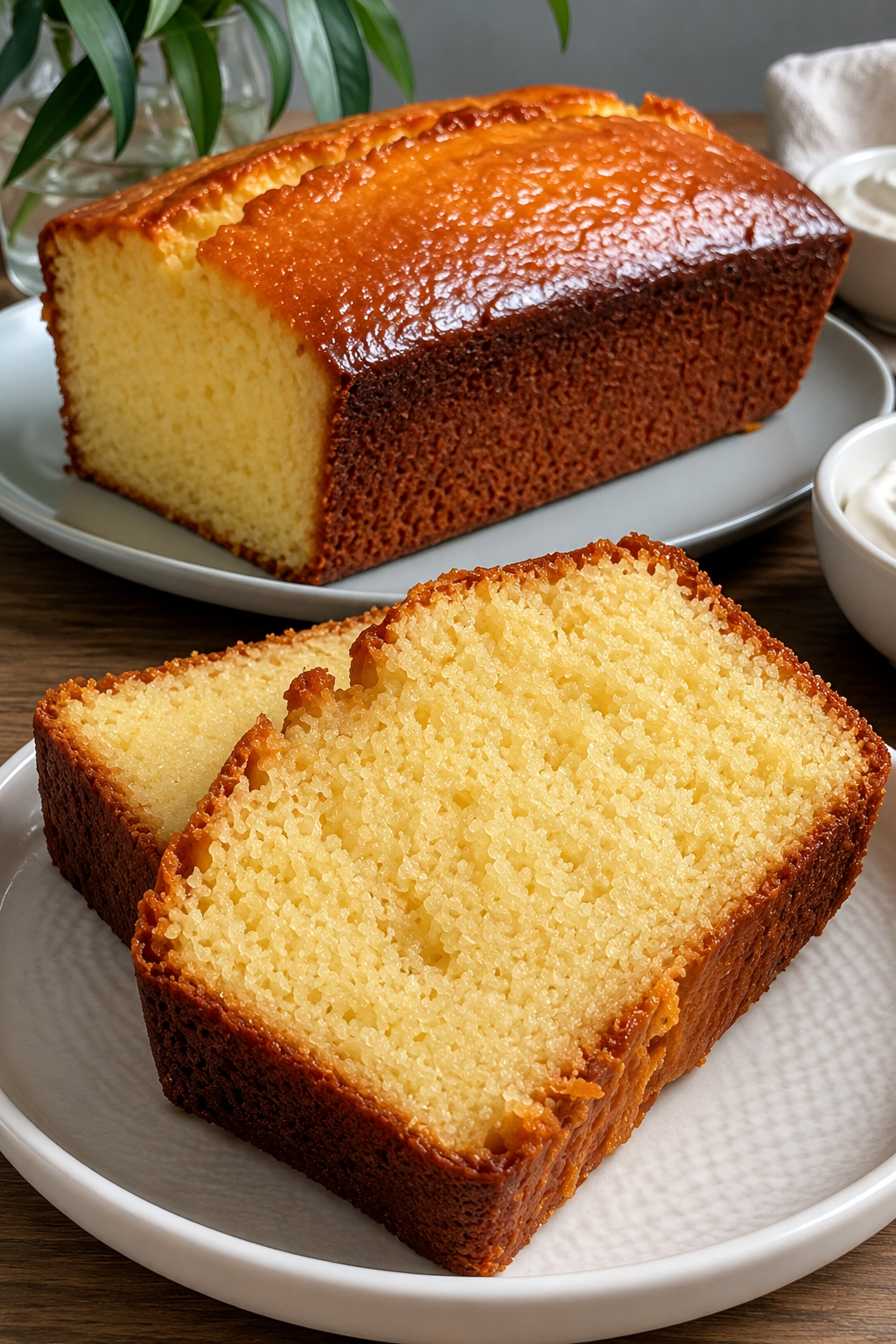
This Orange Loaf Cake is soft, moist, and packed with bright citrus flavor from fresh orange juice and zest. Finished with a simple orange glaze, it’s an easy homemade cake that works beautifully for breakfast, brunch, afternoon coffee, holidays, or a simple family dessert.
The recipe uses everyday baking ingredients and a standard loaf pan, so there’s no complicated decorating or special cake equipment required. The combination of butter, sour cream, and fresh citrus creates a tender crumb that stays moist even after the cake has cooled.
Why You’ll Love This Orange Loaf Cake
- Soft and moist crumb
- Fresh orange flavor
- Easy loaf-pan recipe
- Simple pantry ingredients
- No complicated decorating
- Perfect with coffee or tea
- Freezer-friendly
- Great for brunch and holidays
- Delicious with or without glaze
Ingredients
For the Orange Loaf Cake
- 1¾ cups all-purpose flour
- 1½ teaspoons baking powder
- ¼ teaspoon baking soda
- ½ teaspoon salt
- ½ cup unsalted butter, softened
- ¾ cup granulated sugar
- 2 large eggs, room temperature
- 2 tablespoons fresh orange zest
- ⅓ cup fresh orange juice
- ½ cup sour cream
- 1 teaspoon vanilla extract
For the Orange Glaze
- 1 cup powdered sugar
- 2–3 tablespoons fresh orange juice
- ½ teaspoon orange zest, optional
Optional Garnish
- Additional orange zest
- Thin orange slices
- Powdered sugar
- Chopped pistachios or almonds
The Secret to Strong Orange Flavor
Orange cake can sometimes taste surprisingly mild even when orange juice is used.
That’s because much of an orange’s aromatic flavor comes from the oils in its outer peel.
For a flavorful loaf, use both:
Fresh orange juice + fresh orange zest
The zest provides concentrated citrus aroma while the juice adds flavor, acidity, and moisture.
What Kind of Orange Is Best?
Several common varieties work.
Navel Oranges
Easy to find and naturally sweet.
Valencia Oranges
Juicy and excellent for baking.
Cara Cara Oranges
Sweeter with a slightly different citrus character.
Freshly squeezed juice generally gives the cake a brighter flavor than a bottled orange drink.
How to Make Orange Loaf Cake
Step 1: Prepare the Oven and Pan
Preheat the oven to 350°F (175°C).
Grease an 8½×4½-inch or 9×5-inch loaf pan.
Line it with parchment paper, leaving some overhang along the sides.
The parchment makes it much easier to lift the cooled cake from the pan.
Step 2: Zest the Orange
Zest the orange before squeezing it.
Use a microplane or fine grater.
Remove only the bright orange outer layer.
Avoid grating deeply into the white pith because it can taste bitter.
Step 3: Juice the Orange
Cut the orange and squeeze enough juice for both the cake and glaze.
Strain out seeds if necessary.
Set aside.
Step 4: Combine the Dry Ingredients
In a medium mixing bowl, whisk together:
- All-purpose flour
- Baking powder
- Baking soda
- Salt
Whisking distributes the leavening throughout the flour.
Set aside.
Step 5: Cream the Butter and Sugar
Place softened butter and granulated sugar in a large mixing bowl.
Beat with an electric mixer for approximately 2 to 3 minutes, until lighter and fluffy.
This step incorporates tiny air pockets into the batter and contributes to a lighter cake texture.
Step 6: Add the Orange Zest
Add the orange zest to the butter and sugar.
Mix briefly.
For even more aroma, you can rub the zest into the sugar with your fingertips before creaming it with the butter.
This helps release the fragrant citrus oils.
Step 7: Add the Eggs
Add the eggs one at a time.
Beat well after each addition.
Scrape the sides and bottom of the mixing bowl as needed.
Room-temperature eggs incorporate more easily into the butter mixture.
Step 8: Add Vanilla
Mix in the vanilla extract.
Vanilla may seem unusual in an orange cake, but a small amount complements the citrus without overpowering it.
Step 9: Combine Orange Juice and Sour Cream
In a separate bowl, stir together:
- Fresh orange juice
- Sour cream
The sour cream adds richness and helps keep the loaf tender.
Step 10: Finish the Batter
Add approximately one-third of the dry ingredients to the butter mixture.
Mix gently.
Add some of the sour cream-orange mixture.
Continue alternating until everything is combined.
Stop mixing as soon as you no longer see dry streaks of flour.
Don’t Overmix the Batter
Once flour is added, excessive mixing encourages gluten development.
Too much mixing can turn a tender orange loaf into a tougher, denser cake.
Mix only until combined.
A silicone spatula is useful for finishing the batter by hand.
Step 11: Fill the Loaf Pan
Transfer the batter to the prepared loaf pan.
Use a spatula to smooth the surface.
Gently tap the pan on the counter once or twice to settle large air pockets.
Step 12: Bake
Bake at 350°F for approximately 45 to 60 minutes.
Begin checking earlier if using a larger 9×5-inch pan because the batter may bake faster.
The cake is ready when:
- The top is golden
- The center springs back lightly
- A tester inserted near the center comes out clean or with a few moist crumbs
If the top becomes too dark before the center finishes, loosely tent it with aluminum foil.
Step 13: Cool
Allow the cake to cool in the pan for approximately 10 to 15 minutes.
Use the parchment to carefully lift it onto a wire cooling rack.
Let it cool before glazing.
How to Make Orange Glaze
Step 14: Combine Sugar and Juice
Place powdered sugar in a small bowl.
Add approximately 2 tablespoons fresh orange juice.
Whisk until smooth.
Add additional juice a little at a time until you reach the desired consistency.
The glaze should be thick enough to cling to the loaf while still slowly dripping down the sides.
Step 15: Glaze the Cake
Once the cake has cooled, drizzle the orange glaze over the top.
Allow some to naturally run down the sides.
Finish with fresh orange zest if desired.
Let the glaze set briefly before slicing.