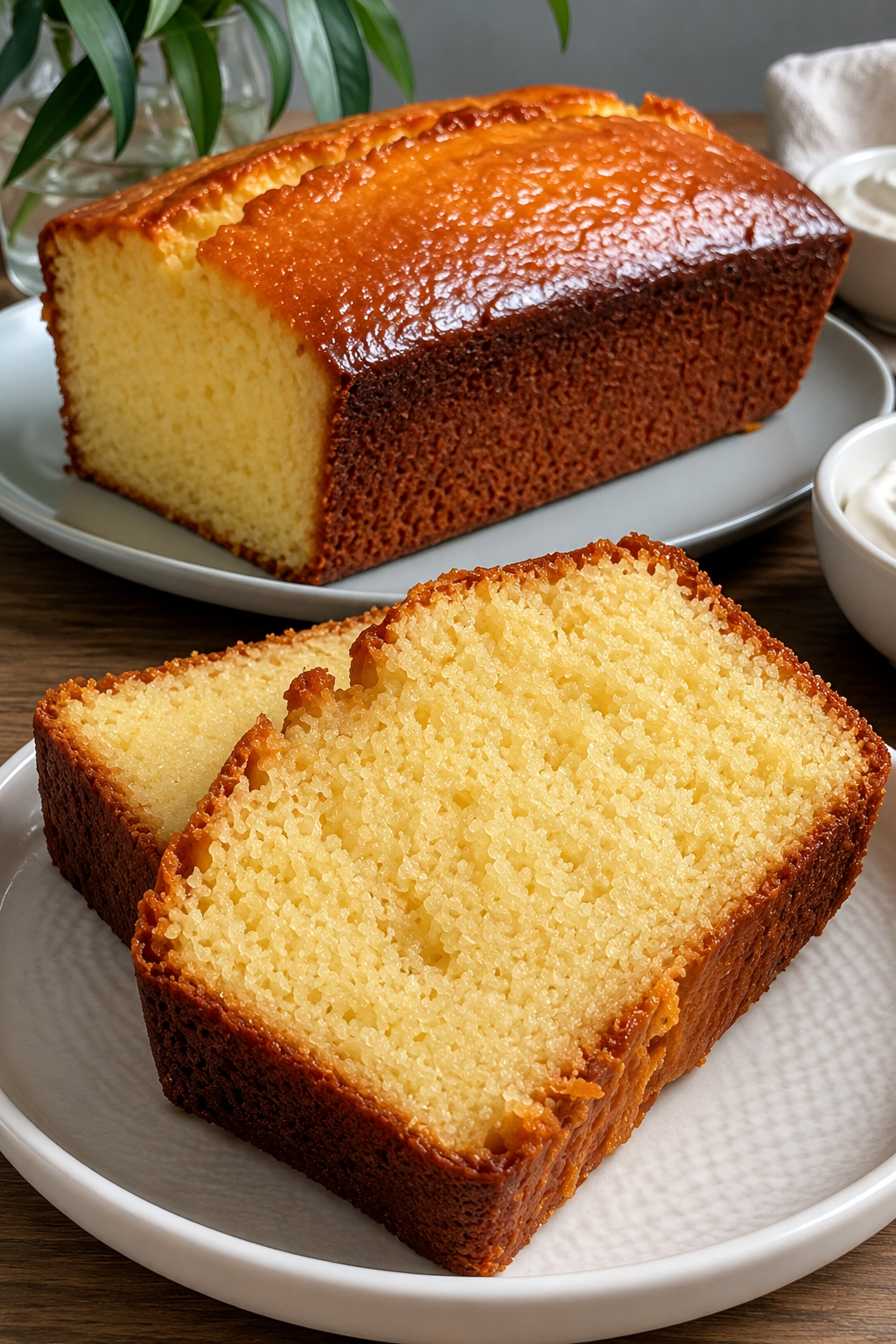
How to Make Orange Loaf Cake Extra Moist
A moist loaf depends on several things working together.
Measure Flour Correctly
Too much flour is one of the easiest ways to make cake dry.
Don’t Overbake
Even an excellent batter becomes dry when baked too long.
Use Sour Cream
Its fat and moisture help produce a tender crumb.
Use Room-Temperature Ingredients
They combine into a smoother, more uniform batter.
Store Properly
Once completely cooled, protect the loaf from excessive air exposure.
How to Measure Flour Correctly
For maximum consistency, a digital kitchen scale is extremely useful.
If using measuring cups, don’t scoop flour directly from a tightly packed bag.
Instead:
- Fluff the flour.
- Spoon it into the measuring cup.
- Level the top without packing.
Excess flour changes the balance between dry and wet ingredients.
Why Sour Cream Works So Well
Sour cream provides:
- Moisture
- Fat
- Tenderness
- Mild acidity
The result is a richer loaf without making the batter excessively liquid.
Full-fat sour cream generally gives the richest texture.
Can You Use Greek Yogurt Instead?
Yes.
Plain Greek yogurt is a good substitute for sour cream.
For the closest texture, choose a yogurt with some fat rather than an extremely thin nonfat product.
Use it in approximately the same quantity.
Butter vs. Oil in Orange Cake
Both can make excellent cakes, but they produce different results.
| Fat | Flavor | Texture | Best For |
| Butter | Rich and buttery | Tender, cake-like | Classic loaf cake |
| Neutral oil | Mild | Very moist | Maximum moisture |
| Butter + oil | Rich | Moist and soft | Balanced loaf |
This recipe uses butter because its flavor pairs beautifully with fresh orange.
Can I Replace Some Butter with Oil?
Yes.
If you prefer an especially moist loaf, part of the butter can be replaced with a neutral oil such as canola or vegetable oil.
However, replacing all the butter changes both flavor and the creaming method.
For a classic pound-cake-style result, butter is preferable.
Orange Pound Cake Variation
For a denser, richer orange loaf, use a pound-cake-style batter with more butter and eggs.
The result will have:
- Tighter crumb
- Richer flavor
- Heavier texture
Serve thin slices with coffee or tea.
Orange Yogurt Loaf Cake
Replace the sour cream with plain Greek yogurt.
Add plenty of orange zest.
This version is especially convenient when yogurt is already in the refrigerator.
Orange Lemon Loaf
Orange and lemon complement each other beautifully.
Use mostly orange zest and juice, then add a smaller amount of:
- Lemon zest
- Lemon juice
Use both juices in the glaze for a bright citrus finish.
Orange Cranberry Loaf Cake
Cranberries provide tart contrast against the sweet orange cake.
Fold fresh or frozen cranberries gently into the finished batter.
If using frozen cranberries, don’t necessarily thaw them first unless your specific recipe adjustment requires it, as thawed fruit can release substantial moisture.
Orange-cranberry loaf is especially good during fall and winter holidays.
Chocolate Orange Loaf Cake
Chocolate and orange are a classic pairing.
Add:
- Semisweet chocolate chips
- Dark chocolate chunks
to the batter.
You can also replace the powdered sugar glaze with melted dark chocolate and finish with fresh orange zest.
Orange Poppy Seed Loaf
Add poppy seeds to the batter for a variation inspired by lemon-poppy seed cake.
The small seeds add subtle texture while allowing orange to remain the dominant flavor.
Orange Almond Loaf
Add a small amount of almond extract along with vanilla.
Use it sparingly because almond extract can easily overpower citrus.
Finish the loaf with sliced almonds.
Orange Pistachio Loaf
Orange and pistachio make an elegant combination.
Sprinkle chopped pistachios over the wet glaze.
The nuts add:
- Crunch
- Color
- Richness
This version works particularly well for brunch or holiday dessert tables.
Orange Cream Cheese Glaze
Instead of a simple powdered-sugar glaze, prepare a richer topping using:
- Softened cream cheese
- Powdered sugar
- Orange juice
- Orange zest
Spread it over the completely cooled cake.
Because cream cheese frosting is perishable, store the finished cake appropriately refrigerated.
Simple Orange Syrup
For even more citrus flavor, make a light orange syrup.
Combine orange juice and sugar in a small saucepan.
Heat gently until the sugar dissolves and the mixture slightly reduces.
Brush a small amount over the warm loaf.
Don’t soak it excessively or the cake can become wet and heavy.
Why Did My Orange Loaf Sink?
A loaf can sink in the middle for several reasons.
Underbaking
The center didn’t have enough time to set.
Opening the Oven Too Early
A sudden temperature drop can interfere with structure before the cake is stable.
Too Much Leavening
Excess baking powder can cause rapid rising followed by collapse.
Incorrect Ingredient Measurements
Too much liquid or too little flour can destabilize the batter.
Use accurate measuring tools.
Why Is My Orange Cake Dense?
Common causes include:
- Overmixing after adding flour
- Too much flour
- Butter that was too cold
- Old baking powder
- Incorrect pan size
- Under-creaming butter and sugar
Follow the mixing sequence rather than combining everything at once.
Why Is My Orange Cake Dry?
Dry cake usually comes from either excess flour or excess baking time.
Remember that ovens can vary significantly.
A digital oven thermometer can help determine whether your oven runs hotter or cooler than the selected temperature.
Begin checking before the maximum suggested baking time.
Why Did the Top Crack?
A crack along the top of a loaf cake is generally normal.
The outside sets first while the batter underneath continues expanding.
That pressure can create a natural split across the surface.
In fact, the crack often gives homemade loaf cakes their characteristic appearance.
Why Doesn’t My Cake Taste Like Orange?
Using juice alone may not provide enough aroma.
The easiest solution is fresh zest.
For stronger orange flavor:
- Use generous fresh zest
- Rub zest into sugar
- Use freshly squeezed juice
- Add orange glaze
- Finish with additional zest
Avoid adding excessive liquid juice because it can upset the cake’s ingredient ratios.
How to Make a Thick Orange Glaze
Start with less juice than you think you need.
Powdered sugar changes consistency quickly when liquid is added.
For a thick white glaze:
More powdered sugar + less juice
For a thinner translucent glaze:
More orange juice
Add liquid by the teaspoon once you’re close to the desired texture.
When Should You Glaze the Cake?
For a thick decorative glaze, let the loaf cool completely.
Glaze applied to a hot cake will melt and run off.
If you’re using a thin citrus syrup designed to soak into the cake, that can be applied while the loaf is still warm.
These are two different techniques.
Loaf Pan Size Matters
The pan affects baking time and loaf height.
8½×4½-Inch Pan
Produces a taller loaf and may require more baking time.
9×5-Inch Pan
Produces a slightly wider, shorter loaf and may bake faster.
Avoid using a dramatically smaller pan unless the batter quantity is adjusted.
An overfilled loaf pan can overflow in the oven.
Metal vs. Glass Loaf Pan
Metal
Heats efficiently and is excellent for consistent baking.
Glass
Allows you to see browning but transfers heat differently.
Ceramic
Attractive for serving but can also bake differently from metal.
When changing pan materials, monitor the loaf carefully and follow manufacturer recommendations.
Best Tools for Orange Loaf Cake
Useful baking equipment includes:
- 9×5-inch loaf pan
- Parchment paper
- Digital kitchen scale
- Electric hand mixer
- Stand mixer
- Microplane zester
- Citrus juicer
- Silicone spatula
- Mixing bowls
- Wire cooling rack
- Measuring cups and spoons
- Airtight cake container
A microplane and digital kitchen scale are particularly useful for citrus baking because they make zesting and ingredient measurement much easier.
How to Serve Orange Loaf Cake
This cake works for many occasions.
Serve it with:
- Coffee
- Hot tea
- Fresh berries
- Whipped cream
- Vanilla ice cream
- Greek yogurt
For dessert, slightly thicker slices with berries and whipped cream work beautifully.
For breakfast or brunch, serve thinner slices alongside coffee.
Orange Loaf Cake for Brunch
This recipe is ideal for a brunch table because it can be prepared ahead.
Serve alongside:
- Fresh fruit
- Yogurt
- Muffins
- Coffee
- Tea
Slice the loaf shortly before guests arrive for the freshest presentation.
Holiday Orange Loaf
Orange naturally works well with winter flavors.
Add a small amount of:
- Cinnamon
- Cardamom
- Cranberries
Finish with glaze and chopped pistachios.
It makes a beautiful addition to Thanksgiving, Christmas, or New Year’s brunch.
Orange Loaf Cake as a Homemade Gift
Bake the loaf in a disposable or giftable loaf pan.
Allow it to cool completely.
Glaze it and let the glaze set.
Wrap securely for freshness.
For gifting, you can also make several mini loaves instead of one large loaf.
Mini Orange Loaves
The same style of batter can be divided among mini loaf pans.
Mini loaves bake faster than a full-size loaf, so begin checking them much earlier.
Because mini loaf pan capacities vary, don’t rely on one universal baking time.
They’re excellent for:
- Gifts
- Parties
- Brunch
- Individual portions
How to Store Orange Loaf Cake
Once completely cool, store the loaf in an airtight container.
If it has only a simple powdered-sugar glaze, it can generally be stored for a short period at cool room temperature.
For longer storage, refrigerate it.
If you use a cream cheese topping, refrigeration is necessary.
How to Keep the Loaf Moist
Don’t slice the entire cake before you need it.
Every exposed cut surface loses moisture.
Instead, slice individual portions as needed.
Wrap or cover the remaining loaf tightly.
Can You Freeze Orange Loaf Cake?
Yes.
Orange loaf cake freezes very well.
For best results, freeze it without the glaze.
Allow the cake to cool completely.
Wrap securely and place it inside a freezer-safe container or bag.
Thaw at room temperature or overnight in the refrigerator, then glaze before serving.
Can You Freeze Individual Slices?
Absolutely.
This is particularly convenient if you don’t need the entire loaf at once.
Wrap individual slices and store them in a freezer-safe container.
Then thaw only the amount you need.
Make-Ahead Instructions
You can bake the loaf one day before serving.
Cool completely.
Store it tightly covered.
Prepare and add the glaze closer to serving for the freshest appearance.
This makes Orange Loaf Cake particularly convenient for holidays and brunch gatherings.
Common Orange Loaf Cake Mistakes
Using Too Much Flour
Measure accurately.
Overmixing
Stop once the flour disappears.
Skipping the Orange Zest
Zest provides much of the citrus aroma.
Overbaking
Start checking early.
Glazing a Hot Cake
Allow it to cool first.
Using the Wrong Pan Size
Pan dimensions affect baking time and loaf height.
Adding Too Much Orange Juice
More juice doesn’t automatically mean more orange flavor and can disrupt the batter.
Frequently Asked Questions
Can I use bottled orange juice?
Freshly squeezed juice is preferable for the brightest flavor, especially because you’ll already need fresh oranges for zest.
Can I use Greek yogurt instead of sour cream?
Yes. Plain Greek yogurt is an excellent substitute.
Why do I need orange zest?
The zest contains aromatic citrus oils that provide concentrated orange flavor.
Can I make this cake without glaze?
Absolutely. Dust it with powdered sugar or serve it plain.
Can I add chocolate chips?
Yes. Chocolate and orange pair beautifully.
Why did my loaf sink?
Underbaking, inaccurate measurements, or excess leavening are common causes.
Why is my cake dry?
Too much flour or excessive baking time are the most likely reasons.
Can Orange Loaf Cake be frozen?
Yes. Freeze it well wrapped, preferably before glazing.
What loaf pan should I use?
An 8½×4½-inch or 9×5-inch loaf pan works well, with baking time adjusted as necessary.
How can I make the orange flavor stronger?
Use plenty of fresh zest, rub it into the sugar, use fresh juice, and finish the cake with orange glaze.
Final Thoughts
Orange Loaf Cake is a simple homemade bake that delivers plenty of fresh citrus flavor without requiring elaborate cake decorating.
The best results come from combining fresh orange zest and juice, accurately measuring the flour, creaming the butter and sugar properly, and avoiding overmixing or overbaking. Sour cream adds extra tenderness, while the fresh orange glaze provides another layer of bright citrus flavor.
Serve it alongside morning coffee, add it to a weekend brunch table, or dress it up with pistachios, berries, or chocolate for dessert.
And if you’re planning ahead, bake an extra loaf for the freezer—you’ll have an easy homemade orange cake ready whenever you need something sweet.