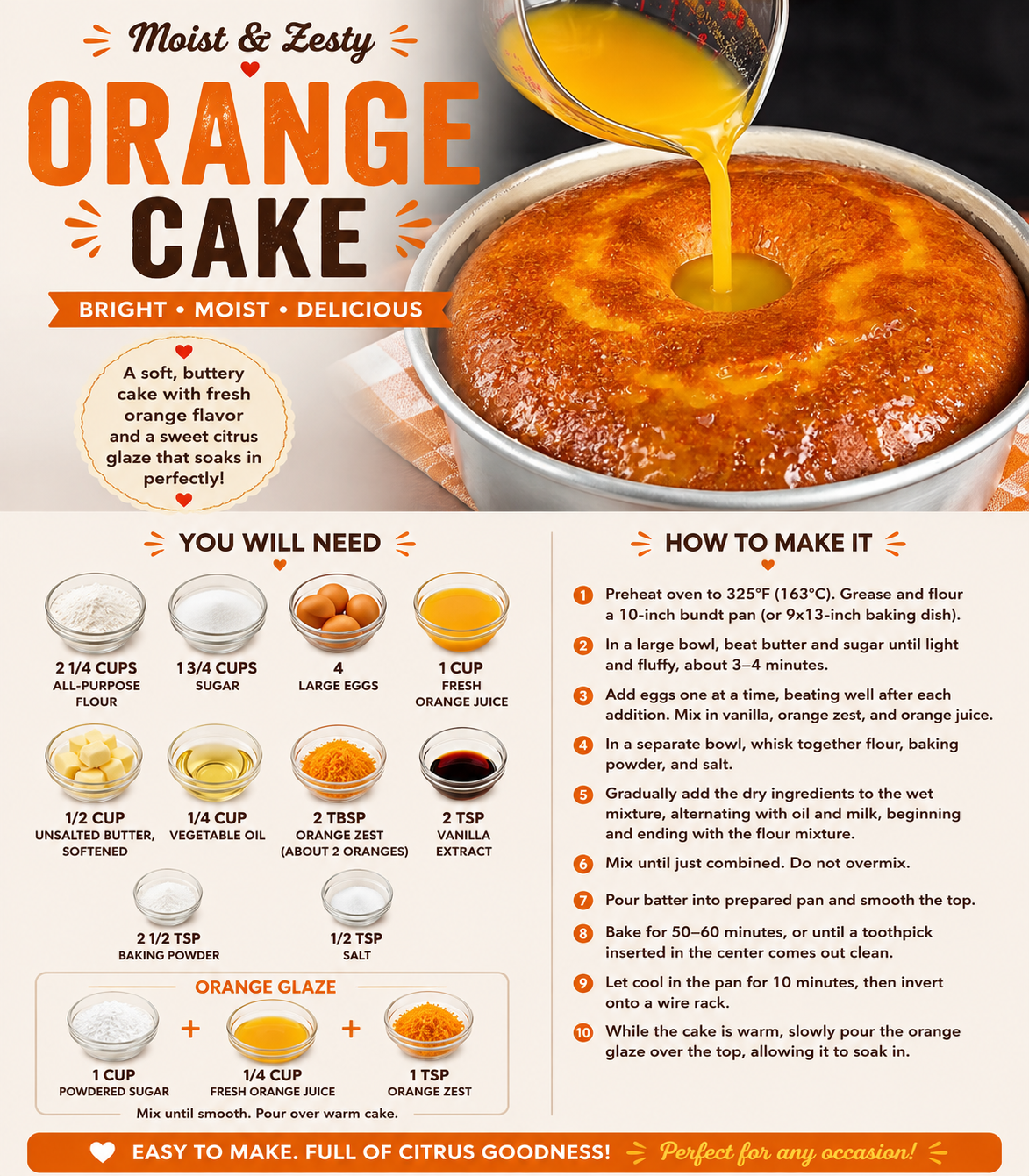
Orange Cake (Super Moist and Fresh): Easy Homemade Citrus Cake
There is something special about a homemade Orange Cake made with fresh citrus. It is soft, fragrant, moist, and full of bright orange flavor without being overly heavy.
This Super Moist and Fresh Orange Cake is perfect for breakfast, brunch, afternoon coffee, family gatherings, holidays, or a simple weekend dessert. Fresh orange juice and zest give the cake its natural citrus flavor, while oil and eggs help keep the crumb tender and moist.
It is also easy to prepare with basic baking tools and common grocery-store ingredients.
Why You’ll Love This Orange Cake
This cake is a great recipe to keep in your dessert collection because it is:
- Super moist
- Soft and fluffy
- Full of fresh orange flavor
- Easy to make
- Made with simple ingredients
- Great for make-ahead baking
- Delicious with or without glaze
- Perfect for brunch or dessert
The fresh orange zest is especially important because much of the fruit’s natural aroma is concentrated in the peel.
Ingredients
For the Orange Cake
- 3 large eggs, room temperature
- 1 cup granulated sugar
- ½ cup vegetable oil
- ¾ cup fresh orange juice
- 1 tablespoon finely grated orange zest
- 1 teaspoon vanilla extract
- 2 cups all-purpose flour
- 2 teaspoons baking powder
- ¼ teaspoon salt
Optional Orange Glaze
- 1 cup powdered sugar
- 2 to 3 tablespoons fresh orange juice
- ½ teaspoon orange zest
Optional Garnish
- Fresh orange slices
- Powdered sugar
- Extra orange zest
- Whipped cream
- Fresh berries
Why Fresh Orange Juice Makes a Difference
Bottled orange juice can work in some recipes, but freshly squeezed juice usually gives homemade cake a brighter and fresher flavor.
Fresh oranges provide two important ingredients:
Juice adds moisture and citrus flavor.
Zest contains aromatic oils that give the cake a much stronger orange fragrance.
For the best result, zest the orange before squeezing it.
Choosing the Best Oranges
Look for oranges that feel heavy for their size.
Heavier fruit generally contains more juice.
Good choices include:
- Navel oranges
- Valencia oranges
- Cara Cara oranges
Navel oranges are easy to find in most U.S. grocery stores and work very well for baking.
Cara Cara oranges can provide a slightly sweeter flavor.
How to Make Super Moist Orange Cake
Step 1: Preheat the Oven
Preheat the oven to 350°F (175°C).
Prepare a 9-inch round cake pan or similar baking pan.
Grease the pan lightly and line the bottom with parchment paper.
Proper pan preparation makes it much easier to remove the cake cleanly after baking.
Step 2: Zest the Orange
Wash and dry the orange thoroughly.
Using a fine grater or microplane, remove only the bright orange outer layer.
Avoid grating deeply into the white pith because it can taste bitter.
Measure approximately 1 tablespoon of zest.
Step 3: Squeeze the Orange Juice
Cut the oranges and squeeze enough juice to measure approximately ¾ cup.
Strain out seeds if necessary.
Freshly squeezed juice gives the cake its bright citrus character.
Step 4: Beat the Eggs and Sugar
Place the room-temperature eggs and granulated sugar in a large mixing bowl.
Beat with an electric hand mixer or stand mixer until the mixture becomes lighter and slightly fluffy.
This helps incorporate some air into the batter and contributes to a softer cake.
Step 5: Add the Oil
Slowly pour in the vegetable oil while mixing.
Oil is one of the secrets to keeping orange cake moist.
Unlike butter, oil remains liquid at room temperature, so the cake stays soft even after it has completely cooled.
Step 6: Add Orange Juice and Zest
Pour in the fresh orange juice.
Add:
- Orange zest
- Vanilla extract
Mix on low speed until combined.
At this stage, the batter should smell fresh and strongly citrusy.
Step 7: Combine the Dry Ingredients
In a separate bowl, whisk together:
- All-purpose flour
- Baking powder
- Salt
Whisking helps distribute the baking powder evenly throughout the flour.
For an especially fine crumb, sift the dry ingredients.
Step 8: Add the Flour Mixture
Gradually add the dry ingredients to the wet mixture.
Mix gently until just combined.
Do not continue beating once the flour has disappeared.
Overmixing can create too much gluten and make the cake tougher.
Step 9: Transfer to the Cake Pan
Pour the batter into the prepared pan.
Smooth the surface with a silicone spatula.
Gently tap the pan once or twice against the countertop to release very large air bubbles.
Step 10: Bake
Bake at 350°F for approximately 30 to 40 minutes.
Baking time depends on:
- Pan size
- Oven accuracy
- Batter depth
- Pan material
Begin checking near the earlier end of the baking range.
Step 11: Check for Doneness
Insert a toothpick or cake tester into the center.
It should come out clean or with only a few moist crumbs.
The top should also spring back gently when touched.
Avoid overbaking because extra oven time can reduce the cake’s moisture.
Step 12: Cool
Let the cake cool in the pan for about 10 to 15 minutes.
Then carefully transfer it to a cooling rack.
Allow it to cool completely before glazing.