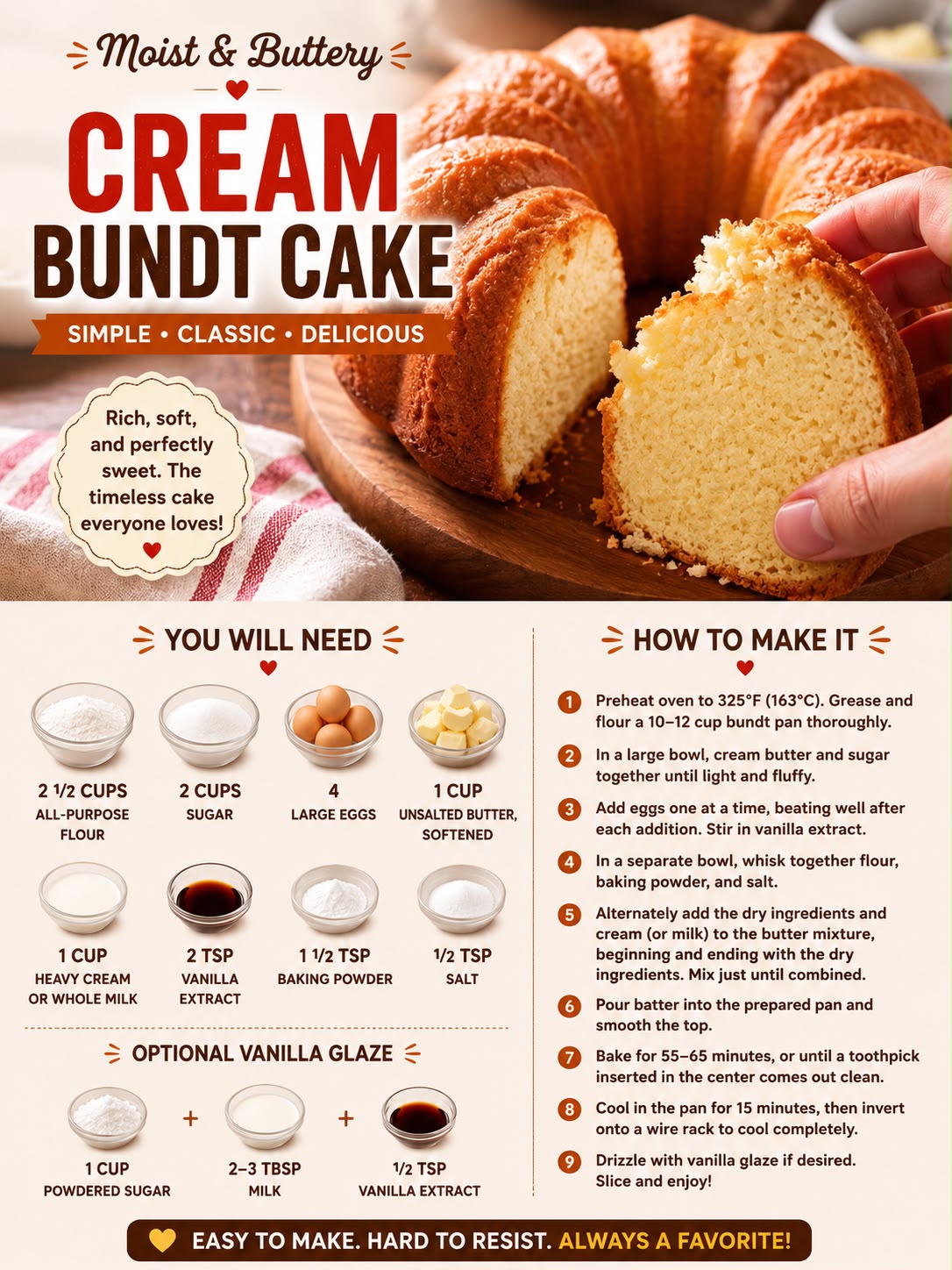
Cream Cheese Bundt Cake: Rich, Buttery, Moist, and Perfectly Tender
There is something timeless about a homemade Cream Cheese Bundt Cake.
It is rich without being overly complicated, buttery without feeling heavy, and moist enough to stay delicious for several days when stored properly.
The combination of softened cream cheese, butter, sugar, eggs, and flour creates a dense yet tender cake with a smooth crumb and slightly crisp golden exterior.
This is the kind of dessert that works for almost any occasion.
Serve it for Sunday dinner, bring it to a potluck, bake it for a birthday, or add it to your Thanksgiving or Christmas dessert table.
It is also delicious on its own, which means you do not need an elaborate frosting or filling to make it special.
Why You’ll Love This Cream Cheese Bundt Cake
This classic cake has everything you want from a dependable homemade dessert.
You get:
- Rich buttery flavor
- Soft, moist texture
- Simple pantry ingredients
- Beautiful Bundt cake presentation
- No complicated decorating
- Easy make-ahead preparation
- Excellent slicing
- Great flavor even without frosting
The cream cheese adds richness and helps create the dense, tender crumb that makes this cake different from a standard vanilla cake.
Ingredients
For the Cake
- 1 package (8 oz) cream cheese, softened
- 1 cup (2 sticks) unsalted butter, softened
- 2 cups granulated sugar
- 5 large eggs
- 2½ cups all-purpose flour
- 1 teaspoon vanilla extract
- ½ teaspoon almond extract, optional
- ½ teaspoon salt
- 1 teaspoon baking powder
Optional Simple Glaze
- 1 cup powdered sugar
- 2 to 3 tablespoons milk
- ½ teaspoon vanilla extract
Optional Garnish
- Powdered sugar
- Fresh berries
- Whipped cream
- Lemon zest
What Makes Cream Cheese Bundt Cake Different?
Cream cheese changes both the flavor and texture of a cake.
Regular pound cake relies mainly on butter, sugar, eggs, and flour.
Adding cream cheese gives the batter extra richness and moisture.
The result is a cake that is:
- Slightly denser
- Very tender
- Rich and buttery
- Moist in the center
- Easy to slice
The mild tanginess of cream cheese also helps balance the sweetness.
Choosing the Right Bundt Pan
A standard 10- to 12-cup Bundt pan works well for this recipe.
Bundt pans come in many shapes and materials, including:
- Aluminum
- Nonstick metal
- Cast aluminum
- Decorative molded pans
For consistent baking, a sturdy metal pan is usually a reliable choice.
Highly detailed decorative pans can produce beautiful cakes, but they also need to be greased carefully so the cake releases cleanly.
How to Make Cream Cheese Bundt Cake
Step 1: Preheat the Oven
Preheat your oven to 325°F (165°C).
This cake benefits from a slightly lower baking temperature because the batter is rich and dense.
A moderate temperature allows the center to bake through without browning the outside too quickly.
Step 2: Prepare the Bundt Pan
Grease the Bundt pan thoroughly.
Pay special attention to:
- Corners
- Ridges
- Center tube
- Decorative details
You can use softened butter and flour or a baking spray designed for cakes.
Make sure every part of the pan is coated.
This is one of the most important steps for getting a clean release.
Step 3: Cream the Butter and Cream Cheese
Place the softened butter and cream cheese in a large mixing bowl.
Using a stand mixer or electric hand mixer, beat until smooth and creamy.
Scrape down the bowl as needed.
This usually takes a few minutes.
Both ingredients should be softened before mixing.
Cold butter or cream cheese can create lumps and prevent proper aeration.
Step 4: Add the Sugar
Gradually add the granulated sugar.
Continue beating for several minutes until the mixture becomes lighter and fluffy.
This process incorporates air into the batter, which helps improve the cake’s texture.
Do not rush this step.
Step 5: Add the Eggs
Add the eggs one at a time.
Beat well after each addition.
Adding eggs gradually makes it easier for the batter to stay smooth and properly emulsified.
Scrape down the sides of the mixing bowl occasionally.
Step 6: Add the Flavorings
Mix in the vanilla extract.
If desired, add a small amount of almond extract.
Almond extract has a stronger flavor than vanilla, so use it sparingly.
Step 7: Combine the Dry Ingredients
In a separate bowl, whisk together:
- All-purpose flour
- Baking powder
- Salt
Mixing the dry ingredients separately helps distribute the leavening evenly.
Step 8: Add the Flour
Reduce the mixer speed to low.
Gradually add the dry ingredients to the butter mixture.
Mix only until combined.
Do not overmix once the flour has been added.
Overmixing can develop too much gluten and make the cake tougher.
Step 9: Fill the Bundt Pan
Spoon the batter evenly into the prepared pan.
Smooth the top with a silicone spatula.
Gently tap the pan on the countertop a few times.
This can help release large air pockets trapped in the batter.
Step 10: Bake
Bake at 325°F for approximately 65 to 80 minutes.
Because Bundt pans and ovens vary, start checking toward the earlier end of the range.
Insert a wooden skewer or cake tester into the thickest part of the cake.
It should come out clean or with only a few moist crumbs.
Step 11: Cool Before Removing
Place the Bundt pan on a cooling rack.
Let the cake cool inside the pan for approximately 15 to 20 minutes.
Do not leave it in the pan until completely cold.
As the cake cools, sugars can stick more firmly to the pan.
Step 12: Invert the Cake
Place a serving plate or cooling rack over the Bundt pan.
Hold both securely and flip them together.
Lift the pan slowly.
The cake should release cleanly.
Allow it to cool completely before glazing.