Why Room-Temperature Ingredients Matter
One of the easiest ways to improve homemade cakes is to use ingredients at similar temperatures.
Softened butter and cream cheese blend more smoothly.
Room-temperature eggs also incorporate more easily into the batter.
When ingredients combine properly, the cake develops a more uniform texture.
Cold ingredients can cause the butter mixture to look curdled or uneven.
How Soft Should the Butter Be?
Butter should be soft enough to press gently with a finger but should not look melted or greasy.
If the butter becomes too warm, it will not trap air as effectively during creaming.
For best results, remove butter from the refrigerator in advance.
Avoid microwaving it until partially melted.
How Soft Should Cream Cheese Be?
Cream cheese should also be soft enough to mix smoothly.
Full-fat block cream cheese usually works best for this type of cake.
Whipped cream cheese sold in tubs has a different texture and moisture level, so it may change the consistency of the batter.
Why Creaming Butter and Sugar Is Important
Creaming is more than simply combining ingredients.
As the mixer beats butter and sugar together, tiny air pockets form in the mixture.
Those air pockets expand during baking.
That contributes to a tender texture and helps prevent an overly heavy cake.
Beat until the mixture looks noticeably lighter and fluffier.
Do You Need Baking Powder?
Some traditional cream cheese pound cakes rely almost entirely on eggs for structure.
This version uses a small amount of baking powder to provide additional lift.
The result is still dense and rich, but slightly lighter than a traditional old-fashioned pound cake.
How to Prevent a Bundt Cake From Sticking
Bundt pans can be tricky because of their detailed shape.
For reliable release:
- Grease every surface thoroughly.
- Flour the pan if needed.
- Do not let excess batter build up in deep grooves.
- Cool the cake for about 15 to 20 minutes.
- Invert while it is still slightly warm.
Baking sprays that contain flour can also work very well.
Butter and Flour Method
Spread softened butter over the inside of the Bundt pan.
Add a few tablespoons of flour.
Rotate the pan until the flour coats every buttered surface.
Turn the pan upside down and tap out excess flour.
This classic technique provides a protective barrier between the cake and the pan.
How to Know When Bundt Cake Is Done
Because Bundt cakes are thick, checking only the surface can be misleading.
The outside may look fully baked while the interior still needs time.
Use a wooden skewer or long cake tester.
Insert it into one of the thickest sections.
The cake is usually ready when it comes out clean or with only a few moist crumbs.
Why Did My Bundt Cake Sink?
Several things can cause a cake to sink.
Opening the Oven Too Early
Opening the oven door can cause a sudden temperature drop.
Avoid opening it during the early stages of baking.
Underbaking
If the center is not fully set, it can collapse as the cake cools.
Too Much Leavening
Adding excessive baking powder can make the cake rise quickly and then fall.
Measure carefully.
Overmixing or Undermixing
Proper mixing helps build the right structure.
Why Is My Bundt Cake Dry?
A dry cake is often the result of overbaking.
Bundt cakes continue cooking slightly after they come out of the oven.
Remove the cake as soon as the center is properly baked.
Other possible causes include:
- Too much flour
- Incorrect measuring
- Too little fat
- Oven temperature running too high
Using a digital kitchen scale can improve baking consistency.
Measuring Flour Correctly
Flour is one of the easiest baking ingredients to overmeasure.
For best results, use a kitchen scale.
If using measuring cups:
- Fluff the flour.
- Spoon it gently into the measuring cup.
- Level the top with a knife.
Do not pack flour tightly into the cup.
Too much flour can make the cake dry and heavy.
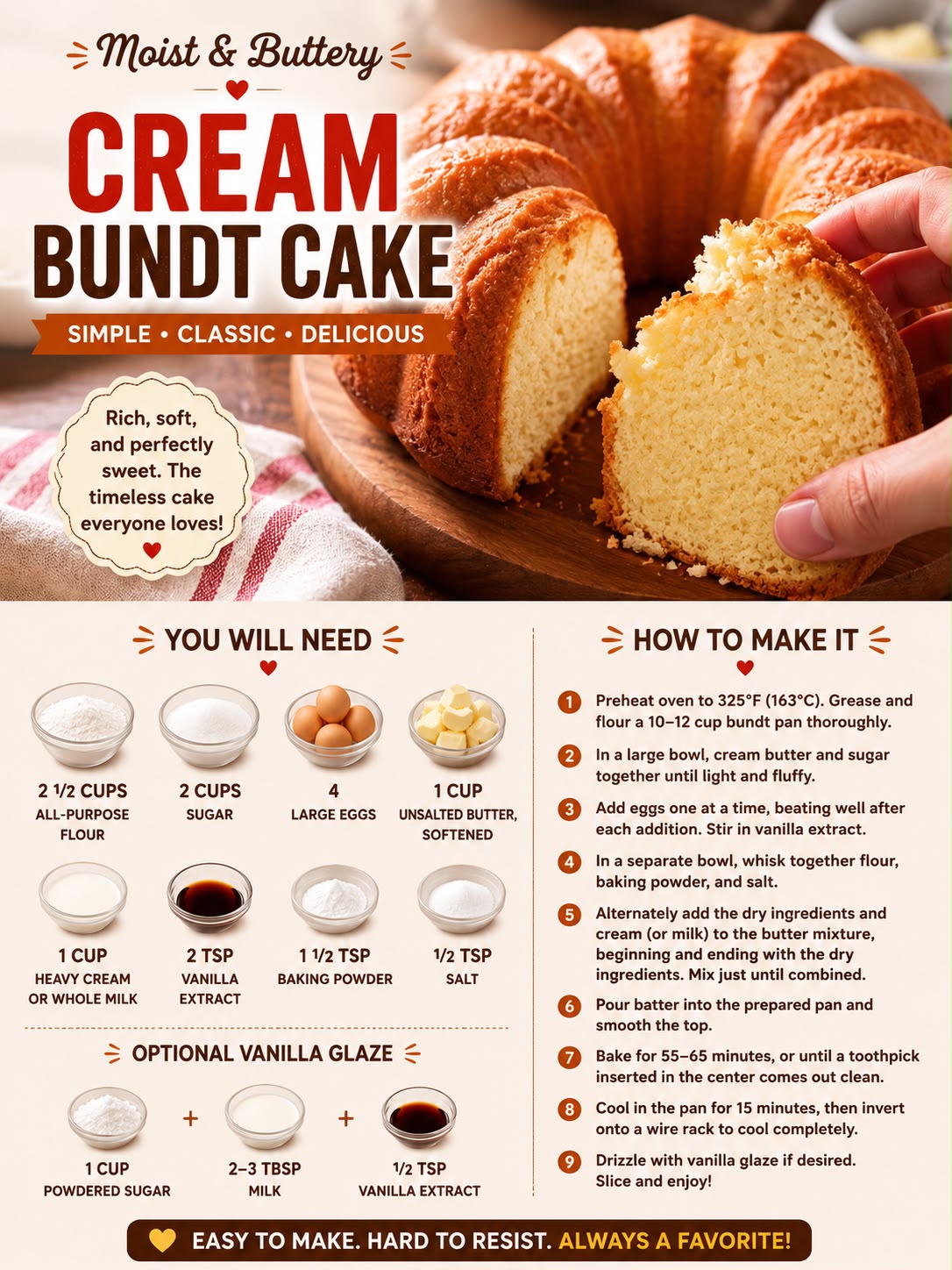
Simple Vanilla Glaze
A basic glaze can make the Bundt cake look especially elegant.
Combine:
- 1 cup powdered sugar
- 2 tablespoons milk
- ½ teaspoon vanilla extract
Whisk until smooth.
If the glaze is too thick, add more milk a teaspoon at a time.
If it becomes too thin, add additional powdered sugar.
Drizzle over the completely cooled cake.
Lemon Cream Cheese Bundt Cake Variation
For a bright citrus version, add:
- Zest of 1 lemon
- 1 to 2 tablespoons fresh lemon juice
Add the zest with the sugar and the juice with the vanilla.
Finish with a lemon glaze made from powdered sugar and fresh lemon juice.
Almond Bundt Cake Variation
Add ½ teaspoon almond extract to the batter.
Top with sliced almonds or a simple almond glaze.
Almond extract is potent, so a little goes a long way.
Chocolate Chip Cream Cheese Bundt Cake
Fold approximately 1 cup of mini chocolate chips into the batter before transferring it to the pan.
Toss the chips lightly with a small amount of flour first.
This can help keep them distributed throughout the cake.
Berry Bundt Cake
Fresh blueberries or raspberries can also be folded into the batter.
Use berries carefully because excessive moisture can affect baking time.
For a simple serving option, keep the cake plain and serve fresh berries alongside individual slices instead.
What to Serve With Cream Cheese Bundt Cake
This cake can be served completely plain.
Its rich flavor does not require frosting.
However, good accompaniments include:
- Fresh strawberries
- Blueberries
- Raspberries
- Whipped cream
- Vanilla ice cream
- Lemon curd
- Caramel sauce
- Hot coffee
- Tea
For brunch, serve a thin slice with coffee and fresh fruit.
For dessert, add berries and whipped cream.
Holiday Dessert Idea
A Bundt cake makes an excellent holiday dessert because its decorative shape already looks impressive.
For Christmas, dust it with powdered sugar and decorate the serving plate with berries.
For Thanksgiving, a caramel drizzle can complement the buttery cake.
For Easter or spring gatherings, pair it with fresh strawberries and lemon glaze.
Make-Ahead Baking
Cream cheese Bundt cake is an excellent make-ahead dessert.
In fact, many dense butter cakes taste even better the following day because the flavor has time to develop.
Bake it one day before your event.
Let it cool completely and store it tightly covered.
Add powdered sugar or glaze shortly before serving.
How to Store Cream Cheese Bundt Cake
Once completely cool, place the cake in an airtight cake container.
You can also wrap individual slices.
Because the cake contains baked cream cheese and eggs, follow appropriate food-storage practices and refrigerate when needed, especially for longer storage.
Bring chilled slices closer to room temperature before serving for a softer texture.
Can You Freeze Bundt Cake?
Yes.
Bundt cake freezes very well.
For best results, freeze it before adding glaze.
Wrap the completely cooled cake tightly with plastic wrap, then add a second protective layer or place it in a freezer-safe container.
You can also freeze individual slices.
Thaw in the refrigerator or at room temperature before serving.
Freezing Individual Slices
Individual slices are especially convenient.
Slice the cake after it has cooled.
Wrap each piece separately and store them together in a freezer-safe bag or food-storage container.
This lets you thaw one serving at a time rather than an entire cake.
Useful Baking Tools
A few pieces of kitchen equipment can make this recipe easier:
- 10- to 12-cup Bundt pan
- Stand mixer
- Electric hand mixer
- Large mixing bowls
- Silicone spatula
- Cooling rack
- Cake tester
- Kitchen scale
- Measuring cups and spoons
- Airtight cake storage container
A quality Bundt pan and reliable mixer are particularly useful if you bake regularly.
Stand Mixer vs. Hand Mixer
Both work.
Stand Mixer
A stand mixer is convenient for longer creaming times and thick cake batters.
It allows you to mix while preparing other ingredients.
Hand Mixer
An electric hand mixer costs less, requires less storage space, and is more than capable of making Bundt cake.
The important thing is to cream the butter, cream cheese, and sugar thoroughly.
Common Mistakes to Avoid
Using Cold Butter
Cold butter does not cream properly.
Using Cold Cream Cheese
This can create lumps.
Adding Eggs Too Quickly
Add them one at a time for a smoother batter.
Overmixing the Flour
Once flour is added, mix only until combined.
Poorly Greasing the Pan
Even a perfect cake can break if the Bundt pan is not properly prepared.
Removing the Cake Immediately
Give it time to cool slightly before inverting.
Waiting Too Long to Remove It
Allowing the cake to cool completely in the pan can sometimes make release more difficult.
Frequently Asked Questions
Can I use salted butter?
Yes, but reduce or omit the added salt.
Unsalted butter gives you more control over the final flavor.
Can I use low-fat cream cheese?
Full-fat block cream cheese is generally better for texture and richness.
Can I make this without almond extract?
Absolutely.
Vanilla alone works perfectly.
What size Bundt pan should I use?
A 10- to 12-cup pan is a good choice.
Avoid filling the pan completely because the cake needs room to rise.
Why did my cake stick?
The pan may not have been greased thoroughly enough, or the cake may have cooled too long before removal.
Can I add chocolate chips?
Yes.
Mini chocolate chips work particularly well.
Can I prepare it the day before?
Yes.
This cake stores very well and is a great make-ahead dessert.
Does cream cheese Bundt cake need frosting?
No.
It has enough flavor to serve plain.
Powdered sugar or a light glaze is usually more than enough.
How do I get clean slices?
Use a sharp serrated or cake knife and wipe it clean between slices if necessary.
Can I freeze leftovers?
Yes.
Wrap individual slices tightly and freeze them in an airtight container.
Final Thoughts
Cream Cheese Bundt Cake is a dependable homemade dessert with rich butter flavor, a tender crumb, and the slight tanginess that cream cheese brings to classic baking.
The recipe uses familiar ingredients but produces a cake that looks elegant enough for birthdays, holidays, potlucks, or family gatherings.
For the best results, start with properly softened butter and cream cheese, cream them thoroughly with the sugar, add the eggs gradually, and avoid overmixing once the flour goes in.
Most importantly, prepare your Bundt pan carefully and give the cake enough time to bake through.
Serve it plain, dusted with powdered sugar, drizzled with vanilla glaze, or paired with fresh berries for a simple classic that works in almost any season.